 Add to Chrome
 Add to Firefox
 Add to Edge
PAC--Bayes Bounds on Quotient Parameter Spaces: Geometry-induced Implicit-Bias Priors
Jul 20, 2026
Overparameterized models often have continuous parameter symmetries, so different parameters define the same predictor. We show that PAC--Bayesian analysis should be performed on the quotient predictor space: pushing a prior and posterior to the quotient preserves the empirical and population Gibbs risks while removing the nonnegative KL contribution caused solely by how the two distributions differ among parameterizations of the same predictor. Quotienting alone does not determine which prior to use. We construct a canonical choice of one parameterization for each predictor and account for the geometric volume of its equivalent parameterizations. This transforms a neutral reference prior into a data-independent prior that reflects the model's implicit bias. It approximates the ideal but inadmissible posterior-matched prior, which would minimize the KL term by depending on the training data. The resulting certificate is tighter exactly when this geometry-induced prior has smaller KL divergence from the learned quotient posterior than the neutral prior. We test this prediction in Fourier regression with a Hadamard parameterization and in Query-Key attention, using ordinary SGD without an explicit regularizer. The implicit-bias prior reduces the mean quotient-space KL by \(40.69\%\) and the mean PAC--Bayes certificate by \(21.40\%\) in the Fourier-Hadamard experiment. The smaller, prior-scale-dependent improvement in Query-Key attention confirms the predicted conditional nature of the effect.

Attractor Geometry Determines the Identifiability Limits of System Discovery
Jul 20, 2026Symbolic discovery of governing equations from data is limited not only by algorithm design and data volume, but by the geometry of the attractor: what the long-run dynamics allow to be recovered. Using a within-system design on Lorenz-84, where one forcing parameter drives fixed-point, limit-cycle, and chaotic regimes while the governing equations and library stay fixed, we show that a single number, $λ_{\min}(M)$, the smallest eigenvalue of the invariant-measure moment matrix, sets the identifiability ceiling for both sparse regression (SINDy) and evolutionary symbolic regression (PySR). Derived from the Birkhoff ergodic theorem and obtained from a short reference trajectory before any run, $λ_{\min}(M)$ measures how fully the attractor covers function space: where it vanishes, recovery is impossible for any algorithm, sparse or combinatorial alike; as it grows, both algorithms improve. Chaos raises $λ_{\min}(M)$ by spreading the attractor, but also enlarges it and amplifies noise; because noise enters SINDy's regression bottleneck linearly and PySR's discrimination channel superlinearly, the same transition can push the two methods in opposite directions, so deeper chaos is not uniformly better. Parameter-free mechanistic scores from this framework transfer without refitting to a held-out Lorenz-96 system, confirming mechanism rather than curve-fitting; a criterion read from the equations predicts when added chaos will not improve conditioning. We also introduce Soft F1, a coefficient-weighted structural metric that resolves performance differences invisible to binary-success and predictive scores. The first question of discovery is then not which algorithm, but what the attractor permits.
Perceptual misalignment of texture representations in convolutional neural networks
Apr 01, 2026Mathematical modeling of visual textures traces back to Julesz's intuition that texture perception in humans is based on local correlations between image features. An influential approach for texture analysis and generation generalizes this notion to linear correlations between the nonlinear features computed by convolutional neural networks (CNNs), compiled into Gram matrices. Given that CNNs are often used as models for the visual system, it is natural to ask whether such "texture representations" spontaneously align with the textures' perceptual content, and in particular whether those CNNs that are regarded as better models for the visual system also possess more human-like texture representations. Here we compare the perceptual content captured by feature correlations computed for a diverse pool of CNNs, and we compare it to the models' perceptual alignment with the mammalian visual system as measured by Brain-Score. Surprisingly, we find that there is no connection between conventional measures of CNN quality as a model of the visual system and its alignment with human texture perception. We conclude that texture perception involves mechanisms that are distinct from those that are commonly modeled using approaches based on CNNs trained on object recognition, possibly depending on the integration of contextual information.
Implicit bias as a Gauge correction: Theory and Inverse Design
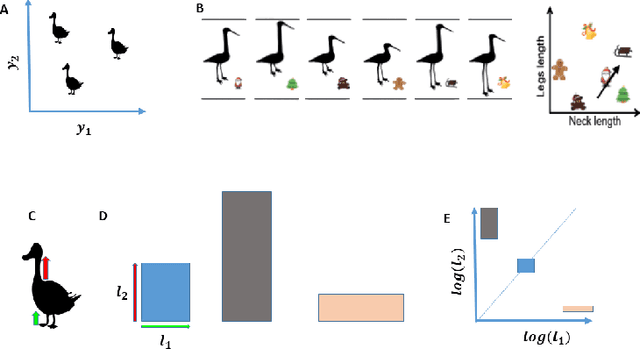
Jan 10, 2026A central problem in machine learning theory is to characterize how learning dynamics select particular solutions among the many compatible with the training objective, a phenomenon, called implicit bias, which remains only partially characterized. In the present work, we identify a general mechanism, in terms of an explicit geometric correction of the learning dynamics, for the emergence of implicit biases, arising from the interaction between continuous symmetries in the model's parametrization and stochasticity in the optimization process. Our viewpoint is constructive in two complementary directions: given model symmetries, one can derive the implicit bias they induce; conversely, one can inverse-design a wide class of different implicit biases by computing specific redundant parameterizations. More precisely, we show that, when the dynamics is expressed in the quotient space obtained by factoring out the symmetry group of the parameterization, the resulting stochastic differential equation gains a closed form geometric correction in the stationary distribution of the optimizer dynamics favoring orbits with small local volume. We compute the resulting symmetry induced bias for a range of architectures, showing how several well known results fit into a single unified framework. The approach also provides a practical methodology for deriving implicit biases in new settings, and it yields concrete, testable predictions that we confirm by numerical simulations on toy models trained on synthetic data, leaving more complex scenarios for future work. Finally, we test the implicit bias inverse-design procedure in notable cases, including biases toward sparsity in linear features or in spectral properties of the model parameters.
The Spectral Bias of Shallow Neural Network Learning is Shaped by the Choice of Non-linearity
Mar 13, 2025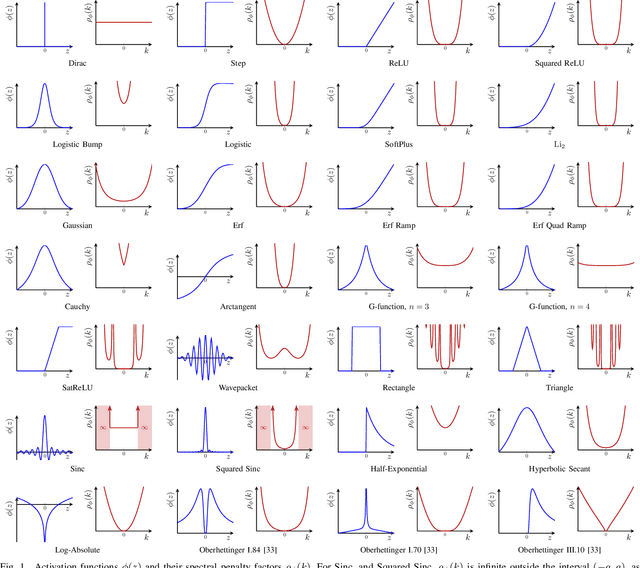

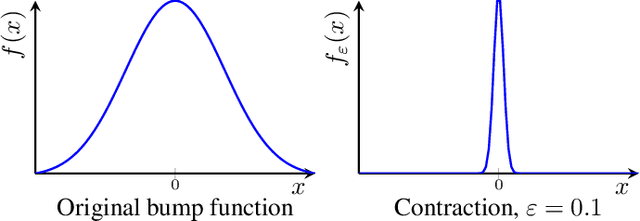
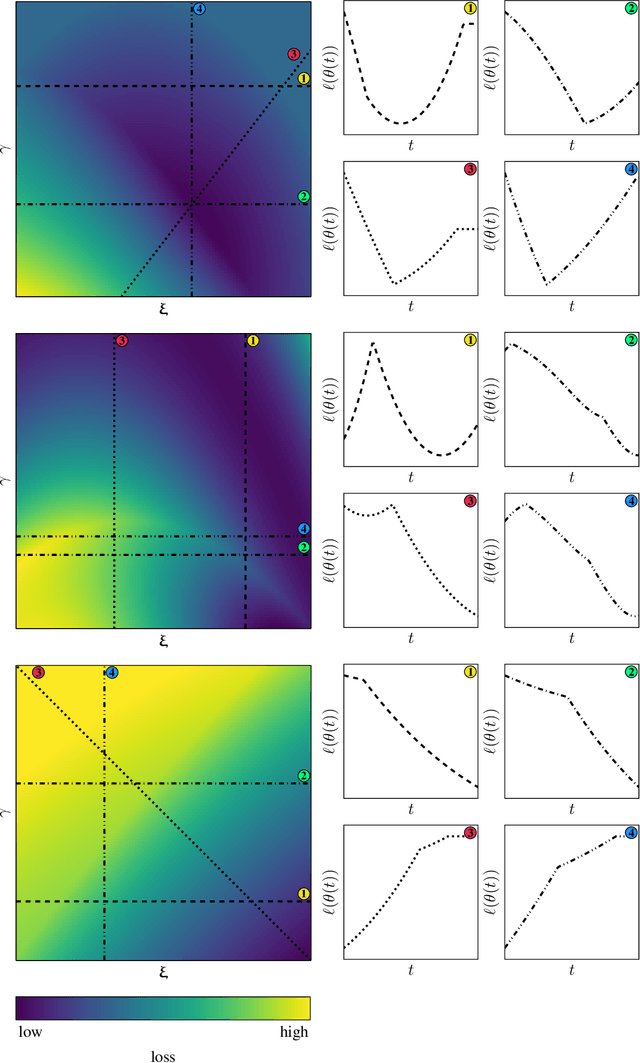
Despite classical statistical theory predicting severe overfitting, modern massively overparameterized neural networks still generalize well. This unexpected property is attributed to the network's so-called implicit bias, which describes its propensity to converge to solutions that generalize effectively, among the many possible that correctly label the training data. The aim of our research is to explore this bias from a new perspective, focusing on how non-linear activation functions contribute to shaping it. First, we introduce a reparameterization which removes a continuous weight rescaling symmetry. Second, in the kernel regime, we leverage this reparameterization to generalize recent findings that relate shallow Neural Networks to the Radon transform, deriving an explicit formula for the implicit bias induced by a broad class of activation functions. Specifically, by utilizing the connection between the Radon transform and the Fourier transform, we interpret the kernel regime's inductive bias as minimizing a spectral seminorm that penalizes high-frequency components, in a manner dependent on the activation function. Finally, in the adaptive regime, we demonstrate the existence of local dynamical attractors that facilitate the formation of clusters of hyperplanes where the input to a neuron's activation function is zero, yielding alignment between many neurons' response functions. We confirm these theoretical results with simulations. All together, our work provides a deeper understanding of the mechanisms underlying the generalization capabilities of overparameterized neural networks and its relation with the implicit bias, offering potential pathways for designing more efficient and robust models.
Intrinsic Dimension Correlation: uncovering nonlinear connections in multimodal representations
Jun 22, 2024To gain insight into the mechanisms behind machine learning methods, it is crucial to establish connections among the features describing data points. However, these correlations often exhibit a high-dimensional and strongly nonlinear nature, which makes them challenging to detect using standard methods. This paper exploits the entanglement between intrinsic dimensionality and correlation to propose a metric that quantifies the (potentially nonlinear) correlation between high-dimensional manifolds. We first validate our method on synthetic data in controlled environments, showcasing its advantages and drawbacks compared to existing techniques. Subsequently, we extend our analysis to large-scale applications in neural network representations. Specifically, we focus on latent representations of multimodal data, uncovering clear correlations between paired visual and textual embeddings, whereas existing methods struggle significantly in detecting similarity. Our results indicate the presence of highly nonlinear correlation patterns between latent manifolds.
Local Search, Semantics, and Genetic Programming: a Global Analysis
May 26, 2023Geometric Semantic Geometric Programming (GSGP) is one of the most prominent Genetic Programming (GP) variants, thanks to its solid theoretical background, the excellent performance achieved, and the execution time significantly smaller than standard syntax-based GP. In recent years, a new mutation operator, Geometric Semantic Mutation with Local Search (GSM-LS), has been proposed to include a local search step in the mutation process based on the idea that performing a linear regression during the mutation can allow for a faster convergence to good-quality solutions. While GSM-LS helps the convergence of the evolutionary search, it is prone to overfitting. Thus, it was suggested to use GSM-LS only for a limited number of generations and, subsequently, to switch back to standard geometric semantic mutation. A more recently defined variant of GSGP (called GSGP-reg) also includes a local search step but shares similar strengths and weaknesses with GSM-LS. Here we explore multiple possibilities to limit the overfitting of GSM-LS and GSGP-reg, ranging from adaptive methods to estimate the risk of overfitting at each mutation to a simple regularized regression. The results show that the method used to limit overfitting is not that important: providing that a technique to control overfitting is used, it is possible to consistently outperform standard GSGP on both training and unseen data. The obtained results allow practitioners to better understand the role of local search in GSGP and demonstrate that simple regularization strategies are effective in controlling overfitting.
Relating Implicit Bias and Adversarial Attacks through Intrinsic Dimension
May 24, 2023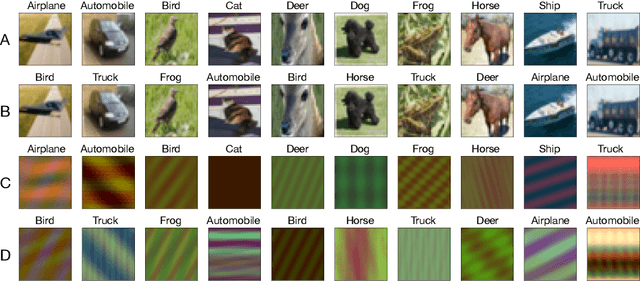
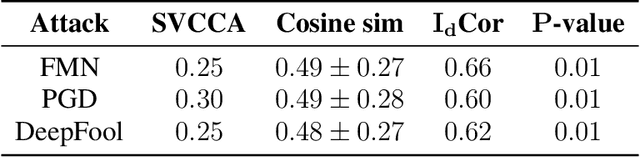
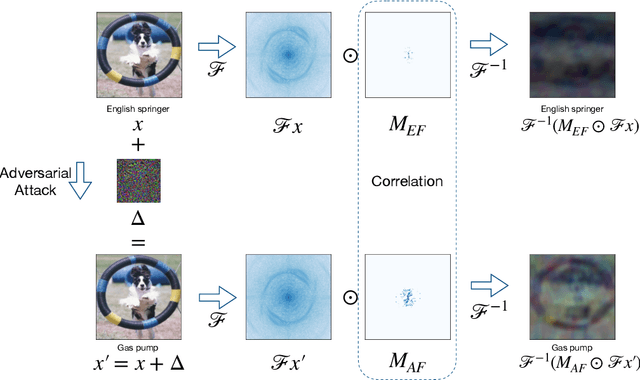
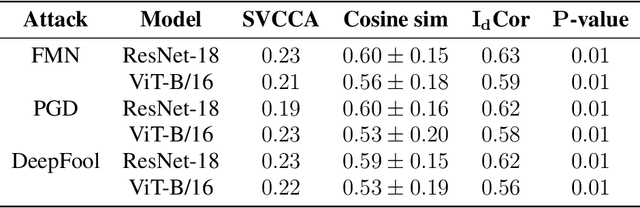
Despite their impressive performance in classification, neural networks are known to be vulnerable to adversarial attacks. These attacks are small perturbations of the input data designed to fool the model. Naturally, a question arises regarding the potential connection between the architecture, settings, or properties of the model and the nature of the attack. In this work, we aim to shed light on this problem by focusing on the implicit bias of the neural network, which refers to its inherent inclination to favor specific patterns or outcomes. Specifically, we investigate one aspect of the implicit bias, which involves the essential Fourier frequencies required for accurate image classification. We conduct tests to assess the statistical relationship between these frequencies and those necessary for a successful attack. To delve into this relationship, we propose a new method that can uncover non-linear correlations between sets of coordinates, which, in our case, are the aforementioned frequencies. By exploiting the entanglement between intrinsic dimension and correlation, we provide empirical evidence that the network bias in Fourier space and the target frequencies of adversarial attacks are closely tied.
Understanding robustness and generalization of artificial neural networks through Fourier masks
Mar 16, 2022
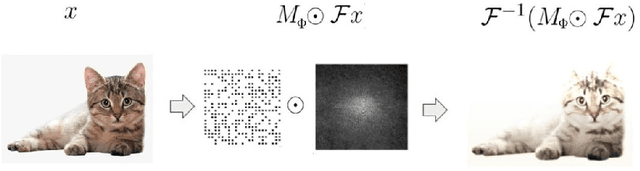
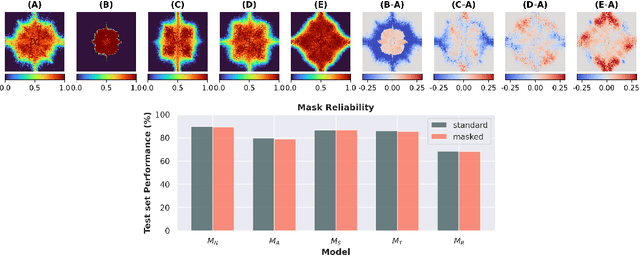
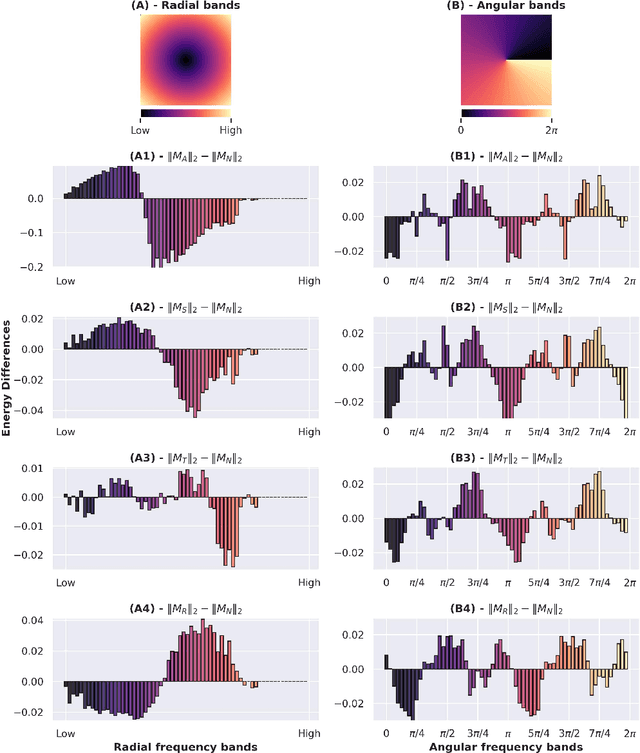
Despite the enormous success of artificial neural networks (ANNs) in many disciplines, the characterization of their computations and the origin of key properties such as generalization and robustness remain open questions. Recent literature suggests that robust networks with good generalization properties tend to be biased towards processing low frequencies in images. To explore the frequency bias hypothesis further, we develop an algorithm that allows us to learn modulatory masks highlighting the essential input frequencies needed for preserving a trained network's performance. We achieve this by imposing invariance in the loss with respect to such modulations in the input frequencies. We first use our method to test the low-frequency preference hypothesis of adversarially trained or data-augmented networks. Our results suggest that adversarially robust networks indeed exhibit a low-frequency bias but we find this bias is also dependent on directions in frequency space. However, this is not necessarily true for other types of data augmentation. Our results also indicate that the essential frequencies in question are effectively the ones used to achieve generalization in the first place. Surprisingly, images seen through these modulatory masks are not recognizable and resemble texture-like patterns.
A computational model for grid maps in neural populations
Feb 19, 2019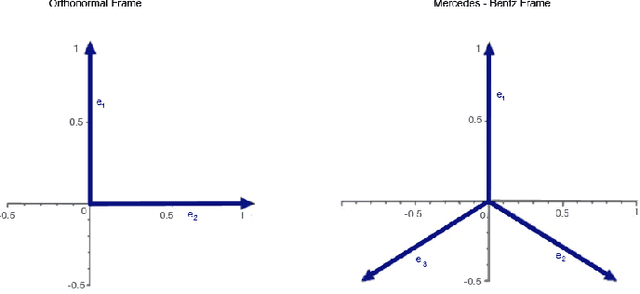
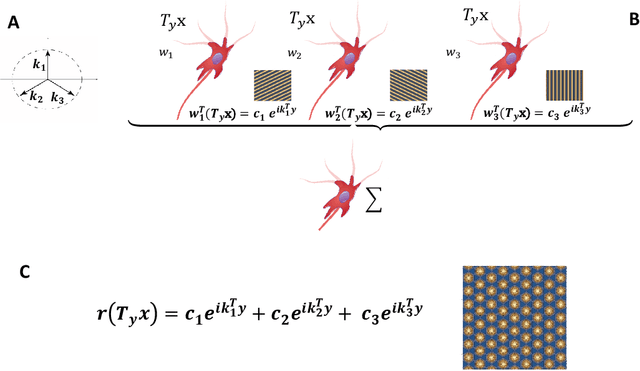
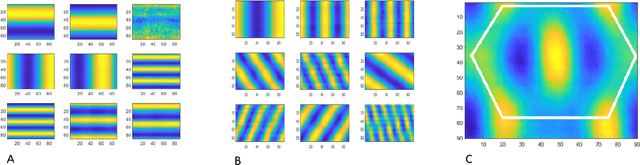
Grid cells in the entorhinal cortex, together with place, speed and border cells, are major contributors to the organization of spatial representations in the brain. In this contribution we introduce a novel theoretical and algorithmic framework able to explain the emergence of hexagonal grid-like response patterns from the statistics of the input stimuli. We show that this pattern is a result of minimal variance encoding of neurons. The novelty lies into the formulation of the encoding problem through the modern Frame Theory language, specifically that of equiangular Frames, providing new insights about the optimality of hexagonal grid receptive fields. The model proposed overcomes some crucial limitations of the current attractor and oscillatory models. It is based on the well-accepted and tested hypothesis of Hebbian learning, providing a simplified cortical-based framework that does not require the presence of theta velocity-driven oscillations (oscillatory model) or translational symmetries in the synaptic connections (attractor model). We moreover demonstrate that the proposed encoding mechanism naturally maps shifts, rotations and scaling of the stimuli onto the shape of grid cells' receptive fields, giving a straightforward explanation of the experimental evidence of grid cells remapping under transformations of environmental cues.