 Add to Chrome
 Add to Firefox
 Add to Edge
From Wearable Data to Personalized and Actionable Health Insights
Aug 04, 2026
Commercial wearable devices continuously capture rich physiological data (e.g., heart rate, respiration), opening new possibilities for monitoring health conditions, notably around stress. Despite their promise, turning raw wearable physiological data streams into visualizations that surface stress-related insights in daily activities, and that ultimately foster reflection, awareness, and better stress management, remains a significant challenge. The data are noisy and context-dependent: the same spike in heart rate can come from sprinting, a tense presentation, or laughing with friends. To address these challenges, we propose a framework that combines user annotations with wearable data to support better stress management. We introduce a web framework offering interactive visualizations that layer daily activities, stress events, and interventions onto raw physiological streams, enabling users to reflect and identify trends. In a four-week pilot with seven university graduate and undergraduate student participants who logged 269 events, our tool revealed patterns between different types of interventions and stress: social interaction reduced average heart rate by 4.35 to 5.0 beats per minute, deliberate rest reduced average Garmin stress scores by 10.03 to 13.83 points, and mindfulness activities decreased average HRV by 6.61 to 13.22 milliseconds.

Personalized and Context-Aware Transformer Models for Predicting Post-Intervention Physiological Responses from Wearable Sensor Data
Apr 16, 2026Consumer wearables enable continuous measurement of physiological data related to stress and recovery, but turning these streams into actionable, personalized stress-management recommendations remains a challenge. In practice, users often do not know how a given intervention, defined as an activity intended to reduce stress, will affect heart rate (HR), heart rate variability (HRV), or inter-beat intervals (BBI) over the next 15 to 120 minutes. We present a framework that predicts post-intervention trajectories and the direction of change for these physiological indicators across time windows. Our methodology combines a Transformer model for multi-horizon trajectories of percent change relative to a pre-intervention baseline, direction-of-change calls (positive, negative, or neutral) at each horizon, and an empirical study using wearable sensor data overlaid with user-tagged events and interventions. This proof of concept shows that personalized post-intervention prediction is feasible. We encourage future integration into stress-management tools for personalized intervention recommendations tailored to each person's day following further validation in larger studies and, where applicable, appropriate regulatory review.
A Sim2Real Approach for Identifying Task-Relevant Properties in Interpretable Machine Learning
May 31, 2024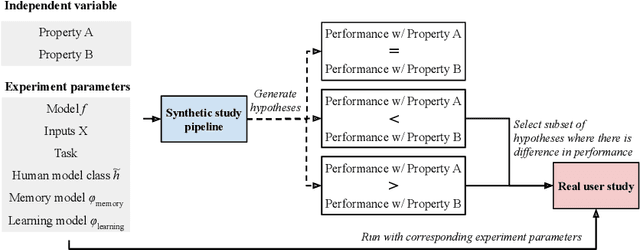
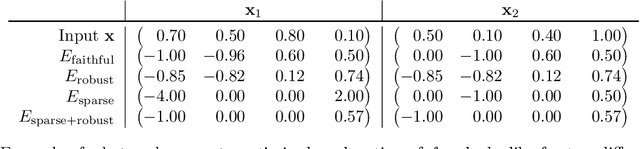
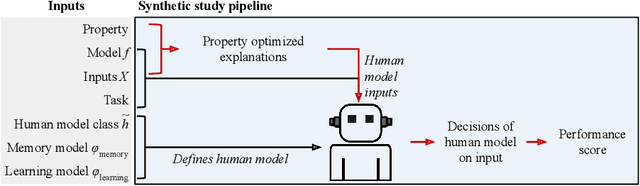
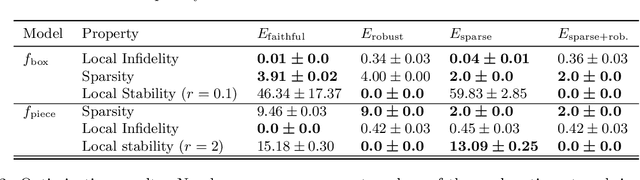
Existing user studies suggest that different tasks may require explanations with different properties. However, user studies are expensive. In this paper, we introduce a generalizable, cost-effective method for identifying task-relevant explanation properties in silico, which can guide the design of more expensive user studies. We use our approach to identify relevant proxies for three example tasks and validate our simulation with real user studies.