 Add to Chrome
 Add to Firefox
 Add to Edge
Co-Existence of Private 5G Network and Wireless Hospital Systems
Dec 24, 2025
This paper investigates the feasibility of deploying private 5G networks in hospital environments, with a focus on the operating room at the brand new Oulu University Hospital, Finland. The study aims to evaluate the interference risk with other wireless systems, and electromagnetic safety of a private 5G network in the 3.9-4.1 GHz band, while ensuring compatibility with legacy wireless systems, such as LTE and Wi-Fi. We conducted a measurement campaign, employing state-of-the-art instrumentation and a methodology that combined high resolution and long-duration spectrum scans. The results demonstrate no measurable interference between the hospital's private 5G network with adjacent LTE (4G) or Wi-Fi bands, confirming the spectral isolation of the 5G transmissions, and vise versa. Additionally, RF exposure levels in the operating room were found to be well below ICNIRP, WHO, and IEEE safety thresholds, ensuring that the network poses negligible biological risk to patients and hospital staff. The study also proposes spectrum management strategies for private 5G networks in hospitals, focusing on adaptive sensing and guardband planning. These findings provide a solid foundation for the integration of private 5G infrastructure in hospitals environments, supporting digital transformation in patient care without compromising electromagnetic compatibility or patient safety. The results also contribute to ongoing discussions around private 5G network deployments in sensitive sectors and provide actionable guidelines for future hospitals' wireless systems planning.

6G Resilience -- White Paper
Sep 10, 2025
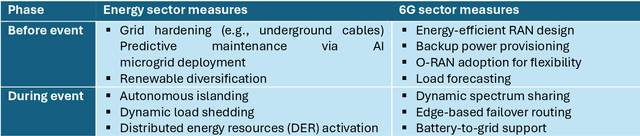


6G must be designed to withstand, adapt to, and evolve amid prolonged, complex disruptions. Mobile networks' shift from efficiency-first to sustainability-aware has motivated this white paper to assert that resilience is a primary design goal, alongside sustainability and efficiency, encompassing technology, architecture, and economics. We promote resilience by analysing dependencies between mobile networks and other critical systems, such as energy, transport, and emergency services, and illustrate how cascading failures spread through infrastructures. We formalise resilience using the 3R framework: reliability, robustness, resilience. Subsequently, we translate this into measurable capabilities: graceful degradation, situational awareness, rapid reconfiguration, and learning-driven improvement and recovery. Architecturally, we promote edge-native and locality-aware designs, open interfaces, and programmability to enable islanded operations, fallback modes, and multi-layer diversity (radio, compute, energy, timing). Key enablers include AI-native control loops with verifiable behaviour, zero-trust security rooted in hardware and supply-chain integrity, and networking techniques that prioritise critical traffic, time-sensitive flows, and inter-domain coordination. Resilience also has a techno-economic aspect: open platforms and high-quality complementors generate ecosystem externalities that enhance resilience while opening new markets. We identify nine business-model groups and several patterns aligned with the 3R objectives, and we outline governance and standardisation. This white paper serves as an initial step and catalyst for 6G resilience. It aims to inspire researchers, professionals, government officials, and the public, providing them with the essential components to understand and shape the development of 6G resilience.
Challenges of AI in Wireless Networks for IoT
Jul 09, 2020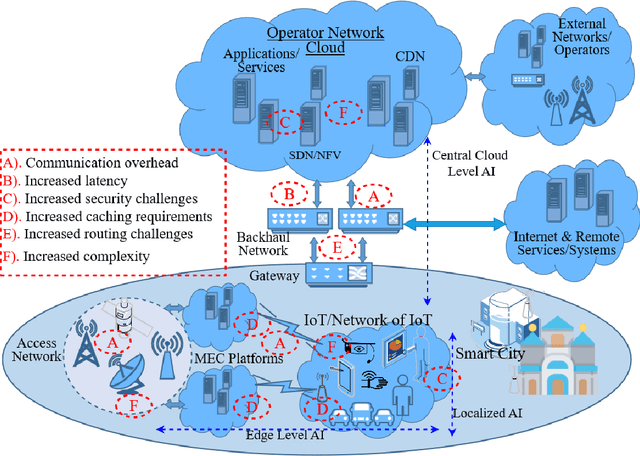
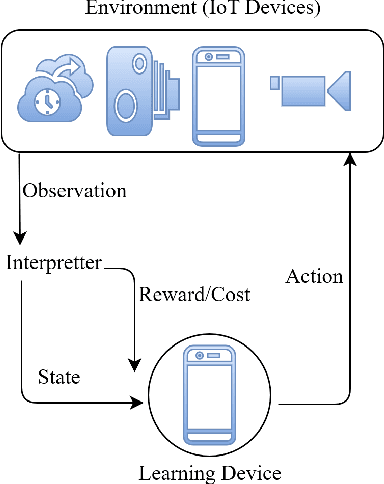
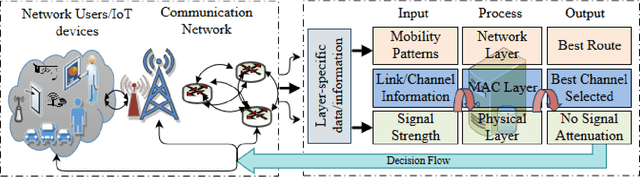
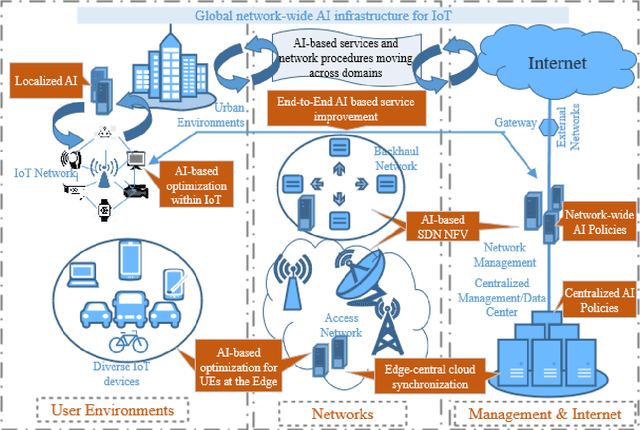
The Internet of Things (IoT), hailed as the enabler of the next industrial revolution, will require ubiquitous connectivity, context-aware and dynamic service mobility, and extreme security through the wireless network infrastructure. Artificial Intelligence (AI), thus, will play a major role in the underlying network infrastructure. However, a number of challenges will surface while using the concepts, tools and algorithms of AI in wireless networks used by IoT. In this article, the main challenges in using AI in the wireless network infrastructure that facilitate end-to-end IoT communication are highlighted with potential generalized solution and future research directions.