 Add to Chrome
 Add to Firefox
 Add to Edge
High-Precision APT Malware Attribution with Out-of-Scope Resilience
Jun 02, 2026
Early attribution of Advanced Persistent Threat (APT) activity can help defenders prioritise investigation, select countermeasures, and reduce the impact of an intrusion. Malware provides useful attribution evidence, but automated APT malware attribution remains difficult in practice. Existing approaches are typically trained and evaluated as closed-set classifiers over a limited number of known APT groups. In operational environments, however, classifiers are likely to encounter samples from groups not represented during training. Closed-set classifiers are then forced to assign such samples to known groups, producing unsupported and potentially misleading attributions. We present a high-precision APT malware attribution method based on ranked binary classifiers with explicit abstention. Rather than training a single multi-class classifier, our approach trains and tunes two binary classifiers per APT group, ranks the classifiers by validation performance, and applies them sequentially. A sample is attributed only when a classifier provides sufficient evidence; otherwise, it abstains. We evaluate the method on the APT Malware dataset and on a larger combined dataset designed to stress-test out-of-scope behaviour. On the APT Malware dataset, the method achieves higher precision than previously published results on the same dataset. In the most challenging setting, where 87% of test samples came from 60 APT groups excluded from training, the method abstained on 94% of out-of-scope samples while maintaining 92% precision and 95% selective accuracy on the samples it classified.

AttackER: Towards Enhancing Cyber-Attack Attribution with a Named Entity Recognition Dataset
Aug 09, 2024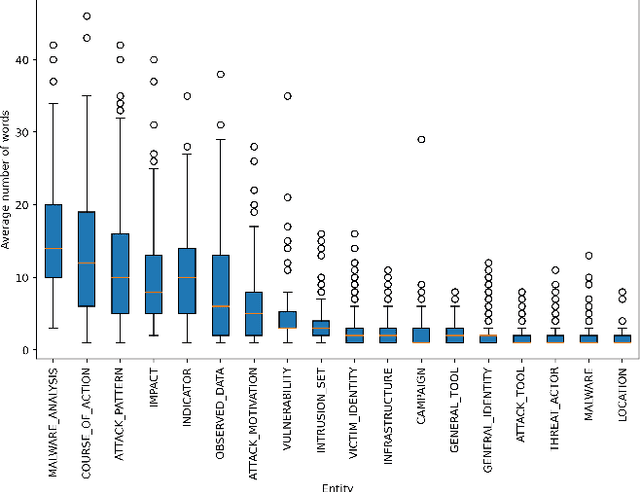
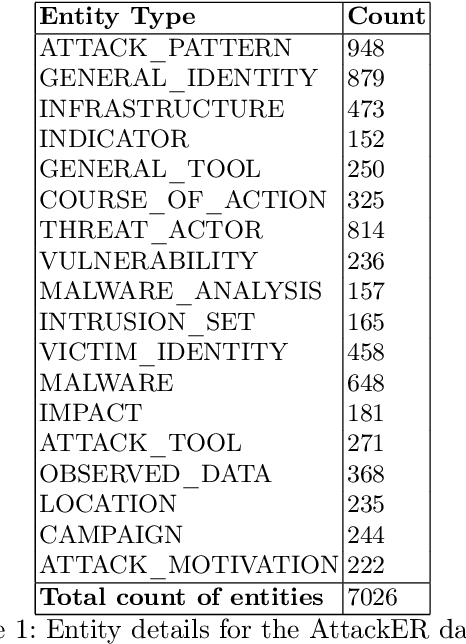
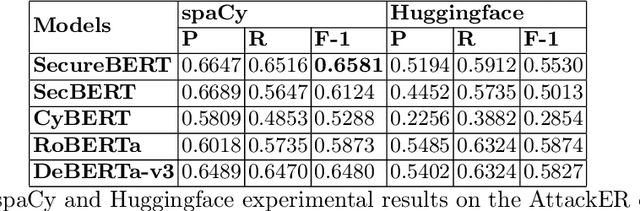
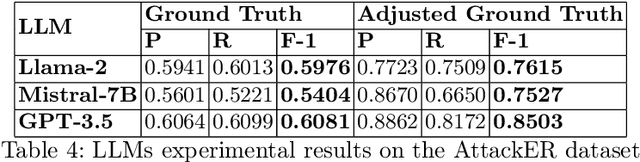
Cyber-attack attribution is an important process that allows experts to put in place attacker-oriented countermeasures and legal actions. The analysts mainly perform attribution manually, given the complex nature of this task. AI and, more specifically, Natural Language Processing (NLP) techniques can be leveraged to support cybersecurity analysts during the attribution process. However powerful these techniques are, they need to deal with the lack of datasets in the attack attribution domain. In this work, we will fill this gap and will provide, to the best of our knowledge, the first dataset on cyber-attack attribution. We designed our dataset with the primary goal of extracting attack attribution information from cybersecurity texts, utilizing named entity recognition (NER) methodologies from the field of NLP. Unlike other cybersecurity NER datasets, ours offers a rich set of annotations with contextual details, including some that span phrases and sentences. We conducted extensive experiments and applied NLP techniques to demonstrate the dataset's effectiveness for attack attribution. These experiments highlight the potential of Large Language Models (LLMs) capabilities to improve the NER tasks in cybersecurity datasets for cyber-attack attribution.
An Argumentation-Based Approach to Assist in the Investigation and Attribution of Cyber-Attacks
Apr 30, 2019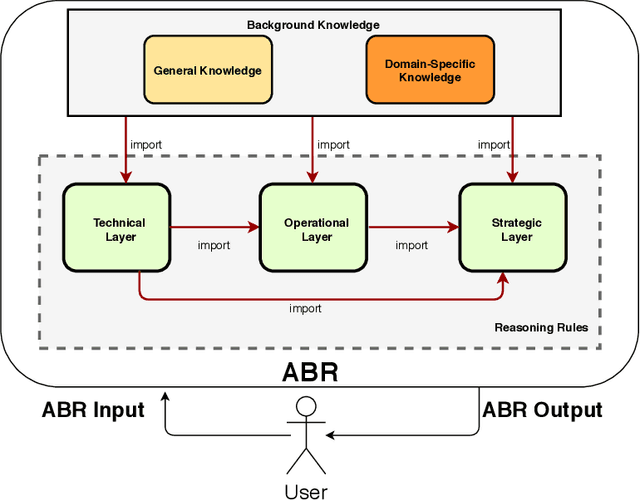
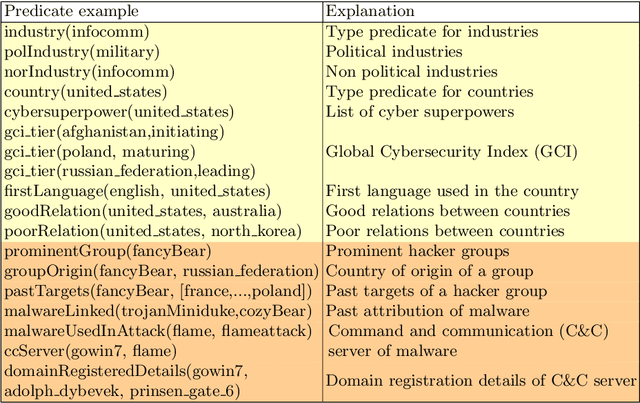
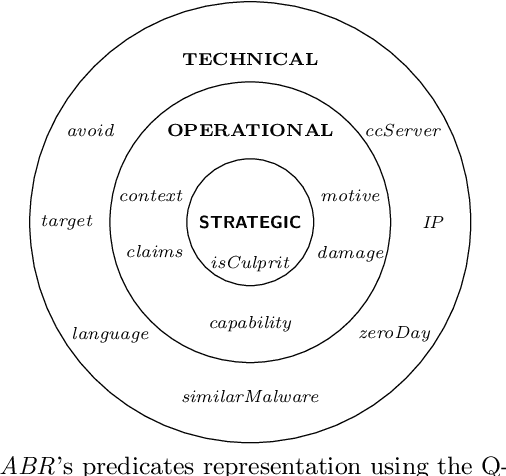
We expect an increase in frequency and severity of cyber-attacks that comes along with the need of efficient security countermeasures. The process of attributing a cyber-attack helps in constructing efficient and targeted mitigative and preventive security measures. In this work, we propose an argumentation-based reasoner (ABR) that helps the analyst during the analysis of forensic evidence and the attribution process. Given the evidence collected from the cyber-attack, our reasoner helps the analyst to identify who performed the attack and suggests the analyst where to focus further analyses by giving hints of the missing evidence, or further investigation paths to follow. ABR is the first automatic reasoner that analyzes and attributes cyber-attacks by using technical and social evidence, as well as incomplete and conflicting information. ABR was tested on realistic cyber-attacks cases.
Argumentation-based Security for Social Good
May 01, 2017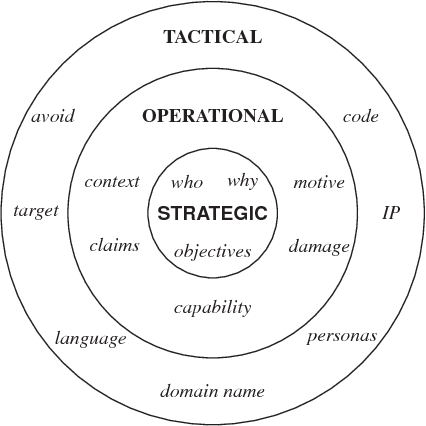
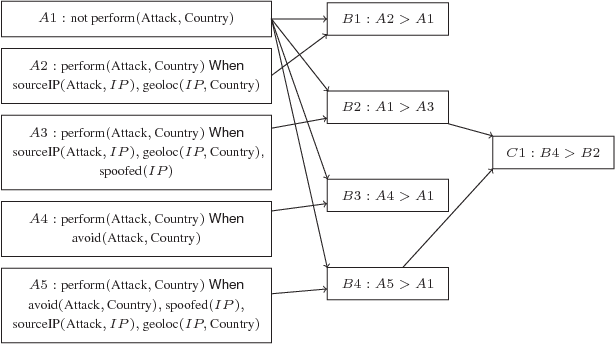
The increase of connectivity and the impact it has in every day life is raising new and existing security problems that are becoming important for social good. We introduce two particular problems: cyber attack attribution and regulatory data sharing. For both problems, decisions about which rules to apply, should be taken under incomplete and context dependent information. The solution we propose is based on argumentation reasoning, that is a well suited technique for implementing decision making mechanisms under conflicting and incomplete information. Our proposal permits us to identify the attacker of a cyber attack and decide the regulation rule that should be used while using and sharing data. We illustrate our solution through concrete examples.