 Add to Chrome
 Add to Firefox
 Add to Edge
Sequential and Generative Models for Vehicular Distributed MIMO Channel Prediction
Jun 24, 2026
Vehicular communication is a key 6G use case requiring reliable and high-capacity connectivity under fast mobility and highly time-varying propagation conditions. However, large-scale vehicular channel estimation is costly and limited, impacting system-level performance of vehicular communications, and realistic channel prediction models are needed. This paper proposes a vehicular channel prediction framework based on real measured urban channels collected through a dedicated measurement campaign using the MaMIMOSA channel sounder. The framework enables the training and systematic benchmarking of sequential and generative models for both single-step and multi-horizon vehicular channel state information (CSI) prediction to assess prediction robustness across different forecasting horizons, including LSTM, TCN, a CNN-enhanced Transformer, and ChannelGPT, with the goal of accurately predicting channel evolution while preserving spatiotemporal dynamics and non-stationarity. In addition, a system-level evaluation framework is introduced to assess the impact of channel prediction on the performance of vehicular distributed MIMO communications. Using predicted channels, spectral efficiency (SE) is evaluated against true CSI. Results show that ChannelGPT achieves over 94% normalized mean squared error (NMSE) reduction compared to LSTM and significant improvements over other baselines, while reducing FLOPs by 28% and inference latency by 39% relative to the CNN + Transformer. Moreover, ChannelGPT-predicted channels yield SE distributions nearly indistinguishable from those obtained with real measurements, demonstrating its effectiveness for reliable performance evaluation in high-mobility 6G vehicular networks.

Automated Planning for Optimal Data Pipeline Instantiation
Mar 16, 2025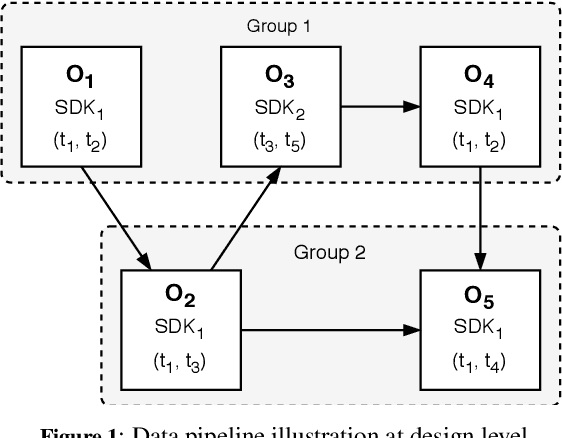
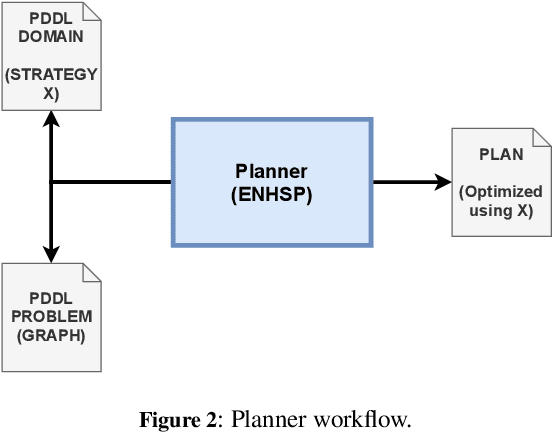
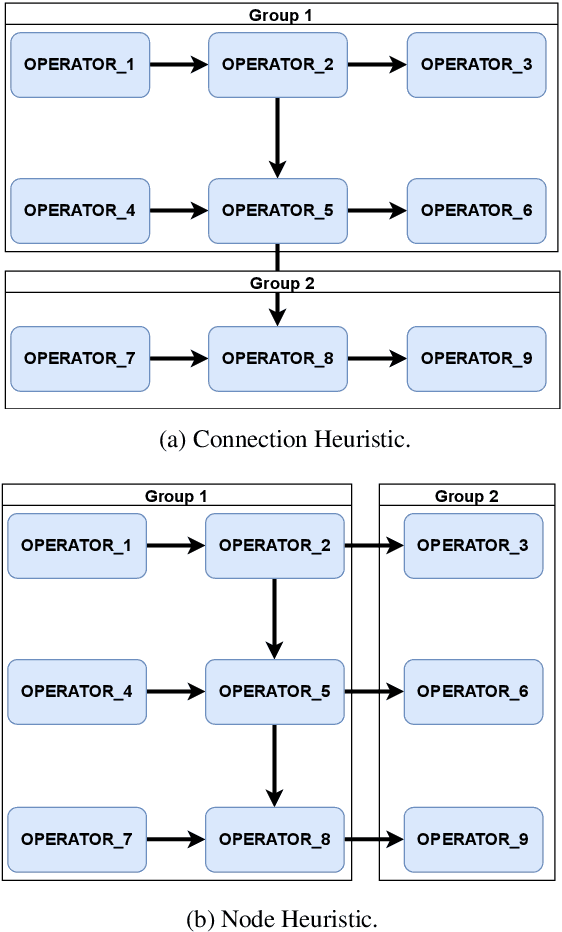
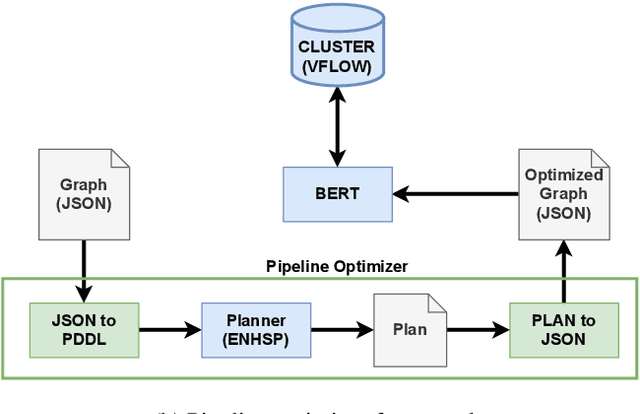
Data pipeline frameworks provide abstractions for implementing sequences of data-intensive transformation operators, automating the deployment and execution of such transformations in a cluster. Deploying a data pipeline, however, requires computing resources to be allocated in a data center, ideally minimizing the overhead for communicating data and executing operators in the pipeline while considering each operator's execution requirements. In this paper, we model the problem of optimal data pipeline deployment as planning with action costs, where we propose heuristics aiming to minimize total execution time. Experimental results indicate that the heuristics can outperform the baseline deployment and that a heuristic based on connections outperforms other strategies.
A Meta-level Analysis of Online Anomaly Detectors
Sep 13, 2022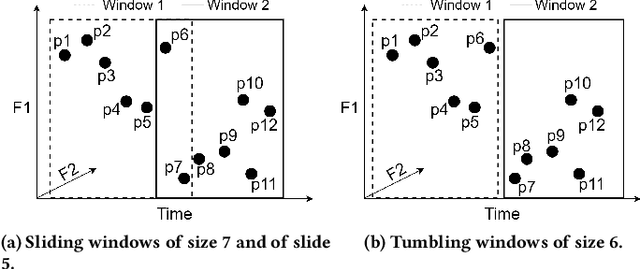
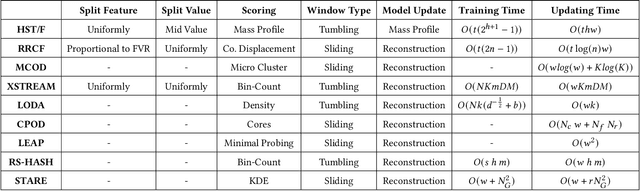
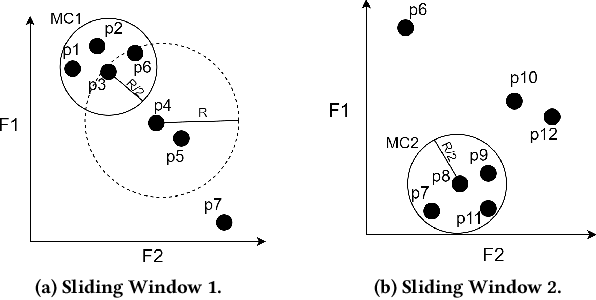
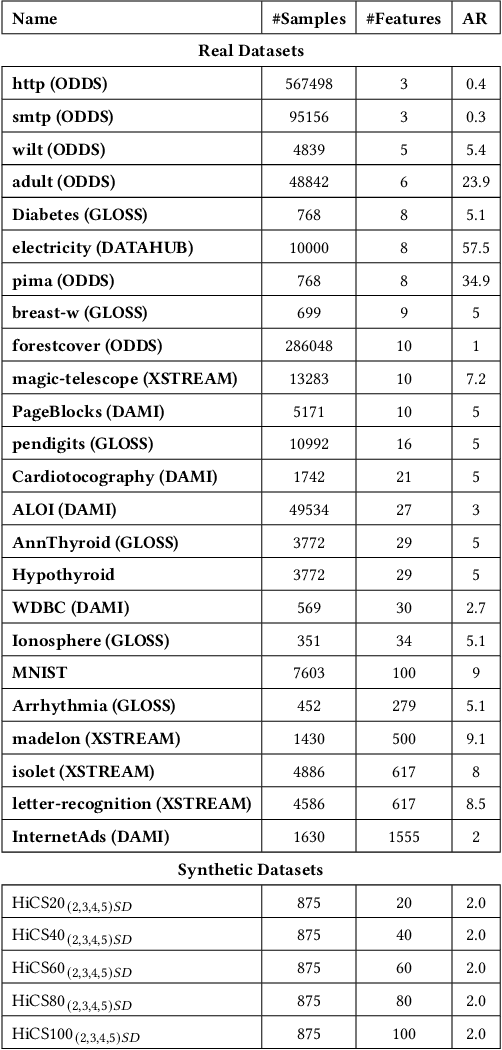
Real-time detection of anomalies in streaming data is receiving increasing attention as it allows us to raise alerts, predict faults, and detect intrusions or threats across industries. Yet, little attention has been given to compare the effectiveness and efficiency of anomaly detectors for streaming data (i.e., of online algorithms). In this paper, we present a qualitative, synthetic overview of major online detectors from different algorithmic families (i.e., distance, density, tree or projection-based) and highlight their main ideas for constructing, updating and testing detection models. Then, we provide a thorough analysis of the results of a quantitative experimental evaluation of online detection algorithms along with their offline counterparts. The behavior of the detectors is correlated with the characteristics of different datasets (i.e., meta-features), thereby providing a meta-level analysis of their performance. Our study addresses several missing insights from the literature such as (a) how reliable are detectors against a random classifier and what dataset characteristics make them perform randomly; (b) to what extent online detectors approximate the performance of offline counterparts; (c) which sketch strategy and update primitives of detectors are best to detect anomalies visible only within a feature subspace of a dataset; (d) what are the tradeoffs between the effectiveness and the efficiency of detectors belonging to different algorithmic families; (e) which specific characteristics of datasets yield an online algorithm to outperform all others.