 Add to Chrome
 Add to Firefox
 Add to Edge
IslamicTurathBench: A Multi-Task, Multi-Discipline Benchmark for Evaluating Large Language Models on the Islamic Scholarly Tradition (turath)
Aug 05, 2026
Large language models (LLMs) are increasingly used for question answering, education, and research, including in religious and cultural domains where answers depend on specialised source traditions. Yet in Islamic Studies, key concepts, methods, and debates preserved in the authoritative scholarly tradition, known as turath, lack high-quality annotated resources. We introduce IslamicTurathBench (ISTB), a multi-task, multi-discipline dataset for evaluating LLMs on classical Islamic scholarship. Developed and reviewed by domain experts, ISTB contains 3,465 question-answer items drawn from 35 recognised source works spanning more than 12 centuries of scholarship across seven key fields of Islamic Studies. To enable comprehensive profiling of model capabilities, ISTB is structured along two axes: scholarly demand (Beginner, Intermediate, and Advanced) and task format (multiple-choice questions, passage-based comprehension, and open-ended knowledge questions). ISTB includes aggregated scores from a scholarly human reference panel and zero-shot baselines from ten systems. The dataset supports reproducible evaluation of language-model behaviour across source works, disciplines, scholarly-demand levels, and question formats in a historically layered scholarly domain.

HalluTruthQA: A Fine-Grained Benchmark for Hallucination Detection, Localization, and Explanation in Arabic Question Answering
Jul 22, 2026Large language models (LLMs) can generate fluent Arabic answers, yet factual errors remain difficult to detect, localize, explain, and verify. Existing hallucination benchmarks often provide response-level labels, with limited support for identifying the exact erroneous content, explaining why it is incorrect, or selecting the correct factual answer. We introduce \textsc{HalluTruthQA}, a fine-grained benchmark for hallucination evaluation in Arabic question answering. The benchmark contains 2,400 expert-curated examples across four knowledge-intensive domains: Islamic knowledge, history, science, and geography. Each example pairs an Arabic question and a model-generated answer with a verified reference answer, a binary hallucination label, six candidate answers for factual verification, and, for hallucinated answers, character-level erroneous spans, human-written explanations, and macro and micro hallucination types. We evaluate four open-source LLMs, \textsc{Allam}, \textsc{Falcon-H1}, \textsc{Qwen32}, and \textsc{Silma}, in a zero-shot setting across hallucination detection, span-level localization, factual verification, and explanation evaluation. Results show that these tasks capture different abilities: no single model achieves the strongest performance across all tasks, with best scores of 0.880 Macro-F1 for detection, 0.516 F1-Sp for localization, 0.852 LO-Score for factual verification, and 0.644 final score for explanation evaluation. Our taxonomy shows that hallucination evaluation should move beyond detection toward localizing, verifying, and explaining factual errors. The code, dataset, prompts, and evaluation scripts are available at https://gitlab.com/nlpresearcher/HalluTruthQA.
QIAS 2026: Overview of the Shared Task on Islamic Inheritance Reasoning
Jun 11, 2026This paper presents a comprehensive overview of the QIAS 2026 shared task, organized as part of the OSACT7 Workshop and co-located with LREC 2026. The shared task was designed to evaluate the ability of large language models to perform complex reasoning in the religious and legal domain of Islamic inheritance. Unlike conventional question-answering benchmarks, QIAS 2026 focuses on end-to-end reasoning from natural language cases, requiring systems to perform the full inheritance calculation process, from identifying the eligible heirs to assigning the correct share to each beneficiary. To support this evaluation, the task was based on the MAWARITH benchmark, a dataset of $12{,}500$ Arabic inheritance cases annotated with intermediate reasoning steps and final answers. System submissions were evaluated using MIR-E, a multi-step metric that measures performance across the main stages of inheritance reasoning. A total of $16$ teams participated in the shared task, investigating a range of approaches, including prompting-based methods, retrieval-augmented generation, and fine-tuning strategies. The results show that Islamic inheritance remains a highly challenging benchmark for current language models, especially in stages that require precise legal interpretation and structured numerical reasoning. This overview summarizes the task design, dataset, evaluation framework, participating systems, and main results.
Automating Sonologists USG Commands with AI and Voice Interface
Nov 20, 2024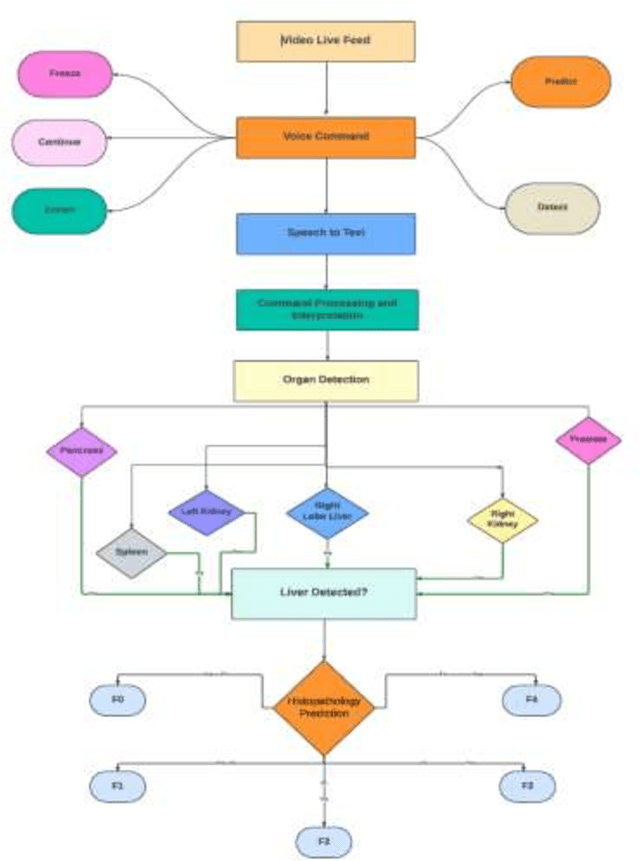
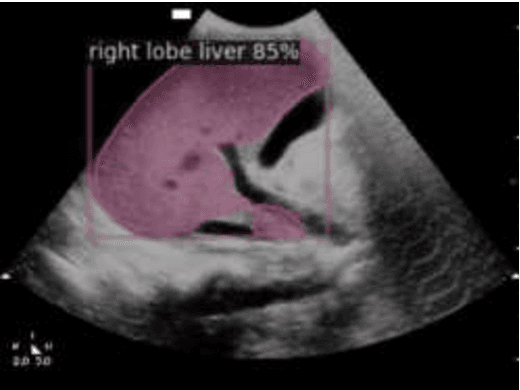
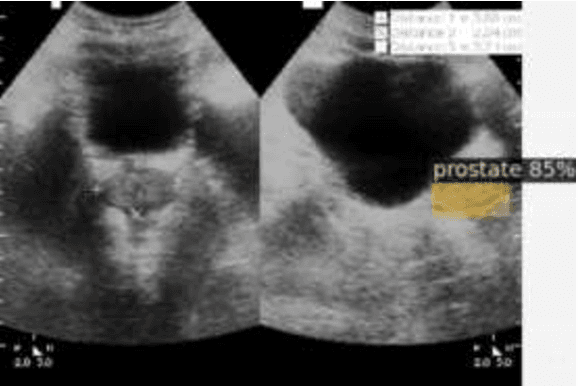
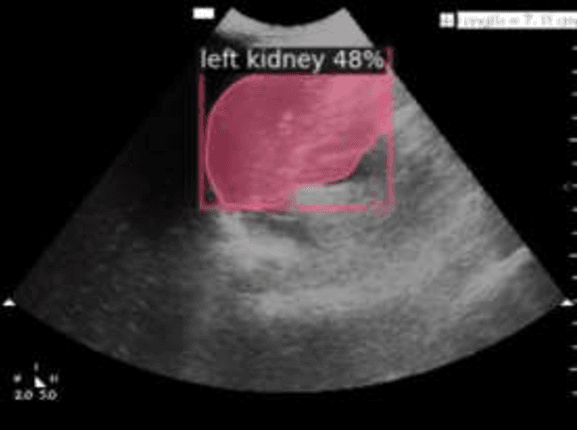
This research presents an advanced AI-powered ultrasound imaging system that incorporates real-time image processing, organ tracking, and voice commands to enhance the efficiency and accuracy of diagnoses in clinical practice. Traditional ultrasound diagnostics often require significant time and introduce a degree of subjectivity due to user interaction. The goal of this innovative solution is to provide Sonologists with a more predictable and productive imaging procedure utilizing artificial intelligence, computer vision, and voice technology. The functionality of the system employs computer vision and deep learning algorithms, specifically adopting the Mask R-CNN model from Detectron2 for semantic segmentation of organs and key landmarks. This automation improves diagnostic accuracy by enabling the extraction of valuable information with minimal human input. Additionally, it includes a voice recognition feature that allows for hands-free operation, enabling users to control the system with commands such as freeze or liver, all while maintaining their focus on the patient. The architecture comprises video processing and real-time segmentation modules that prepare the system to perform essential imaging functions, such as freezing and zooming in on frames. The liver histopathology module, optimized for detecting fibrosis, achieved an impressive accuracy of 98.6%. Furthermore, the organ segmentation module produces output confidence levels between 50% and 95%, demonstrating its efficacy in organ detection.
Sentiment-Aware Measure (SAM) for Evaluating Sentiment Transfer by Machine Translation Systems
Oct 05, 2021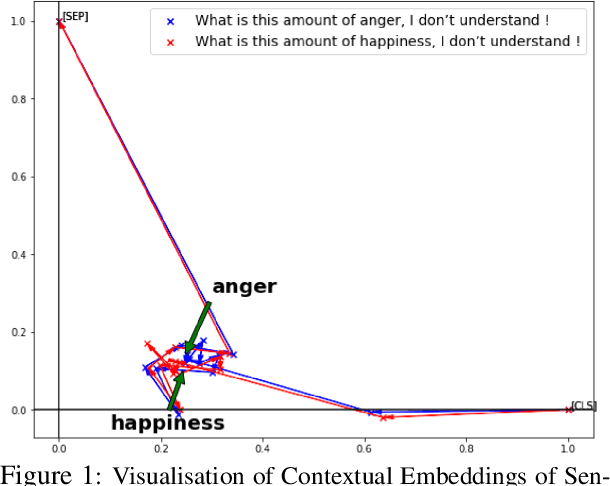

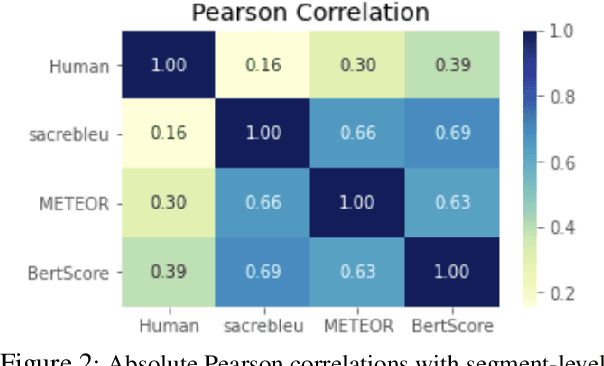
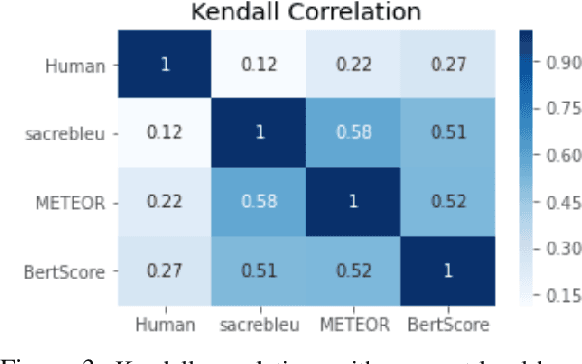
In translating text where sentiment is the main message, human translators give particular attention to sentiment-carrying words. The reason is that an incorrect translation of such words would miss the fundamental aspect of the source text, i.e. the author's sentiment. In the online world, MT systems are extensively used to translate User-Generated Content (UGC) such as reviews, tweets, and social media posts, where the main message is often the author's positive or negative attitude towards the topic of the text. It is important in such scenarios to accurately measure how far an MT system can be a reliable real-life utility in transferring the correct affect message. This paper tackles an under-recognised problem in the field of machine translation evaluation which is judging to what extent automatic metrics concur with the gold standard of human evaluation for a correct translation of sentiment. We evaluate the efficacy of conventional quality metrics in spotting a mistranslation of sentiment, especially when it is the sole error in the MT output. We propose a numerical `sentiment-closeness' measure appropriate for assessing the accuracy of a translated affect message in UGC text by an MT system. We will show that incorporating this sentiment-aware measure can significantly enhance the correlation of some available quality metrics with the human judgement of an accurate translation of sentiment.
* Accepted for RANLP (Recent Advances in Natural Language Processing) 2021
Fake or Real? A Study of Arabic Satirical Fake News
Nov 01, 2020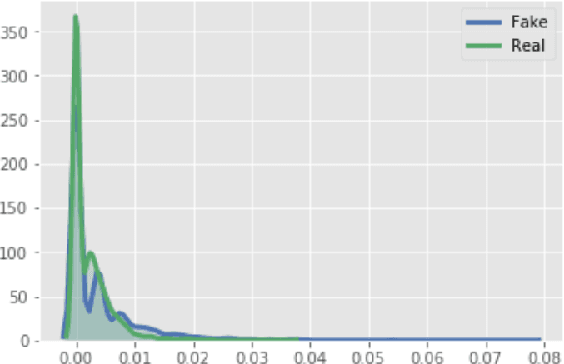
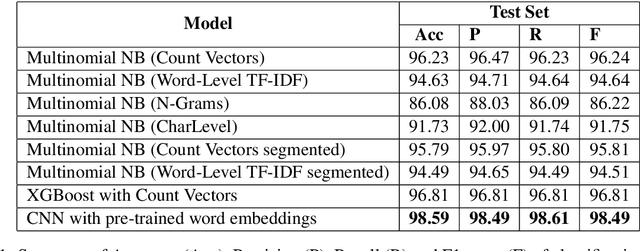
One very common type of fake news is satire which comes in a form of a news website or an online platform that parodies reputable real news agencies to create a sarcastic version of reality. This type of fake news is often disseminated by individuals on their online platforms as it has a much stronger effect in delivering criticism than through a straightforward message. However, when the satirical text is disseminated via social media without mention of its source, it can be mistaken for real news. This study conducts several exploratory analyses to identify the linguistic properties of Arabic fake news with satirical content. We exploit these features to build a number of machine learning models capable of identifying satirical fake news with an accuracy of up to 98.6%.