 Add to Chrome
 Add to Firefox
 Add to Edge
Unknown Aware AI-Generated Content Attribution
Jan 01, 2026
The rapid advancement of photorealistic generative models has made it increasingly important to attribute the origin of synthetic content, moving beyond binary real or fake detection toward identifying the specific model that produced a given image. We study the problem of distinguishing outputs from a target generative model (e.g., OpenAI Dalle 3) from other sources, including real images and images generated by a wide range of alternative models. Using CLIP features and a simple linear classifier, shown to be effective in prior work, we establish a strong baseline for target generator attribution using only limited labeled data from the target model and a small number of known generators. However, this baseline struggles to generalize to harder, unseen, and newly released generators. To address this limitation, we propose a constrained optimization approach that leverages unlabeled wild data, consisting of images collected from the Internet that may include real images, outputs from unknown generators, or even samples from the target model itself. The proposed method encourages wild samples to be classified as non target while explicitly constraining performance on labeled data to remain high. Experimental results show that incorporating wild data substantially improves attribution performance on challenging unseen generators, demonstrating that unlabeled data from the wild can be effectively exploited to enhance AI generated content attribution in open world settings.

Language Models as Science Tutors
Feb 16, 2024

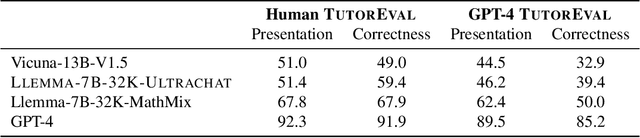
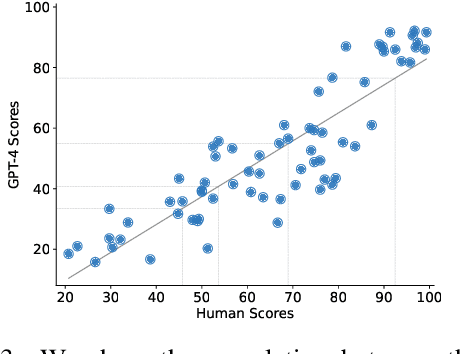
NLP has recently made exciting progress toward training language models (LMs) with strong scientific problem-solving skills. However, model development has not focused on real-life use-cases of LMs for science, including applications in education that require processing long scientific documents. To address this, we introduce TutorEval and TutorChat. TutorEval is a diverse question-answering benchmark consisting of questions about long chapters from STEM textbooks, written by experts. TutorEval helps measure real-life usability of LMs as scientific assistants, and it is the first benchmark combining long contexts, free-form generation, and multi-disciplinary scientific knowledge. Moreover, we show that fine-tuning base models with existing dialogue datasets leads to poor performance on TutorEval. Therefore, we create TutorChat, a dataset of 80,000 long synthetic dialogues about textbooks. We use TutorChat to fine-tune Llemma models with 7B and 34B parameters. These LM tutors specialized in math have a 32K-token context window, and they excel at TutorEval while performing strongly on GSM8K and MATH. Our datasets build on open-source materials, and we release our models, data, and evaluations.