 Add to Chrome
 Add to Firefox
 Add to Edge
Optimal Inference with Black-box Predictions
Aug 10, 2026
Powerful black-box predictive models have motivated many proposals for combining observed data with predictions to perform valid statistical inference. Despite this progress, the field lacks a unifying principle that explains how hypothesis tests should integrate data and predictions in a way that is both valid and efficient. In this work, we address this gap in the high-dimensional Gaussian sequence model. We characterize the information-theoretic limits of inference with black-box predictions when their accuracies are known and, for orthogonal predictions, when they are unknown. Building on these characterizations, we develop practical hypothesis tests that adapt to the unknown accuracies of the predictions while benefiting from strong alignment among them.

Learning Who to Treat When Treatment is Missing
Jul 15, 2026Policy learning methods are increasingly used to inform treatment allocation under budget constraints. Most proposed methods assume complete treatment data, yet applications frequently suffer from missingness that can bias estimates and lead to suboptimal policies. We address this gap by extending efficient estimators for average treatment effect (ATE) estimation to policy value and conditional average treatment effect (CATE) estimation under missing at random (MAR) and missing completely conditionally at random (MCCAR) treatment data. Through asymptotic efficiency analysis, we prove that the MAR estimator, which leverages partially-observed units, is both valid and more efficient than the MCCAR estimator when MCCAR assumptions hold. This result provides formal justification for preferring MAR-based estimation in policy learning under both missing data settings. Our comprehensive experiments using synthetic and semi-synthetic datasets confirm that correctly specifying the missingness mechanism is crucial: misspecified estimators remain biased regardless of sample size, while our estimators achieve near-oracle performance when assumptions are satisfied. Our work provides practitioners with theoretically grounded, empirically validated tools for robust policy learning in the presence of missing treatment data.
Dependent Randomized Rounding for Budget Constrained Experimental Design
Jun 15, 2025Policymakers in resource-constrained settings require experimental designs that satisfy strict budget limits while ensuring precise estimation of treatment effects. We propose a framework that applies a dependent randomized rounding procedure to convert assignment probabilities into binary treatment decisions. Our proposed solution preserves the marginal treatment probabilities while inducing negative correlations among assignments, leading to improved estimator precision through variance reduction. We establish theoretical guarantees for the inverse propensity weighted and general linear estimators, and demonstrate through empirical studies that our approach yields efficient and accurate inference under fixed budget constraints.
Counterfactual Risk Assessments under Unmeasured Confounding
Dec 19, 2022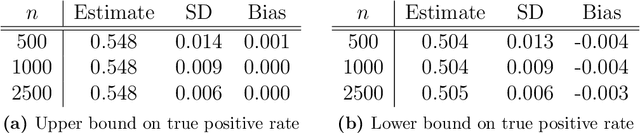
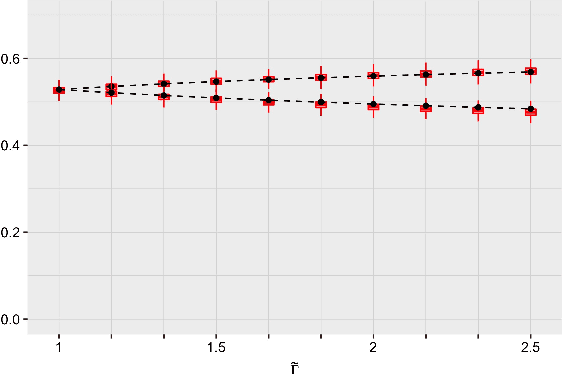
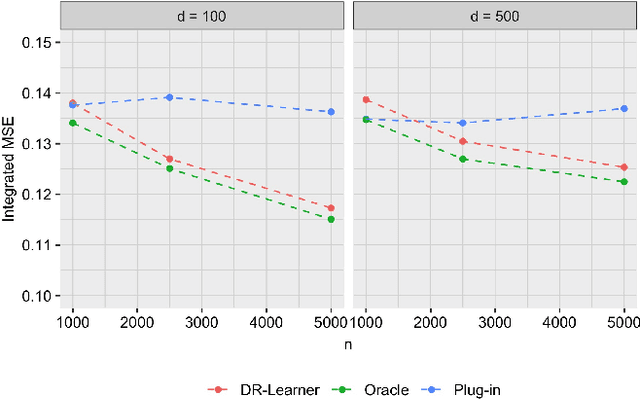
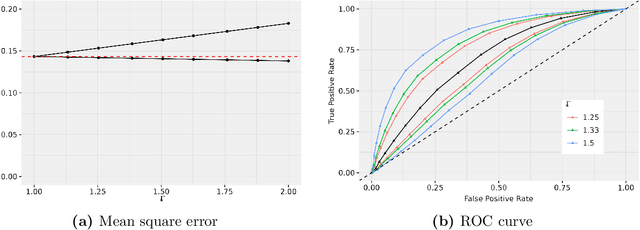
Statistical risk assessments inform consequential decisions such as pretrial release in criminal justice, and loan approvals in consumer finance. Such risk assessments make counterfactual predictions, predicting the likelihood of an outcome under a proposed decision (e.g., what would happen if we approved this loan?). A central challenge, however, is that there may have been unmeasured confounders that jointly affected past decisions and outcomes in the historical data. This paper proposes a tractable mean outcome sensitivity model that bounds the extent to which unmeasured confounders could affect outcomes on average. The mean outcome sensitivity model partially identifies the conditional likelihood of the outcome under the proposed decision, popular predictive performance metrics (e.g., accuracy, calibration, TPR, FPR), and commonly-used predictive disparities. We derive their sharp identified sets, and we then solve three tasks that are essential to deploying statistical risk assessments in high-stakes settings. First, we propose a doubly-robust learning procedure for the bounds on the conditional likelihood of the outcome under the proposed decision. Second, we translate our estimated bounds on the conditional likelihood of the outcome under the proposed decision into a robust, plug-in decision-making policy. Third, we develop doubly-robust estimators of the bounds on the predictive performance of an existing risk assessment.
FADE: FAir Double Ensemble Learning for Observable and Counterfactual Outcomes
Sep 01, 2021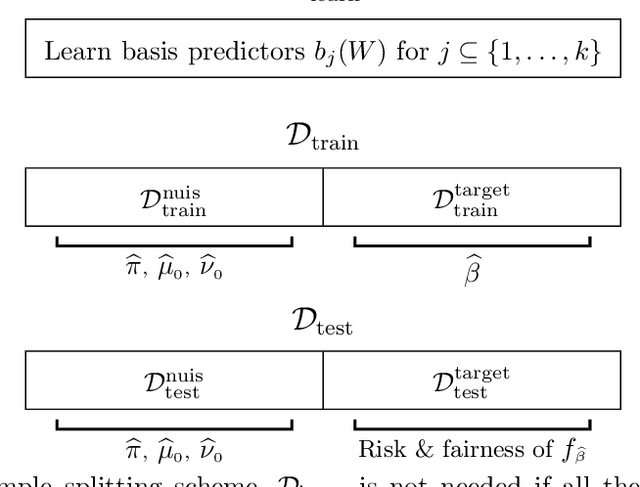
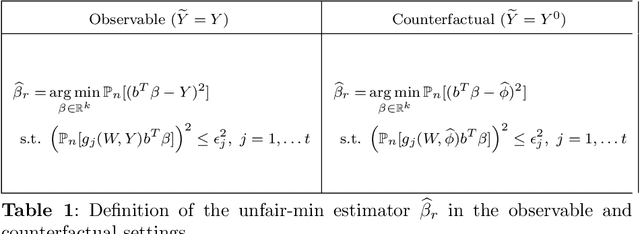
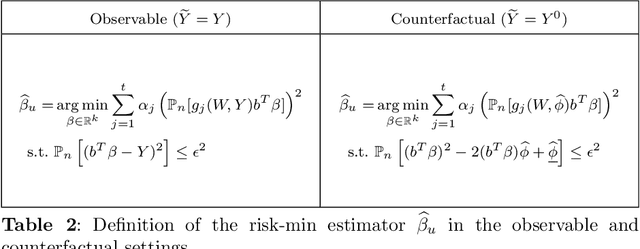
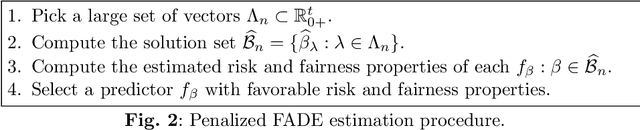
Methods for building fair predictors often involve tradeoffs between fairness and accuracy and between different fairness criteria, but the nature of these tradeoffs varies. Recent work seeks to characterize these tradeoffs in specific problem settings, but these methods often do not accommodate users who wish to improve the fairness of an existing benchmark model without sacrificing accuracy, or vice versa. These results are also typically restricted to observable accuracy and fairness criteria. We develop a flexible framework for fair ensemble learning that allows users to efficiently explore the fairness-accuracy space or to improve the fairness or accuracy of a benchmark model. Our framework can simultaneously target multiple observable or counterfactual fairness criteria, and it enables users to combine a large number of previously trained and newly trained predictors. We provide theoretical guarantees that our estimators converge at fast rates. We apply our method on both simulated and real data, with respect to both observable and counterfactual accuracy and fairness criteria. We show that, surprisingly, multiple unfairness measures can sometimes be minimized simultaneously with little impact on accuracy, relative to unconstrained predictors or existing benchmark models.