 Add to Chrome
 Add to Firefox
 Add to Edge
A Bayesian Learning Approach for Drone Coverage Network: A Case Study on Cardiac Arrest in Scotland
Mar 24, 2026
Drones are becoming popular as a complementary system for \ac{ems}. Although several pilot studies and flight trials have shown the feasibility of drone-assisted \ac{aed} delivery, running a full-scale operational network remains challenging due to high capital expenditure and environmental uncertainties. In this paper, we formulate a reliability-informed Bayesian learning framework for designing drone-assisted \ac{aed} delivery networks under environmental and operational uncertainty. We propose our objective function based on the survival probability of \ac{ohca} patients to identify the ideal locations of drone stations. Moreover, we consider the coverage of existing \ac{ems} infrastructure to improve the response reliability in remote areas. We illustrate our proposed method using geographically referenced cardiac arrest data from Scotland. The result shows how environmental variability and spatial demand patterns influence optimal drone station placement across urban and rural regions. In addition, we assess the robustness of the network and evaluate its economic viability using a cost-effectiveness analysis based on expected \ac{qaly}. The findings suggest that drone-assisted \ac{aed} delivery is expected to be cost-effective and has the potential to significantly improve the emergency response coverage in rural and urban areas with longer ambulance response times.

Towards robust prediction of material properties for nuclear reactor design under scarce data -- a study in creep rupture property
May 28, 2024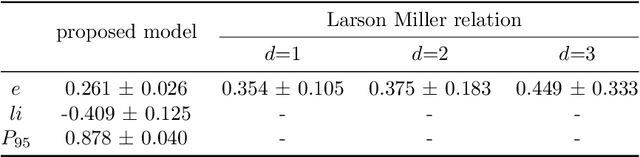
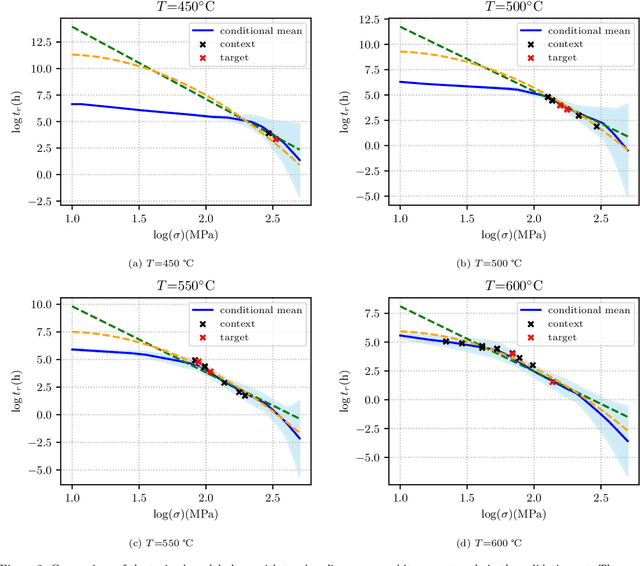
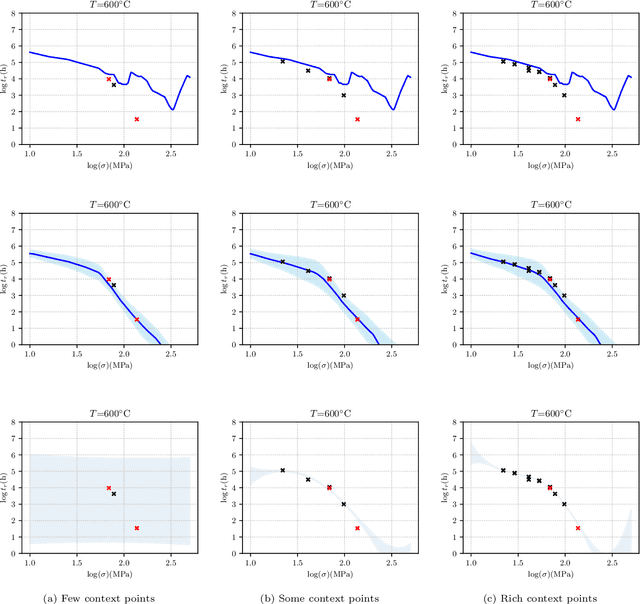
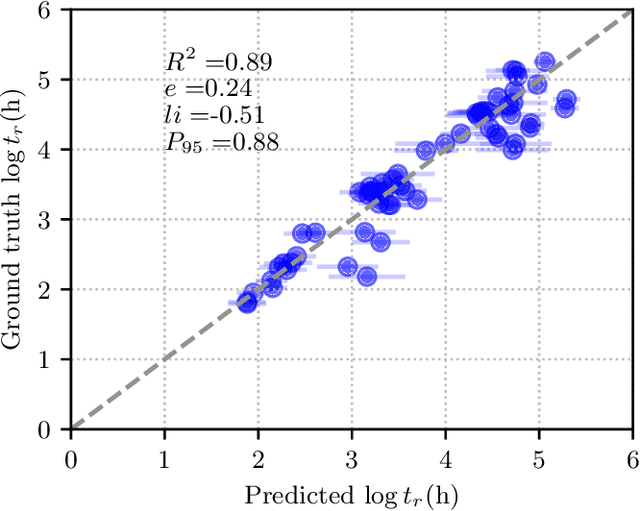
Advances in Deep Learning bring further investigation into credibility and robustness, especially for safety-critical engineering applications such as the nuclear industry. The key challenges include the availability of data set (often scarce and sparse) and insufficient consideration of the uncertainty in the data, model, and prediction. This paper therefore presents a meta-learning based approach that is both uncertainty- and prior knowledge-informed, aiming at trustful predictions of material properties for the nuclear reactor design. It is suited for robust learning under limited data. Uncertainty has been accounted for where a distribution of predictor functions are produced for extrapolation. Results suggest it achieves superior performance than existing empirical methods in rupture life prediction, a case which is typically under a small data regime. While demonstrated herein with rupture properties, this learning approach is transferable to solve similar problems of data scarcity across the nuclear industry. It is of great importance to boosting the AI analytics in the nuclear industry by proving the applicability and robustness while providing tools that can be trusted.