 Add to Chrome
 Add to Firefox
 Add to Edge
Reproducibility in Machine Learning-based Research: Overview, Barriers and Drivers
Jun 20, 2024
Research in various fields is currently experiencing challenges regarding the reproducibility of results. This problem is also prevalent in machine learning (ML) research. The issue arises primarily due to unpublished data and/or source code and the sensitivity of ML training conditions. Although different solutions have been proposed to address this issue, such as using ML platforms, the level of reproducibility in ML-driven research remains unsatisfactory. Therefore, in this article, we discuss the reproducibility of ML-driven research with three main aims: (i) identify the barriers to reproducibility when applying ML in research as well as categorize the barriers to different types of reproducibility (description, code, data, and experiment reproducibility), (ii) identify potential drivers such as tools, practices, and interventions that support ML reproducibility as well as distinguish between technology-driven drivers, procedural drivers, and drivers related to awareness and education, and (iii) map the drivers to the barriers. With this work, we hope to provide insights and contribute to the decision-making process regarding the adoption of different solutions to support ML reproducibility.

Transparency, Privacy, and Fairness in Recommender Systems
Jun 17, 2024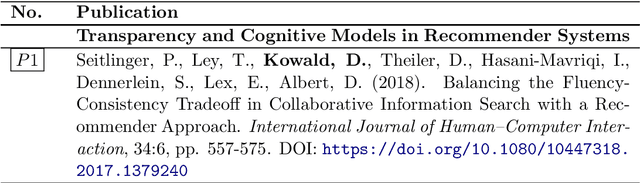
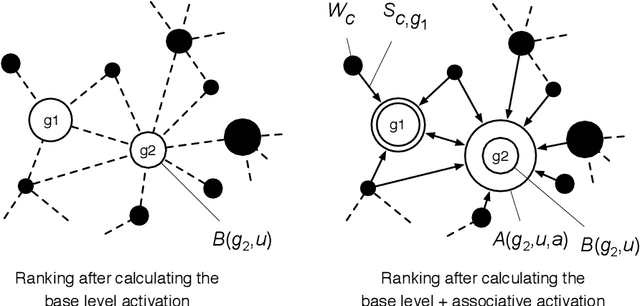
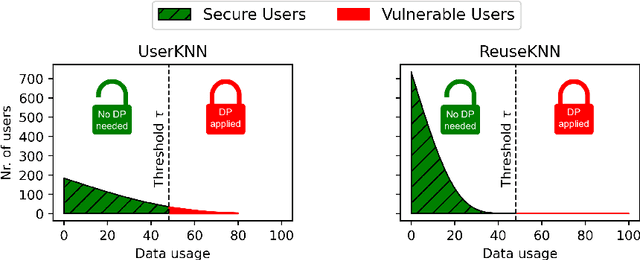
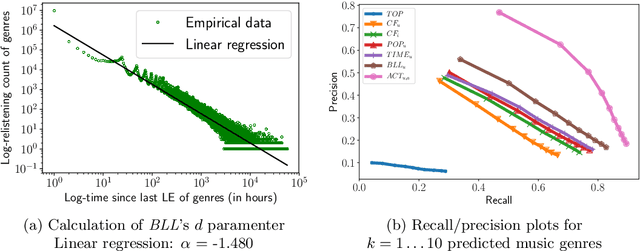
Recommender systems have become a pervasive part of our daily online experience, and are one of the most widely used applications of artificial intelligence and machine learning. Therefore, regulations and requirements for trustworthy artificial intelligence, for example, the European AI Act, which includes notions such as transparency, privacy, and fairness are also highly relevant for the design of recommender systems in practice. This habilitation elaborates on aspects related to these three notions in the light of recommender systems, namely: (i) transparency and cognitive models, (ii) privacy and limited preference information, and (iii) fairness and popularity bias in recommender systems. Specifically, with respect to aspect (i), we highlight the usefulness of incorporating psychological theories for a transparent design process of recommender systems. We term this type of systems psychology-informed recommender systems. In aspect (ii), we study and address the trade-off between accuracy and privacy in differentially-private recommendations. We design a novel recommendation approach for collaborative filtering based on an efficient neighborhood reuse concept, which reduces the number of users that need to be protected with differential privacy. Furthermore, we address the related issue of limited availability of user preference information, e.g., click data, in the settings of session-based and cold-start recommendations. With respect to aspect (iii), we analyze popularity bias in recommender systems. We find that the recommendation frequency of an item is positively correlated with this item's popularity. This also leads to the unfair treatment of users with little interest in popular content. Finally, we study long-term fairness dynamics in algorithmic decision support in the labor market using agent-based modeling techniques.
Making Alice Appear Like Bob: A Probabilistic Preference Obfuscation Method For Implicit Feedback Recommendation Models
Jun 17, 2024Users' interaction or preference data used in recommender systems carry the risk of unintentionally revealing users' private attributes (e.g., gender or race). This risk becomes particularly concerning when the training data contains user preferences that can be used to infer these attributes, especially if they align with common stereotypes. This major privacy issue allows malicious attackers or other third parties to infer users' protected attributes. Previous efforts to address this issue have added or removed parts of users' preferences prior to or during model training to improve privacy, which often leads to decreases in recommendation accuracy. In this work, we introduce SBO, a novel probabilistic obfuscation method for user preference data designed to improve the accuracy--privacy trade-off for such recommendation scenarios. We apply SBO to three state-of-the-art recommendation models (i.e., BPR, MultVAE, and LightGCN) and two popular datasets (i.e., MovieLens-1M and LFM-2B). Our experiments reveal that SBO outperforms comparable approaches with respect to the accuracy--privacy trade-off. Specifically, we can reduce the leakage of users' protected attributes while maintaining on-par recommendation accuracy.
The Impact of Differential Privacy on Recommendation Accuracy and Popularity Bias
Jan 15, 2024



Collaborative filtering-based recommender systems leverage vast amounts of behavioral user data, which poses severe privacy risks. Thus, often, random noise is added to the data to ensure Differential Privacy (DP). However, to date, it is not well understood, in which ways this impacts personalized recommendations. In this work, we study how DP impacts recommendation accuracy and popularity bias, when applied to the training data of state-of-the-art recommendation models. Our findings are three-fold: First, we find that nearly all users' recommendations change when DP is applied. Second, recommendation accuracy drops substantially while recommended item popularity experiences a sharp increase, suggesting that popularity bias worsens. Third, we find that DP exacerbates popularity bias more severely for users who prefer unpopular items than for users that prefer popular items.
Take the aTrain. Introducing an Interface for the Accessible Transcription of Interviews
Oct 18, 2023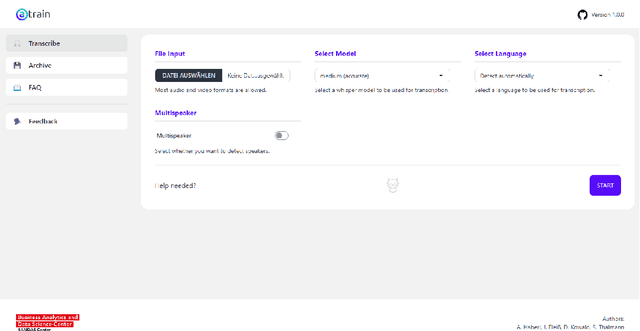
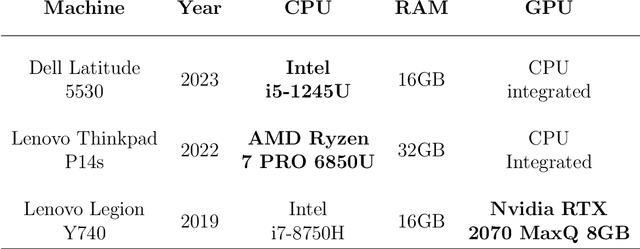


aTrain is an open-source and offline tool for transcribing audio data in multiple languages with CPU and NVIDIA GPU support. It is specifically designed for researchers using qualitative data generated from various forms of speech interactions with research participants. aTrain requires no programming skills, runs on most computers, does not require an internet connection, and was verified not to upload data to any server. aTrain combines OpenAI's Whisper model with speaker recognition to provide output that integrates with the popular qualitative data analysis software tools MAXQDA and ATLAS.ti. It has an easy-to-use graphical interface and is provided as a Windows-App through the Microsoft Store allowing for simple installation by researchers. The source code is freely available on GitHub. Having developed aTrain with a focus on speed on local computers, we show that the transcription time on current mobile CPUs is around 2 to 3 times the duration of the audio file using the highest-accuracy transcription models. If an entry-level graphics card is available, the transcription speed increases to 20% of the audio duration.
Beyond-Accuracy: A Review on Diversity, Serendipity and Fairness in Recommender Systems Based on Graph Neural Networks
Oct 03, 2023
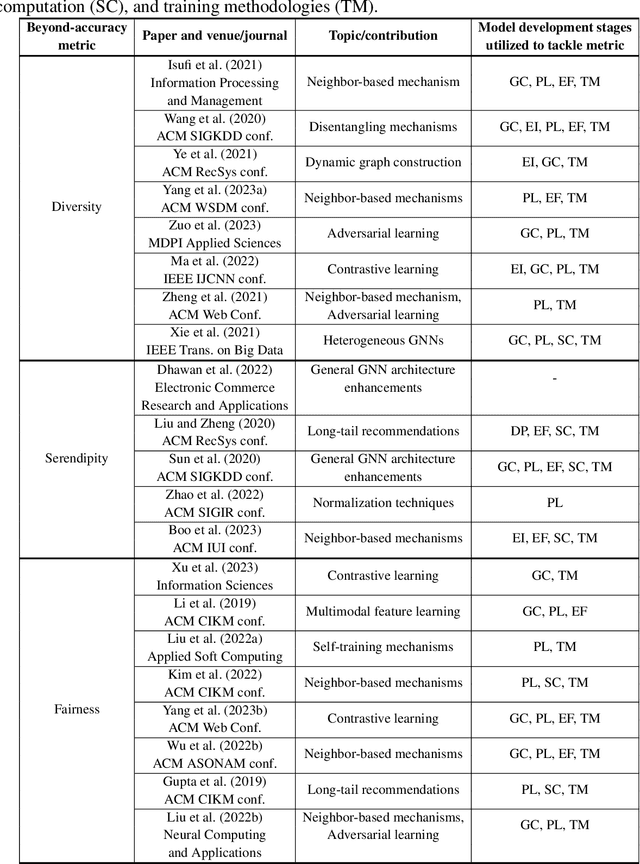
By providing personalized suggestions to users, recommender systems have become essential to numerous online platforms. Collaborative filtering, particularly graph-based approaches using Graph Neural Networks (GNNs), have demonstrated great results in terms of recommendation accuracy. However, accuracy may not always be the most important criterion for evaluating recommender systems' performance, since beyond-accuracy aspects such as recommendation diversity, serendipity, and fairness can strongly influence user engagement and satisfaction. This review paper focuses on addressing these dimensions in GNN-based recommender systems, going beyond the conventional accuracy-centric perspective. We begin by reviewing recent developments in approaches that improve not only the accuracy-diversity trade-off but also promote serendipity and fairness in GNN-based recommender systems. We discuss different stages of model development including data preprocessing, graph construction, embedding initialization, propagation layers, embedding fusion, score computation, and training methodologies. Furthermore, we present a look into the practical difficulties encountered in assuring diversity, serendipity, and fairness, while retaining high accuracy. Finally, we discuss potential future research directions for developing more robust GNN-based recommender systems that go beyond the unidimensional perspective of focusing solely on accuracy. This review aims to provide researchers and practitioners with an in-depth understanding of the multifaceted issues that arise when designing GNN-based recommender systems, setting our work apart by offering a comprehensive exploration of beyond-accuracy dimensions.
Reproducibility in Machine Learning-Driven Research
Jul 19, 2023
Research is facing a reproducibility crisis, in which the results and findings of many studies are difficult or even impossible to reproduce. This is also the case in machine learning (ML) and artificial intelligence (AI) research. Often, this is the case due to unpublished data and/or source-code, and due to sensitivity to ML training conditions. Although different solutions to address this issue are discussed in the research community such as using ML platforms, the level of reproducibility in ML-driven research is not increasing substantially. Therefore, in this mini survey, we review the literature on reproducibility in ML-driven research with three main aims: (i) reflect on the current situation of ML reproducibility in various research fields, (ii) identify reproducibility issues and barriers that exist in these research fields applying ML, and (iii) identify potential drivers such as tools, practices, and interventions that support ML reproducibility. With this, we hope to contribute to decisions on the viability of different solutions for supporting ML reproducibility.
A Study on Accuracy, Miscalibration, and Popularity Bias in Recommendations
Mar 01, 2023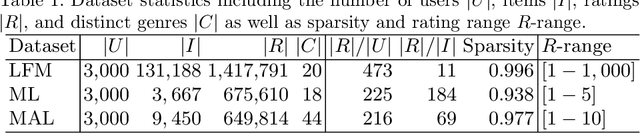
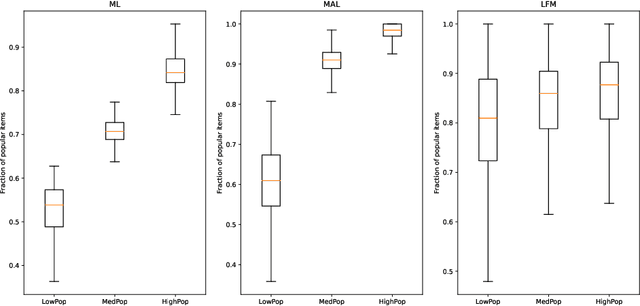
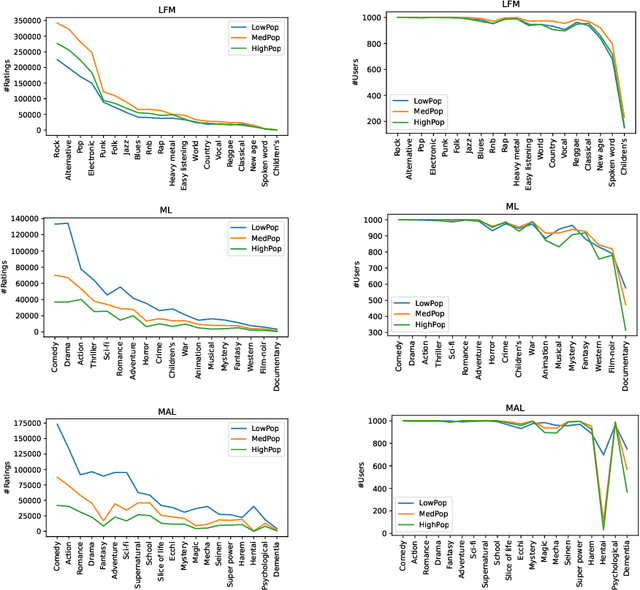
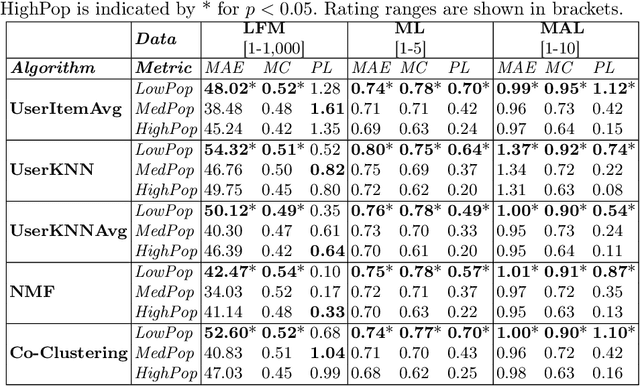
Recent research has suggested different metrics to measure the inconsistency of recommendation performance, including the accuracy difference between user groups, miscalibration, and popularity lift. However, a study that relates miscalibration and popularity lift to recommendation accuracy across different user groups is still missing. Additionally, it is unclear if particular genres contribute to the emergence of inconsistency in recommendation performance across user groups. In this paper, we present an analysis of these three aspects of five well-known recommendation algorithms for user groups that differ in their preference for popular content. Additionally, we study how different genres affect the inconsistency of recommendation performance, and how this is aligned with the popularity of the genres. Using data from LastFm, MovieLens, and MyAnimeList, we present two key findings. First, we find that users with little interest in popular content receive the worst recommendation accuracy, and that this is aligned with miscalibration and popularity lift. Second, our experiments show that particular genres contribute to a different extent to the inconsistency of recommendation performance, especially in terms of miscalibration in the case of the MyAnimeList dataset.
A conceptual model for leaving the data-centric approach in machine learning
Feb 07, 2023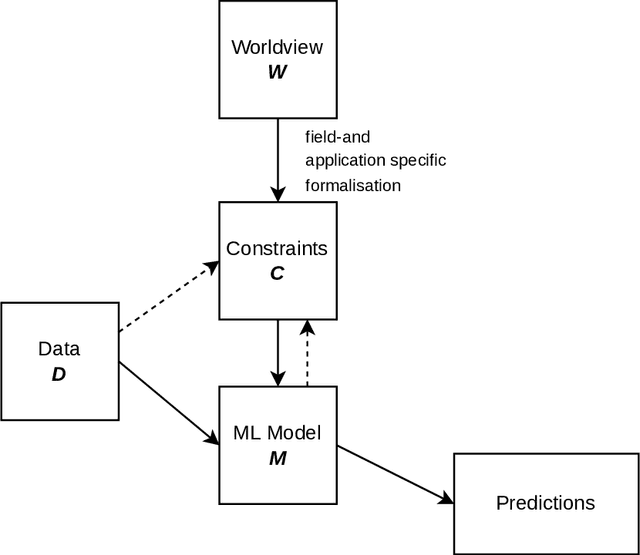
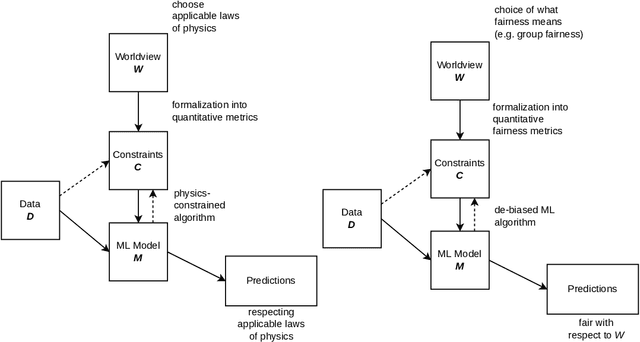
For a long time, machine learning (ML) has been seen as the abstract problem of learning relationships from data independent of the surrounding settings. This has recently been challenged, and methods have been proposed to include external constraints in the machine learning models. These methods usually come from application-specific fields, such as de-biasing algorithms in the field of fairness in ML or physical constraints in the fields of physics and engineering. In this paper, we present and discuss a conceptual high-level model that unifies these approaches in a common language. We hope that this will enable and foster exchange between the different fields and their different methods for including external constraints into ML models, and thus leaving purely data-centric approaches.
Uptrendz: API-Centric Real-time Recommendations in Multi-Domain Settings
Jan 03, 2023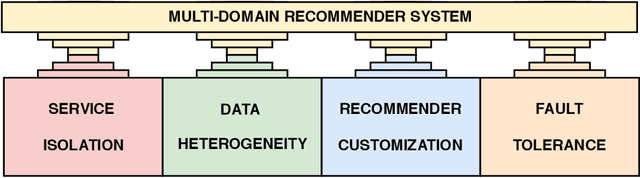
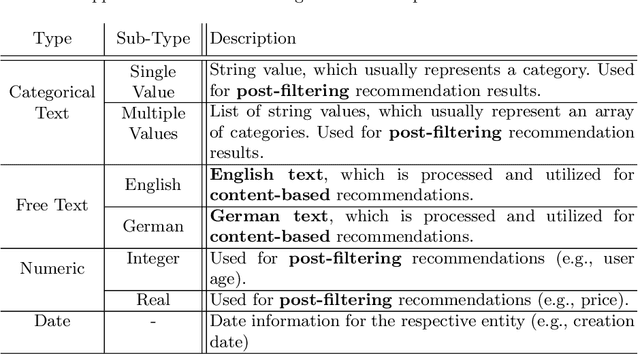
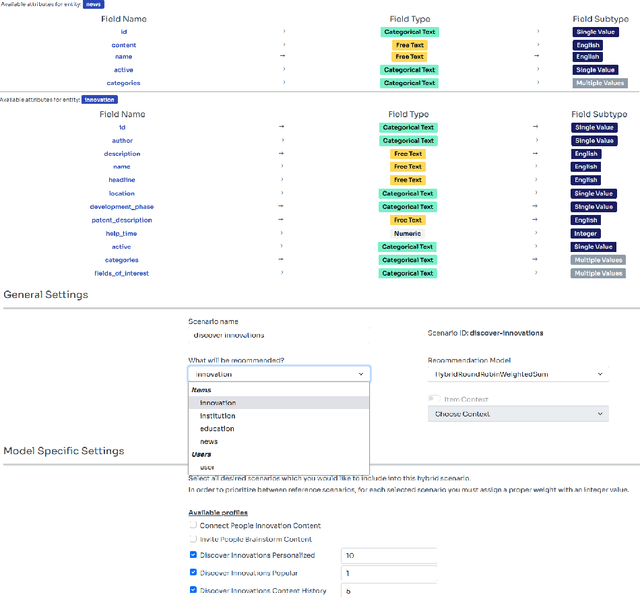

In this work, we tackle the problem of adapting a real-time recommender system to multiple application domains, and their underlying data models and customization requirements. To do that, we present Uptrendz, a multi-domain recommendation platform that can be customized to provide real-time recommendations in an API-centric way. We demonstrate (i) how to set up a real-time movie recommender using the popular MovieLens-100k dataset, and (ii) how to simultaneously support multiple application domains based on the use-case of recommendations in entrepreneurial start-up founding. For that, we differentiate between domains on the item- and system-level. We believe that our demonstration shows a convenient way to adapt, deploy and evaluate a recommender system in an API-centric way. The source-code and documentation that demonstrates how to utilize the configured Uptrendz API is available on GitHub.