 Add to Chrome
 Add to Firefox
 Add to Edge
Towards a Unified Multidimensional Explainability Metric: Evaluating Trustworthiness in AI Models
Jul 15, 2026
In this paper, we present a comprehensive framework for assessing the explainability of various XAI methods, such as LIME and SHAP, across multiple datasets and machine learning models, with the ultimate goal of creating a unified multidimensional explainability score. Our methodology focuses on three key aspects of explainability: fidelity, simplicity, and stability. We leverage benchmarking experiments to systematically evaluate these aspects and use the insights gained to construct an offline knowledge base. This knowledge base captures the explainability scores for each registered model and serves as a valuable resource for context-dependent evaluation of explainability. By analyzing the complementary characteristics and metadata of AI models, datasets, and XAI methods, the knowledge base will enable the estimation of explainability scores for previously unseen datasets and models. Properties like fidelity, simplicity, and stability may vary significantly based on the dataset, underlying model, and domain expertise of the end user. We demonstrate our framework by applying it to three open-source datasets, discussing the implications of the obtained results in relation to the characteristics of the datasets. Our work contributes to the growing field of XAI by providing a robust and versatile tool for evaluating and comparing the explainability of various XAI methods, ultimately supporting the development of more transparent and trustworthy AI systems.

An Organization-Scoped LLM Agent Runtime Architecture for Regulated Cybersecurity Operations
May 28, 2026Regulated cybersecurity workflows lack a runtime substrate that enforces organization-level scope across retrieval, tool calls, memory, findings, reports, and audit while remaining model-agnostic and locally deployable. Recent large language model (LLM) agent systems report strong results on isolated cybersecurity tasks, yet they do not by themselves define an auditable platform architecture for regulated security operations centre (SOC) and compliance workflows, where a single analyst may trigger actions that bind the organization, and where the runtime must integrate with existing SIEM/XDR stacks as a primary source of context and alert-driven triggers rather than operate as a standalone analytical layer. This paper proposes an organization-scoped LLM agent runtime architecture for financial cybersecurity. The contribution is a typed Security Context that is created at every entry point, including SIEM/XDR notifications ingested as first-class triggers, and enforced at every component boundary, combined with a shared Runtime Core, logical specialist subagents, a governed Tool Adapter Layer exposing SIEM/XDR query, enrichment, and response primitives under uniform policy and audit, structured findings with evidence references, tiered human-in-the-loop (HITL) gates, and append-only audit. Model Context Protocol (MCP), extended telemetry, digital twins for pentesting, graph retrieval, and federated knowledge sharing are treated as optional extension paths rather than mandatory runtime assumptions. We describe an implementable slice as the architecture's testability surface, and we propose a falsifiable evaluation plan with metric-level pass criteria for architecture readiness, security-policy enforcement, evidence traceability, output quality, and operational observability.
Persistent and Conversational Multi-Method Explainability for Trustworthy Financial AI
May 12, 2026Financial institutions increasingly require AI explanations that are persistent, cross-validated across methods, and conversationally accessible to human decision-makers. We present an architecture for human-centered explainable AI in financial sentiment analysis that combines three contributions. First, we treat XAI artifacts -- LIME feature attributions, occlusion-based word importance scores, and saliency heatmaps -- as persistent, searchable objects in distributed S3-compatible storage with structured metadata and natural-language summaries, enabling semantic retrieval over explanation history and automatic index reconstruction after system failures. Second, we enable multi-method explanation triangulation, where a retrieval-augmented generation (RAG) assistant compares and synthesizes results from multiple XAI methods applied to the same prediction, allowing users to assess explanation robustness through natural-language dialogue. Third, we evaluate the faithfulness of generated explanations using automated checks over grounding completeness, hallucinated claims, and method-attribution behavior. We demonstrate the architecture on an EXTRA-BRAIN financial sentiment analysis pipeline using FinBERT predictions and present evaluation results showing that constrained prompting reduces hallucination rate by 36\% and increases method-attribution citations by 73\% compared to naive prompting. We discuss implications for trustworthy, human-centered AI services in regulated financial environments.
Native Explainability for Bayesian Confidence Propagation Neural Networks: A Framework for Trusted Brain-Like AI
May 12, 2026The EU Artificial Intelligence Act (Regulation 2024/1689), fully applicable to high-risk systems from August 2026, creates urgent demand for AI architectures that are simultaneously trustworthy, transparent, and feasible to deploy on resource-constrained edge devices. Brain-like neural networks built on the Bayesian Confidence Propagation Neural Network (BCPNN) formalism have re-emerged as a credible alternative to backpropagation-driven deep learning. They deliver state-of-the-art unsupervised representation learning, neuromorphic-friendly sparsity, and existing FPGA implementations that target edge deployment. Despite this momentum, no systematic framework exists for explaining BCPNN decisions -- a gap the present paper fills. We argue that BCPNN is, in the sense of Rudin's interpretable-by-design agenda, an inherently transparent model whose architectural primitives map directly onto established explainable-AI (XAI) families. We make four contributions. First, we propose the first XAI taxonomy for BCPNN. It maps weights, biases, hypercolumn posteriors, structural-plasticity usage scores, attractor dynamics, and input-reconstruction populations onto attribution, prototype, concept, counterfactual, and mechanistic explanation modalities. Second, we introduce sixteen architecture-level explanation primitives (P1--P16), several without analogue in standard ANNs. We provide closed-form algorithms for computing each from quantities the model already maintains. Third, we introduce five design-time Configuration-as-Explanation primitives (Config-P1 to Config-P5) that treat BCPNN hyperparameter choices as an auditable pre-deployment explanation artifact. Fourth, we sketch a roadmap for integration into industrial IoT deployments and discuss EU AI Act alignment, edge feasibility, and Industry 5.0 implications.
CyberAId: AI-Driven Cybersecurity for Financial Service Providers
May 03, 2026European financial institutions face mounting regulatory pressure while their security operations centres remain constrained not by data or staffing but by reasoning capacity: enterprise SIEMs cover only a fraction of MITRE ATT&CK techniques, two thirds of SOC teams cannot keep pace with alert volumes, and the majority of breaches are preceded by alerts that are generated but never investigated. Frontier large language models now achieve state-of-the-art results on isolated cybersecurity tasks (one-day vulnerability exploitation, code-level patching, intrusion detection) yet no narrow win constitutes a platform that can compose across functions, persist multi-tenant state, map findings to regulatory regimes and survive an audit. This position paper argues that the right unit of construction is a hybrid multi-agent system in which specialised LLM subagents reason over classical SIEM/XDR telemetry rather than replacing it, share accumulated agent state across institutions through privacy-preserving federation, and can connect to complementary capability packs such as quantum-based authentication, digital twins for adversarial validation, and eBPF-based kernel telemetry. We present CyberAId, a model-agnostic, on-premise-deployable platform in which a Main Agent coordination layer, a Reporting capability, and specialist subagents operate within a shared runtime under bounded human-in-the-loop autonomy, organised around four falsifiable design principles, and aligned with relevant regulations. CyberAId will be validated at four representative financial use cases (client impersonation, anti-money-laundering for payment service providers, retail-banking incident response, and high-frequency-trading resilience) and propose skill-based agent adaptation as the most promising research direction for turning each deployment into a contribution to a continuously refined collective defence.
HumAIne-Chatbot: Real-Time Personalized Conversational AI via Reinforcement Learning
Sep 04, 2025Current conversational AI systems often provide generic, one-size-fits-all interactions that overlook individual user characteristics and lack adaptive dialogue management. To address this gap, we introduce \textbf{HumAIne-chatbot}, an AI-driven conversational agent that personalizes responses through a novel user profiling framework. The system is pre-trained on a diverse set of GPT-generated virtual personas to establish a broad prior over user types. During live interactions, an online reinforcement learning agent refines per-user models by combining implicit signals (e.g. typing speed, sentiment, engagement duration) with explicit feedback (e.g., likes and dislikes). This profile dynamically informs the chatbot dialogue policy, enabling real-time adaptation of both content and style. To evaluate the system, we performed controlled experiments with 50 synthetic personas in multiple conversation domains. The results showed consistent improvements in user satisfaction, personalization accuracy, and task achievement when personalization features were enabled. Statistical analysis confirmed significant differences between personalized and nonpersonalized conditions, with large effect sizes across key metrics. These findings highlight the effectiveness of AI-driven user profiling and provide a strong foundation for future real-world validation.
Towards Conversational AI for Human-Machine Collaborative MLOps
Apr 16, 2025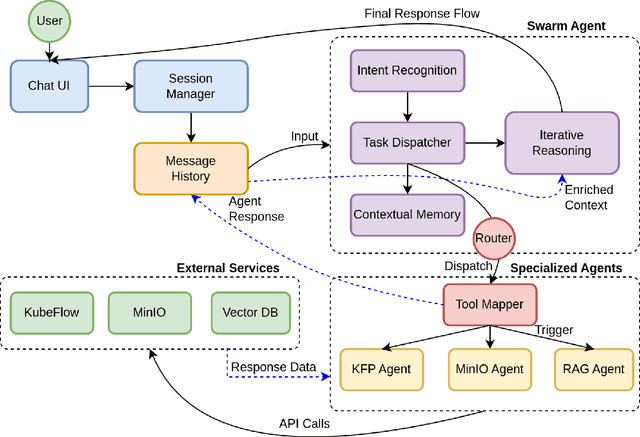



This paper presents a Large Language Model (LLM) based conversational agent system designed to enhance human-machine collaboration in Machine Learning Operations (MLOps). We introduce the Swarm Agent, an extensible architecture that integrates specialized agents to create and manage ML workflows through natural language interactions. The system leverages a hierarchical, modular design incorporating a KubeFlow Pipelines (KFP) Agent for ML pipeline orchestration, a MinIO Agent for data management, and a Retrieval-Augmented Generation (RAG) Agent for domain-specific knowledge integration. Through iterative reasoning loops and context-aware processing, the system enables users with varying technical backgrounds to discover, execute, and monitor ML pipelines; manage datasets and artifacts; and access relevant documentation, all via intuitive conversational interfaces. Our approach addresses the accessibility gap in complex MLOps platforms like Kubeflow, making advanced ML tools broadly accessible while maintaining the flexibility to extend to other platforms. The paper describes the architecture, implementation details, and demonstrates how this conversational MLOps assistant reduces complexity and lowers barriers to entry for users across diverse technical skill levels.
Bridging Industrial Expertise and XR with LLM-Powered Conversational Agents
Apr 07, 2025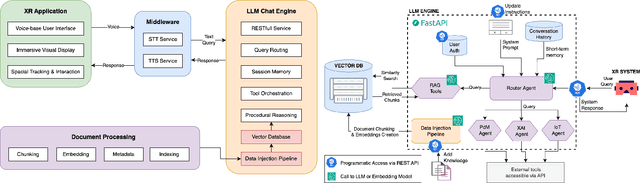
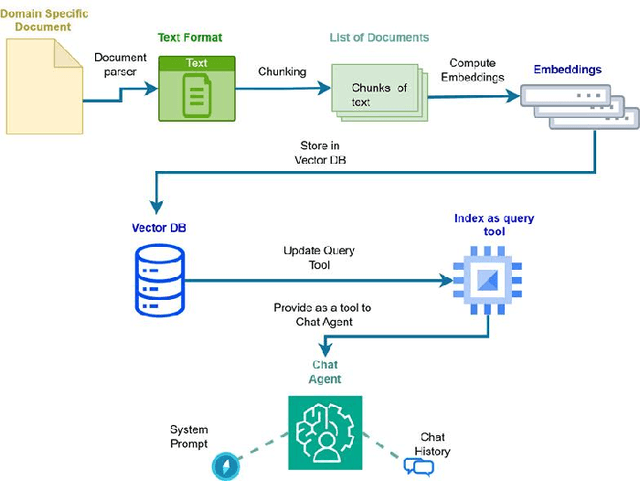
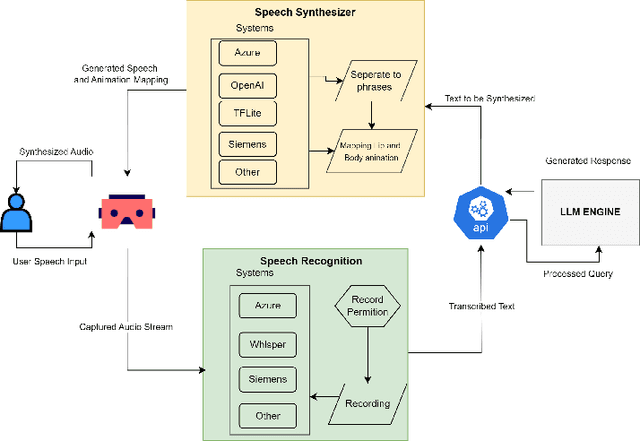
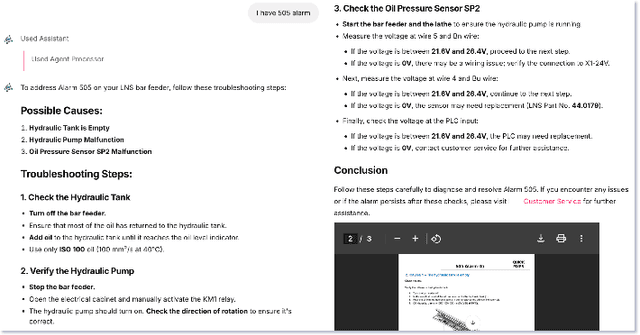
This paper introduces a novel integration of Retrieval-Augmented Generation (RAG) enhanced Large Language Models (LLMs) with Extended Reality (XR) technologies to address knowledge transfer challenges in industrial environments. The proposed system embeds domain-specific industrial knowledge into XR environments through a natural language interface, enabling hands-free, context-aware expert guidance for workers. We present the architecture of the proposed system consisting of an LLM Chat Engine with dynamic tool orchestration and an XR application featuring voice-driven interaction. Performance evaluation of various chunking strategies, embedding models, and vector databases reveals that semantic chunking, balanced embedding models, and efficient vector stores deliver optimal performance for industrial knowledge retrieval. The system's potential is demonstrated through early implementation in multiple industrial use cases, including robotic assembly, smart infrastructure maintenance, and aerospace component servicing. Results indicate potential for enhancing training efficiency, remote assistance capabilities, and operational guidance in alignment with Industry 5.0's human-centric and resilient approach to industrial development.
VirtualXAI: A User-Centric Framework for Explainability Assessment Leveraging GPT-Generated Personas
Mar 06, 2025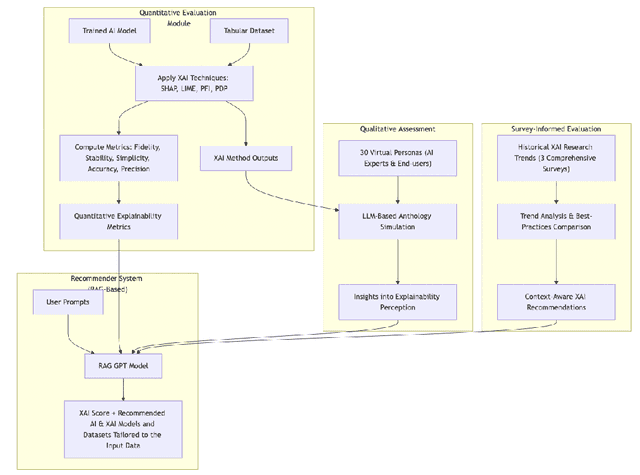
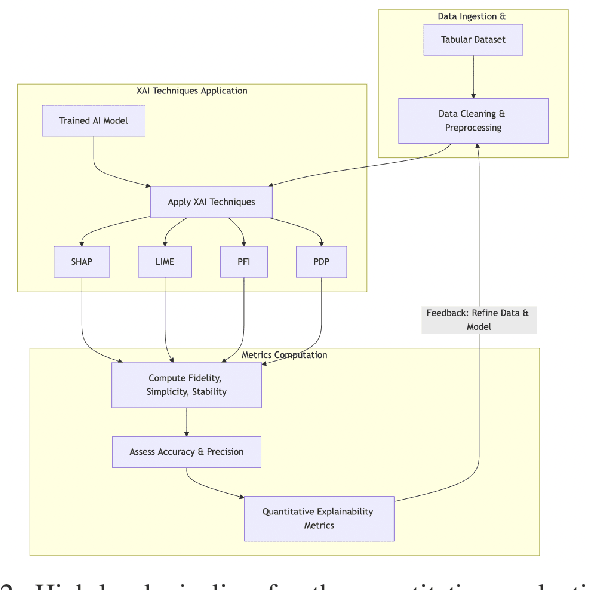
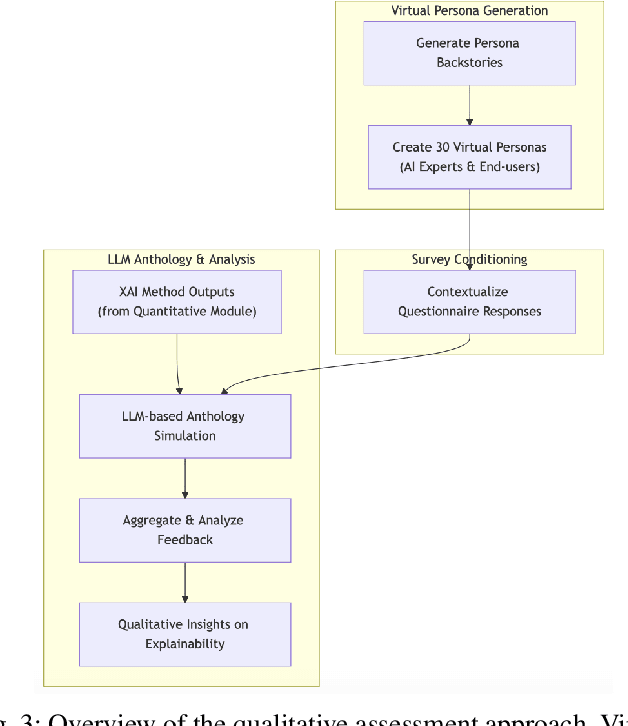
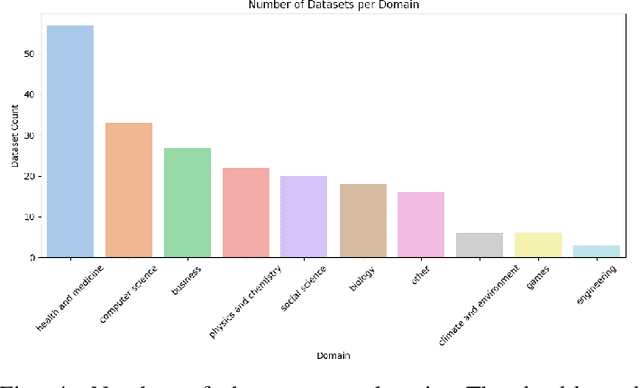
In today's data-driven era, computational systems generate vast amounts of data that drive the digital transformation of industries, where Artificial Intelligence (AI) plays a key role. Currently, the demand for eXplainable AI (XAI) has increased to enhance the interpretability, transparency, and trustworthiness of AI models. However, evaluating XAI methods remains challenging: existing evaluation frameworks typically focus on quantitative properties such as fidelity, consistency, and stability without taking into account qualitative characteristics such as satisfaction and interpretability. In addition, practitioners face a lack of guidance in selecting appropriate datasets, AI models, and XAI methods -a major hurdle in human-AI collaboration. To address these gaps, we propose a framework that integrates quantitative benchmarking with qualitative user assessments through virtual personas based on the "Anthology" of backstories of the Large Language Model (LLM). Our framework also incorporates a content-based recommender system that leverages dataset-specific characteristics to match new input data with a repository of benchmarked datasets. This yields an estimated XAI score and provides tailored recommendations for both the optimal AI model and the XAI method for a given scenario.
XAI for All: Can Large Language Models Simplify Explainable AI?
Jan 23, 2024The field of Explainable Artificial Intelligence (XAI) often focuses on users with a strong technical background, making it challenging for non-experts to understand XAI methods. This paper presents "x-[plAIn]", a new approach to make XAI more accessible to a wider audience through a custom Large Language Model (LLM), developed using ChatGPT Builder. Our goal was to design a model that can generate clear, concise summaries of various XAI methods, tailored for different audiences, including business professionals and academics. The key feature of our model is its ability to adapt explanations to match each audience group's knowledge level and interests. Our approach still offers timely insights, facilitating the decision-making process by the end users. Results from our use-case studies show that our model is effective in providing easy-to-understand, audience-specific explanations, regardless of the XAI method used. This adaptability improves the accessibility of XAI, bridging the gap between complex AI technologies and their practical applications. Our findings indicate a promising direction for LLMs in making advanced AI concepts more accessible to a diverse range of users.