 Add to Chrome
 Add to Firefox
 Add to Edge
S-CARD-CMSA: A Score-Aware Candidate Archive with Density-Filtered Reporting for Multimodal Optimization
Jul 15, 2026
Multimodal optimization aims to locate multiple globally optimal or near-optimal solutions in a single run. This paper presents \emph{S-CARD-CMSA}, a score-aware candidate-archive and density-filtered reporting framework built on the covariance matrix self-adaptation evolution strategy with repelling subpopulations (RS-CMSA-ESII). The method is developed for the IEEE CEC 2026 Competition on Benchmarking Niching Methods for Multimodal Optimization. Rather than modifying the core search dynamics of RS-CMSA-ESII, S-CARD-CMSA preserves its sampling, covariance adaptation, taboo-region update, restart, and termination mechanisms. Two conservative extensions are introduced. First, a passive secondary candidate archive records the restart-level best candidates without influencing the search trajectory. Second, a score-aware density-filtered reporting rule constructs the final solution set by balancing robust peak ratio and precision-driven F1-score. Development experiments show that the density-filtered rule preserves the peak coverage obtained by a medium score-aware rule while reducing redundant reports. On a broader validation subset, it maintains the same mean RPR while improving mean precision, F1-score, and the official-score-oriented average. The method does not use true global-minimum locations during optimization; such information is used only for offline development analysis and post-run scoring. The source code of S-CARD-CMSA is available at https://github.com/ChauhanDikshit.

DE-2LS: Differential Evolution with Late-Stage local-search for Unconstrained Single-Objective Numerical Optimization
Jun 26, 2026Unconstrained single-objective numerical optimization requires a careful balance among global exploration, late-stage exploitation, and function-evaluation efficiency. This paper presents DE-2LS, a late-stage, local-search-enhanced differential evolution framework built on RDEx for unconstrained single-objective optimization with variable bounds. The proposed method preserves the original RDEx evolutionary search engine and introduces two conservative refinements: a smoothed exploitation-biased branch-rate update in the late search stage and a guarded coordinate-pattern local-search that serves as a budget-aware refinement mechanism. Since the considered setting is unconstrained apart from variable bounds, all selection and local-search acceptance decisions are based solely on objective values. To determine the final algorithm configuration, we conduct a staged ablation study by testing multiple settings of the EB-rate smoothing mechanism, the initial EB-rate, the standard-branch Gaussian sampling scale, the selection-pressure parameters, and the local-search coefficients. The final configuration is selected using a U-score-based evaluation that jointly reflects solution quality and convergence speed. Experimental results show that DE-2LS consistently improves the original RDEx in direct head-to-head comparison. In particular, DE-2LS increases the U-score from $33602.0$ to $37448.0$, corresponding to an improvement of $11.45\%$. Moreover, compared with several competitive and IEEE CEC-winning algorithms, DE-2LS achieves the best overall U-score of $178966.5$, outperforming the others by $34.43\%$. These results show that a carefully designed late-stage local-search strategy can improve both convergence speed and the final objective quality of the algorithm. The source code of DE-2LS is available at https://github.com/ChauhanDikshit?tab=repositories.
DE-2LS: Differential Evolution with Lightweight Late Local Search for Constrained Numerical Optimization
Jun 26, 2026Constrained single-objective numerical optimization requires a careful balance among feasibility, objective convergence, and computational efficiency under a fixed function-evaluation budget. This paper proposes DE-2LS, a late-stage, locally search-enhanced variant of differential evolution built on the RDEx framework. The proposed method preserves the original RDEx components, including mutation and crossover operators, success-history adaptation, archive mechanism, population-size reduction, and $ε$-based constraint handling. A lightweight coordinate-pattern local search is added as a guarded polishing component around the current best solution. It is activated only in the late stage of the run, uses a small evaluation budget, and accepts candidates through a feasibility-aware comparison rule. Ablation results show that the finalized DE-2LS configuration achieves the best U-score among all tested variants, confirming that controlled late-stage refinement is more effective than aggressive or premature local search. In the direct comparison with RDEx, DE-2LS achieves a 5.58\% gain in U-score. In the four-algorithm comparison, DE-2LS obtains the highest overall U-score of 80968 and the best total rank of 48 among RDEx, CL-SRDE, and UDE-III. These results indicate that DE-2LS improves the exploitation capability of the RDEx-based search framework while preserving its speed advantage under the combined speed-accuracy scoring criterion. The source code of DE-2LS is available at https://github.com/ChauhanDikshit?tab=repositories.
RDEx-CASK: Cauchy Mutation, Archive, and Stagnation Kick for RDEx-CSOP
May 10, 2026We extend RDEx-CSOP with 3 changes that target stagnation & late-stage variance, plus minor parameter tuning. The second scale factor in the standard branch is sampled independently from a truncated Cauchy. A small feasible-only JADE-style archive (|A|_max = 50) is added & sampled with probability |A|/(|A|+|P|). Per-individual stagnation counter triggers, after 180 no-improvement generations, three local overrides on standard branch: pull toward the global best, lift the archive sampling floor to 0.65, & saturate CR to 0.95 when population success rate is below 0.10. The exploitation biased branch & every other RDEx component are left untouched. On CEC CSOP suite (D=30, 25 runs), RDEx-CASK is competitive with RDEx, UDE-III, & CL-SRDE in feasibility-aware quality & improves time-to-target on most problems.
Evolutionary Computation and Large Language Models: A Survey of Methods, Synergies, and Applications
May 21, 2025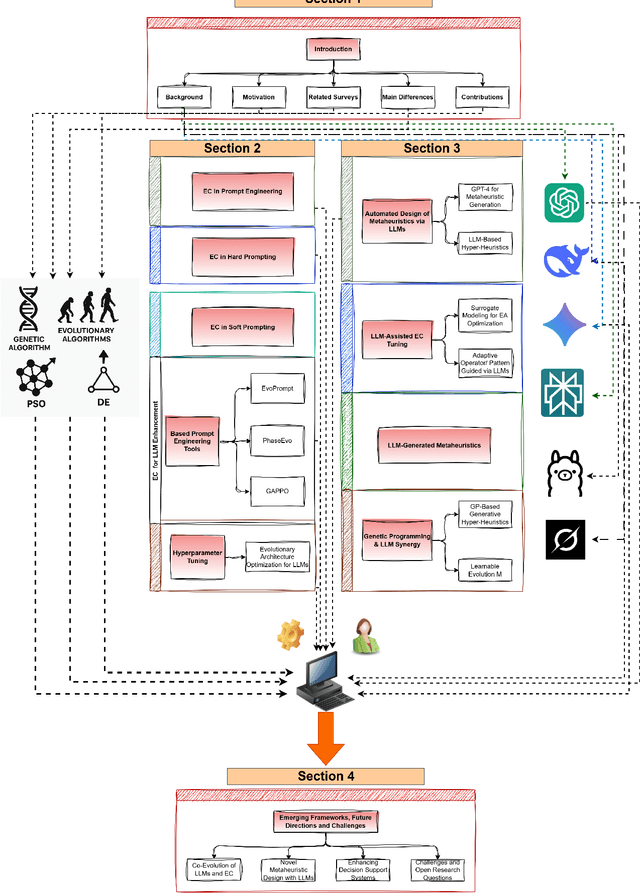
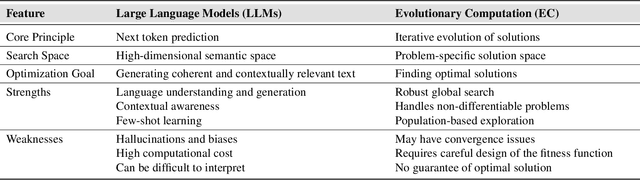
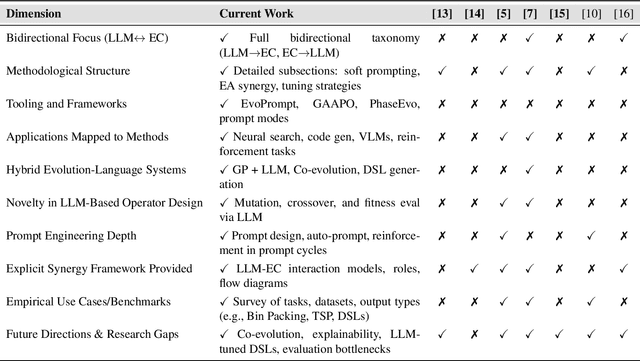
Integrating Large Language Models (LLMs) and Evolutionary Computation (EC) represents a promising avenue for advancing artificial intelligence by combining powerful natural language understanding with optimization and search capabilities. This manuscript explores the synergistic potential of LLMs and EC, reviewing their intersections, complementary strengths, and emerging applications. We identify key opportunities where EC can enhance LLM training, fine-tuning, prompt engineering, and architecture search, while LLMs can, in turn, aid in automating the design, analysis, and interpretation of ECs. The manuscript explores the synergistic integration of EC and LLMs, highlighting their bidirectional contributions to advancing artificial intelligence. It first examines how EC techniques enhance LLMs by optimizing key components such as prompt engineering, hyperparameter tuning, and architecture search, demonstrating how evolutionary methods automate and refine these processes. Secondly, the survey investigates how LLMs improve EC by automating metaheuristic design, tuning evolutionary algorithms, and generating adaptive heuristics, thereby increasing efficiency and scalability. Emerging co-evolutionary frameworks are discussed, showcasing applications across diverse fields while acknowledging challenges like computational costs, interpretability, and algorithmic convergence. The survey concludes by identifying open research questions and advocating for hybrid approaches that combine the strengths of EC and LLMs.
Learning Strategies in Particle Swarm Optimizer: A Critical Review and Performance Analysis
Apr 16, 2025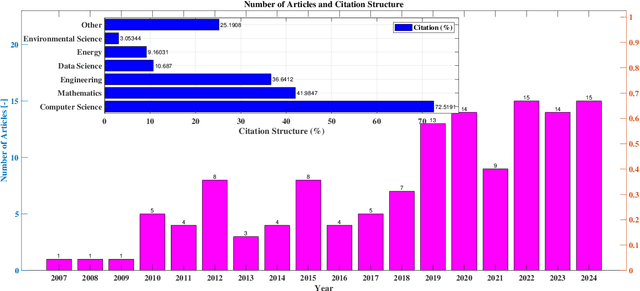
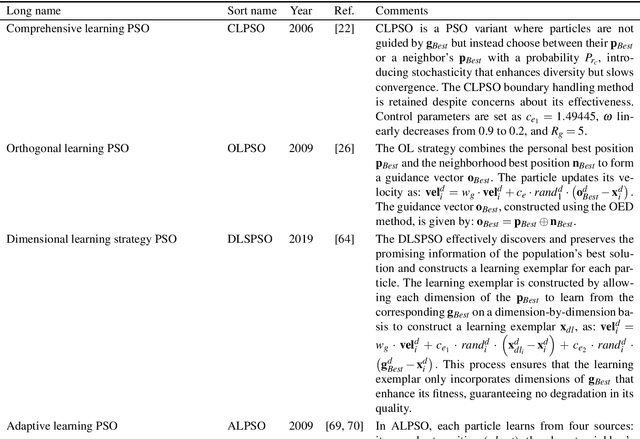
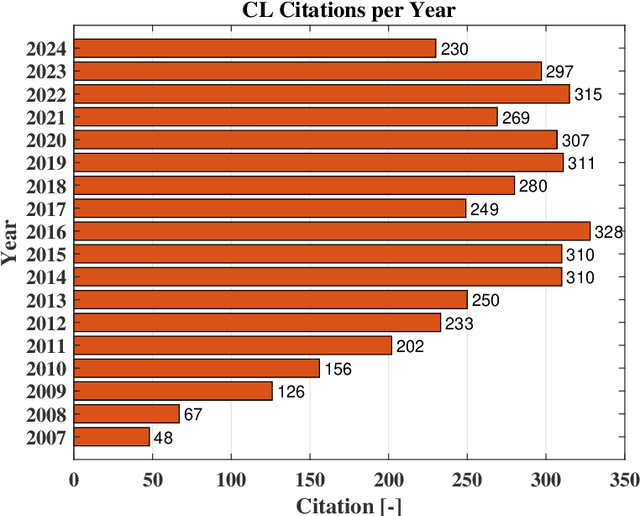
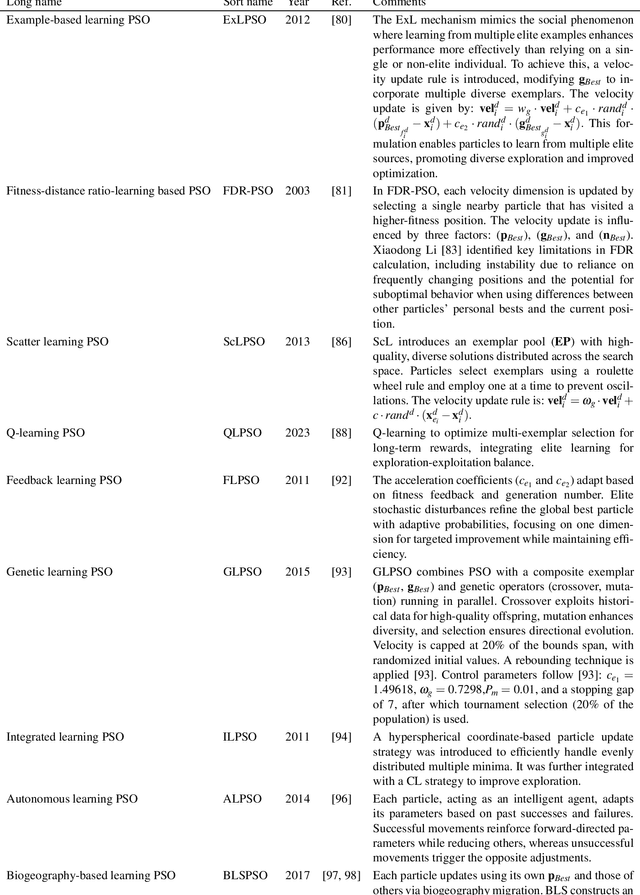
Nature has long inspired the development of swarm intelligence (SI), a key branch of artificial intelligence that models collective behaviors observed in biological systems for solving complex optimization problems. Particle swarm optimization (PSO) is widely adopted among SI algorithms due to its simplicity and efficiency. Despite numerous learning strategies proposed to enhance PSO's performance in terms of convergence speed, robustness, and adaptability, no comprehensive and systematic analysis of these strategies exists. We review and classify various learning strategies to address this gap, assessing their impact on optimization performance. Additionally, a comparative experimental evaluation is conducted to examine how these strategies influence PSO's search dynamics. Finally, we discuss open challenges and future directions, emphasizing the need for self-adaptive, intelligent PSO variants capable of addressing increasingly complex real-world problems.
An Explainable Reconfiguration-Based Optimization Algorithm for Industrial and Reliability-Redundancy Allocation Problems
Apr 02, 2025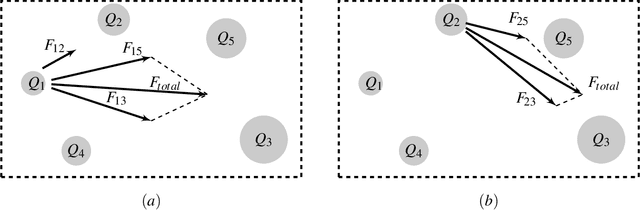

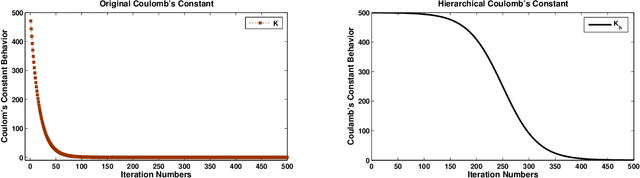
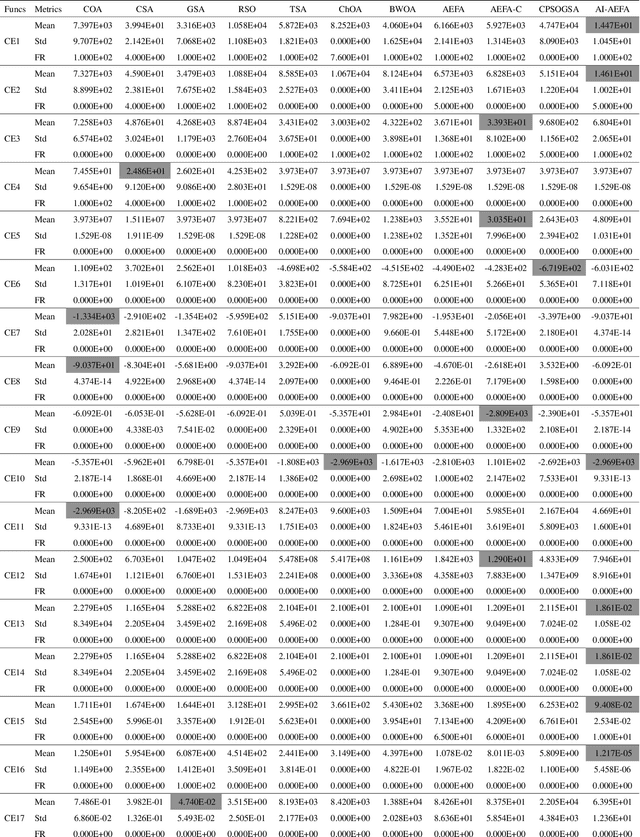
Industrial and reliability optimization problems often involve complex constraints and require efficient, interpretable solutions. This paper presents AI-AEFA, an advanced parameter reconfiguration-based metaheuristic algorithm designed to address large-scale industrial and reliability-redundancy allocation problems. AI-AEFA enhances search space exploration and convergence efficiency through a novel log-sigmoid-based parameter adaptation and chaotic mapping mechanism. The algorithm is validated across twenty-eight IEEE CEC 2017 constrained benchmark problems, fifteen large-scale industrial optimization problems, and seven reliability-redundancy allocation problems, consistently outperforming state-of-the-art optimization techniques in terms of feasibility, computational efficiency, and convergence speed. The additional key contribution of this work is the integration of SHAP (Shapley Additive Explanations) to enhance the interpretability of AI-AEFA, providing insights into the impact of key parameters such as Coulomb's constant, charge, acceleration, and electrostatic force. This explainability feature enables a deeper understanding of decision-making within the AI-AEFA framework during the optimization processes. The findings confirm AI-AEFA as a robust, scalable, and interpretable optimization tool with significant real-world applications.
Advancements in Multimodal Differential Evolution: A Comprehensive Review and Future Perspectives
Apr 01, 2025Multi-modal optimization involves identifying multiple global and local optima of a function, offering valuable insights into diverse optimal solutions within the search space. Evolutionary algorithms (EAs) excel at finding multiple solutions in a single run, providing a distinct advantage over classical optimization techniques that often require multiple restarts without guarantee of obtaining diverse solutions. Among these EAs, differential evolution (DE) stands out as a powerful and versatile optimizer for continuous parameter spaces. DE has shown significant success in multi-modal optimization by utilizing its population-based search to promote the formation of multiple stable subpopulations, each targeting different optima. Recent advancements in DE for multi-modal optimization have focused on niching methods, parameter adaptation, hybridization with other algorithms including machine learning, and applications across various domains. Given these developments, it is an opportune moment to present a critical review of the latest literature and identify key future research directions. This paper offers a comprehensive overview of recent DE advancements in multimodal optimization, including methods for handling multiple optima, hybridization with EAs, and machine learning, and highlights a range of real-world applications. Additionally, the paper outlines a set of compelling open problems and future research issues from multiple perspectives
UDE-III: An Enhanced Unified Differential Evolution Algorithm for Constrained Optimization Problems
Oct 05, 2024In this paper, an enhanced unified differential evolution algorithm, named UDE-III, is presented for real parameter-constrained optimization problems (COPs). The proposed UDE-III is a significantly enhanced version of the Improved UDE (i.e., IUDE or UDE-II), which secured the 1st rank in the CEC 2018 competition on real parameter COPs. To design UDE-III, we extensively targeted the weaknesses of UDE-II. Specifically, UDE-III uses three trial vector generation strategies - DE/rand/1, DE/current-to-rand/1, and DE/current-to-pbest/1. It is based on a dual population approach, and for each generation, it divides the current population into two sub-populations. In the top sub-population, it employs all three trial vector generation strategies on each target vector. On the other hand, the bottom sub-population employs strategy adaptation and one trial vector generation strategy is implemented on each target vector. The mutation operation in UDE-III is based on ranking-based mutation. Further, it employs the parameter adaptation principle of SHADE. The constraint handling principle in UDE-III is based on a combination of the feasibility rule and epsilon-constraint handling technique. We observed that stagnation is a major weakness of UDE-II. To overcome this weakness, we took inspiration from the best-discarded vector selection (BDVS) strategy proposed in the literature and integrated a novel strategy in UDE-III to address stagnation. Additionally, unlike UDE-II, UDE-III considers the size of the two sub-populations to be a design element. Moreover, in comparison to UDE-II, UDE-III improves upon the strategy adaptation, ranking-based mutation, and the constraint handling technique. The proposed UDE-III algorithm is tested on the 28 benchmark 30D problems provided for the CEC 2024 competition on real parameter COPs. The experimental results demonstrate the superiority of UDE-III over UDE-II.
A Multi-operator Ensemble LSHADE with Restart and Local Search Mechanisms for Single-objective Optimization
Sep 24, 2024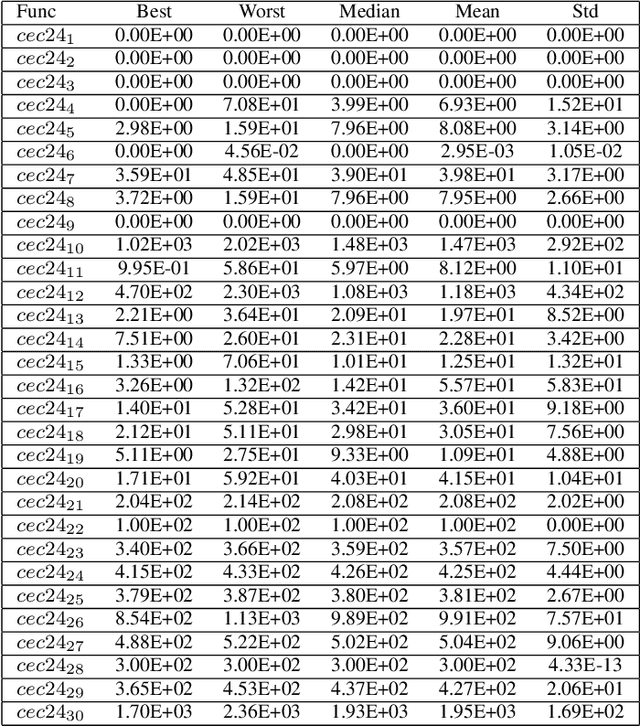
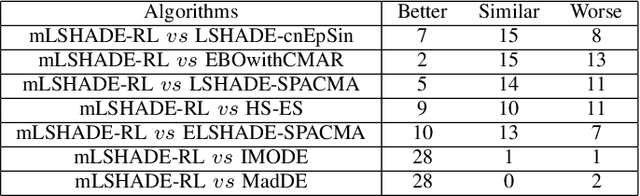
In recent years, multi-operator and multi-method algorithms have succeeded, encouraging their combination within single frameworks. Despite promising results, there remains room for improvement as only some evolutionary algorithms (EAs) consistently excel across all optimization problems. This paper proposes mLSHADE-RL, an enhanced version of LSHADE-cnEpSin, which is one of the winners of the CEC 2017 competition in real-parameter single-objective optimization. mLSHADE-RL integrates multiple EAs and search operators to improve performance further. Three mutation strategies such as DE/current-to-pbest-weight/1 with archive, DE/current-to-pbest/1 without archive, and DE/current-to-ordpbest-weight/1 are integrated in the original LSHADE-cnEpSin. A restart mechanism is also proposed to overcome the local optima tendency. Additionally, a local search method is applied in the later phase of the evolutionary procedure to enhance the exploitation capability of mLSHADE-RL. mLSHADE-RL is tested on 30 dimensions in the CEC 2024 competition on single objective bound constrained optimization, demonstrating superior performance over other state-of-the-art algorithms in producing high-quality solutions across various optimization scenarios.