 Add to Chrome
 Add to Firefox
 Add to Edge
TRec: Egocentric Action Recognition using 2D Point Tracks
Jan 08, 2026
We present a novel approach for egocentric action recognition that leverages 2D point tracks as an additional motion cue. While most existing methods rely on RGB appearance, human pose estimation, or their combination, our work demonstrates that tracking randomly sampled image points across video frames can substantially improve recognition accuracy. Unlike prior approaches, we do not detect hands, objects, or interaction regions. Instead, we employ CoTracker to follow a set of randomly initialized points through each video and use the resulting trajectories, together with the corresponding image frames, as input to a Transformer-based recognition model. Surprisingly, our method achieves notable gains even when only the initial frame and its associated point tracks are provided, without incorporating the full video sequence. Experimental results confirm that integrating 2D point tracks consistently enhances performance compared to the same model trained without motion information, highlighting their potential as a lightweight yet effective representation for egocentric action understanding.

Face Generation and Editing with StyleGAN: A Survey
Dec 18, 2022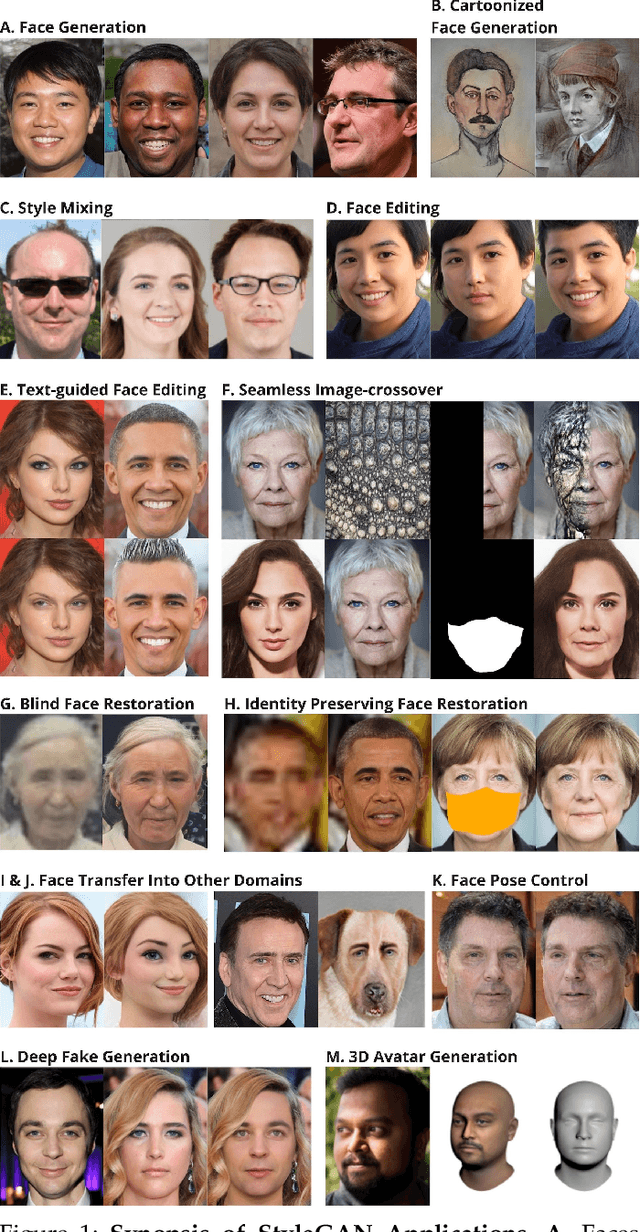
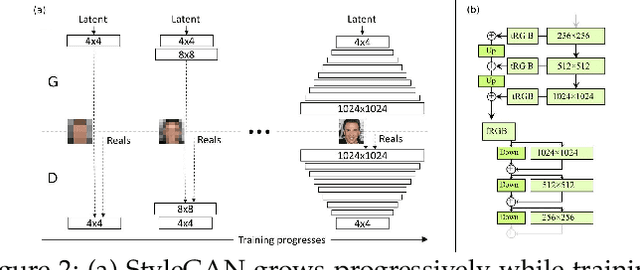
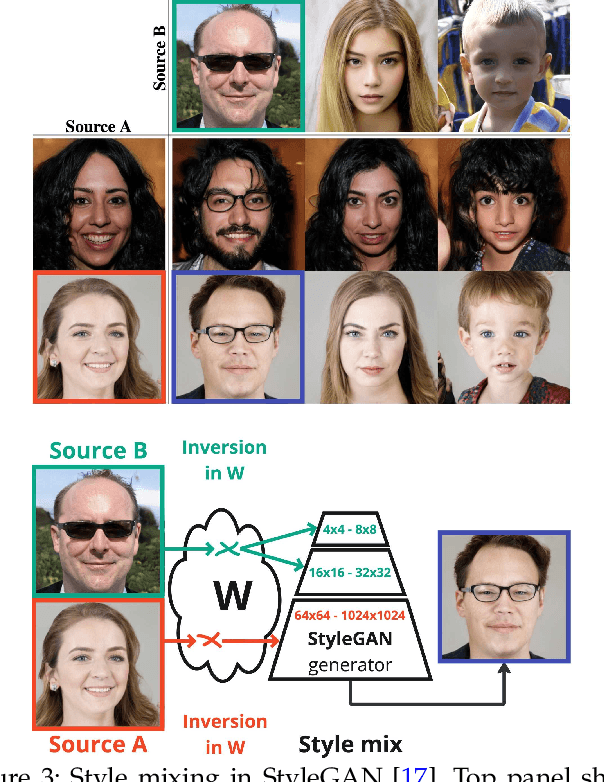
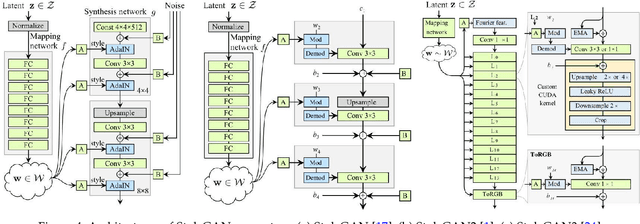
Our goal with this survey is to provide an overview of the state of the art deep learning technologies for face generation and editing. We will cover popular latest architectures and discuss key ideas that make them work, such as inversion, latent representation, loss functions, training procedures, editing methods, and cross domain style transfer. We particularly focus on GAN-based architectures that have culminated in the StyleGAN approaches, which allow generation of high-quality face images and offer rich interfaces for controllable semantics editing and preserving photo quality. We aim to provide an entry point into the field for readers that have basic knowledge about the field of deep learning and are looking for an accessible introduction and overview.