 Add to Chrome
 Add to Firefox
 Add to Edge
Fine-tuning vs. In-context Learning in Large Language Models: A Formal Language Learning Perspective
Apr 25, 2026
Large language models (LLMs) operate in two fundamental learning modes - fine-tuning (FT) and in-context learning (ICL) - raising key questions about which mode yields greater language proficiency and whether they differ in their inductive biases. Prior studies comparing FT and ICL have yielded mixed and inconclusive results due to inconsistent experimental setups. To enable a rigorous comparison, we propose a formal language learning task - offering precise language boundaries, controlled string sampling, and no data contamination - and introduce a discriminative test for language proficiency, where an LLM succeeds if it assigns higher generation probability to in-language strings than to out-of-language strings. Empirically, we find that: (a) FT has greater language proficiency than ICL on in-distribution generalization, but both perform equally well on out-of-distribution generalization. (b) Their inductive biases, measured by the correlation in string generation probabilities, are similar when both modes partially learn the language but diverge at higher proficiency levels. (c) Unlike FT, ICL performance differs substantially across models of varying sizes and families and is sensitive to the token vocabulary of the language. Thus, our work demonstrates the promise of formal languages as a controlled testbed for evaluating LLMs, behaviors that are difficult to isolate in natural language datasets. Our source code is available at https://github.com/bishwamittra/formallm.

ScreenSeg: On-Device Screenshot Layout Analysis
Apr 21, 2021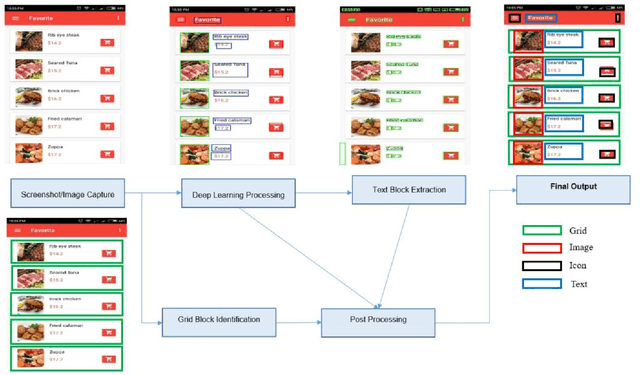
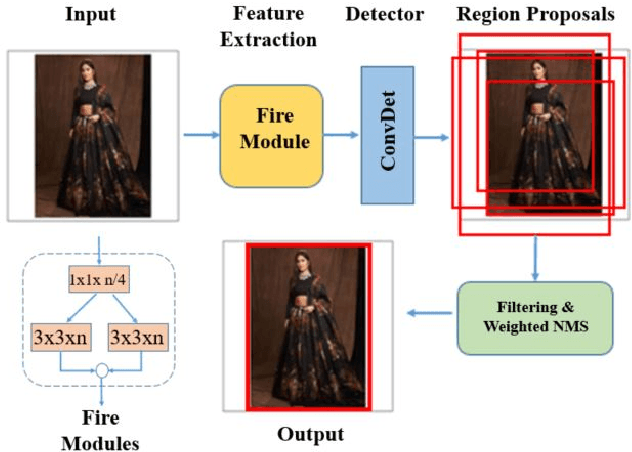
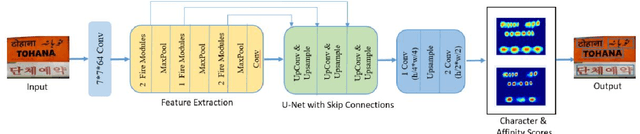
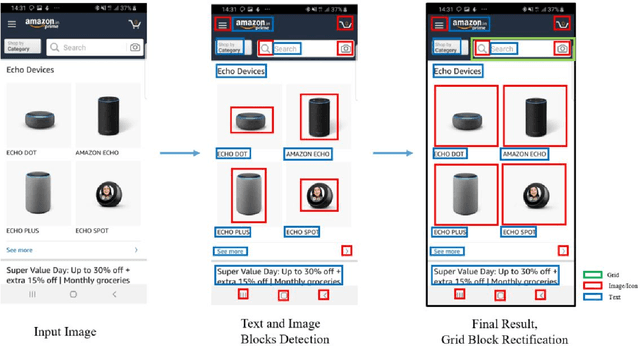
We propose a novel end-to-end solution that performs a Hierarchical Layout Analysis of screenshots and document images on resource constrained devices like mobilephones. Our approach segments entities like Grid, Image, Text and Icon blocks occurring in a screenshot. We provide an option for smart editing by auto highlighting these entities for saving or sharing. Further this multi-level layout analysis of screenshots has many use cases including content extraction, keyword-based image search, style transfer, etc. We have addressed the limitations of known baseline approaches, supported a wide variety of semantically complex screenshots, and developed an approach which is highly optimized for on-device deployment. In addition, we present a novel weighted NMS technique for filtering object proposals. We achieve an average precision of about 0.95 with a latency of around 200ms on Samsung Galaxy S10 Device for a screenshot of 1080p resolution. The solution pipeline is already commercialized in Samsung Device applications i.e. Samsung Capture, Smart Crop, My Filter in Camera Application, Bixby Touch.