 Add to Chrome
 Add to Firefox
 Add to Edge
Motion Compensation for Multiple-Input-Multiple-Output Inverse Synthetic Aperture Imaging of Automotive Targets
Feb 10, 2026
Inverse synthetic aperture radar (ISAR) images generated from single-channel automotive radar data provide critical information about the shape and size of automotive targets. However, the quality of ISAR images degrades due to road clutter and when translational and higher order rotational motions of the targets are not suitably compensated. One method to enhance the signal-to-clutter-and-noise ratio (SCNR) of the systems is to leverage the advantages of the multiple-input-multiple-output (MIMO) framework available in commercial automotive radars to generate MIMO-ISAR images. While substantial research has been devoted to motion compensation of single-channel ISAR images, the effectiveness of these methods for MIMO-ISAR has not been studied extensively. This paper analyzes the performance of three popular motion compensation techniques - entropy minimization, cross-correlation, and phase gradient autofocus - on MIMO-ISAR. The algorithms are evaluated on the measurement data collected using Texas Instruments millimeter-wave MIMO radar. The results indicate that the cross-correlation MOCOMP performs better than the other two MOCOMP algorithms in the MIMO configuration, with an overall improvement of 36%.

Introductory Review of Swarm Intelligence Techniques
Sep 30, 2022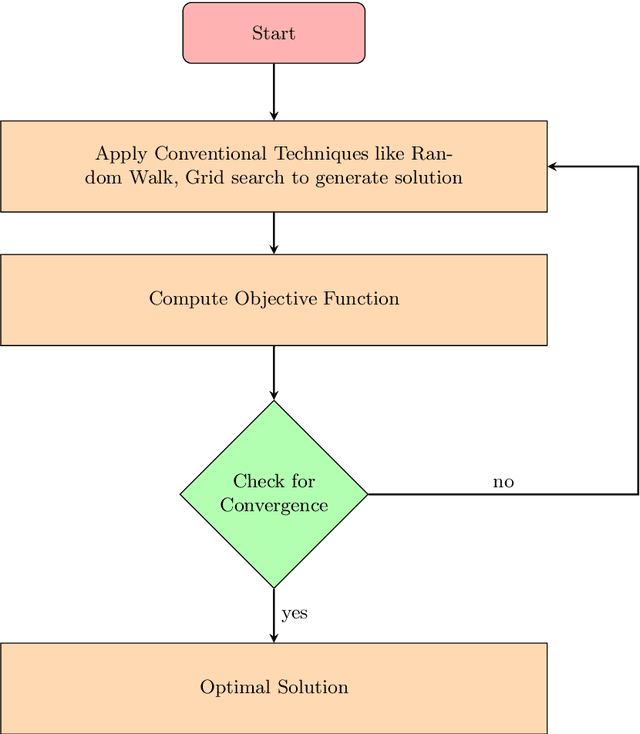
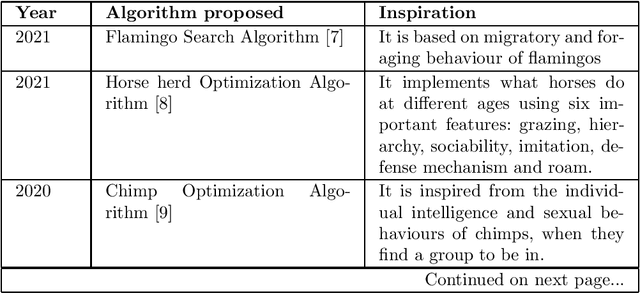
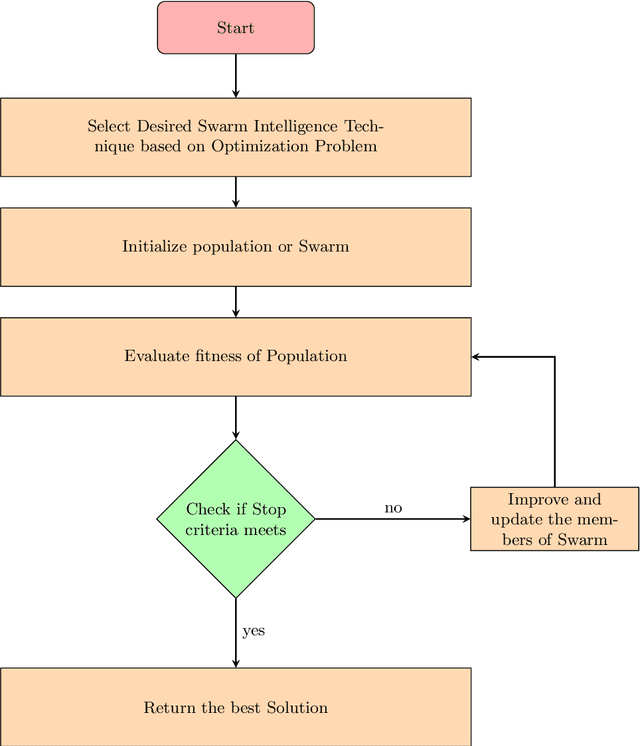
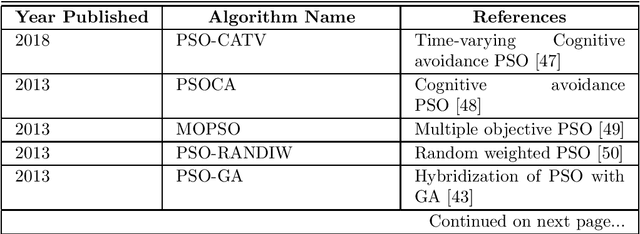
With the rapid upliftment of technology, there has emerged a dire need to fine-tune or optimize certain processes, software, models or structures, with utmost accuracy and efficiency. Optimization algorithms are preferred over other methods of optimization through experimentation or simulation, for their generic problem-solving abilities and promising efficacy with the least human intervention. In recent times, the inducement of natural phenomena into algorithm design has immensely triggered the efficiency of optimization process for even complex multi-dimensional, non-continuous, non-differentiable and noisy problem search spaces. This chapter deals with the Swarm intelligence (SI) based algorithms or Swarm Optimization Algorithms, which are a subset of the greater Nature Inspired Optimization Algorithms (NIOAs). Swarm intelligence involves the collective study of individuals and their mutual interactions leading to intelligent behavior of the swarm. The chapter presents various population-based SI algorithms, their fundamental structures along with their mathematical models.