 Add to Chrome
 Add to Firefox
 Add to Edge
Interpretable Failure Analysis in Multi-Agent Reinforcement Learning Systems
Feb 08, 2026
Multi-Agent Reinforcement Learning (MARL) is increasingly deployed in safety-critical domains, yet methods for interpretable failure detection and attribution remain underdeveloped. We introduce a two-stage gradient-based framework that provides interpretable diagnostics for three critical failure analysis tasks: (1) detecting the true initial failure source (Patient-0); (2) validating why non-attacked agents may be flagged first due to domino effects; and (3) tracing how failures propagate through learned coordination pathways. Stage 1 performs interpretable per-agent failure detection via Taylor-remainder analysis of policy-gradient costs, declaring an initial Patient-0 candidate at the first threshold crossing. Stage 2 provides validation through geometric analysis of critic derivatives-first-order sensitivity and directional second-order curvature aggregated over causal windows to construct interpretable contagion graphs. This approach explains "downstream-first" detection anomalies by revealing pathways that amplify upstream deviations. Evaluated across 500 episodes in Simple Spread (3 and 5 agents) and 100 episodes in StarCraft II using MADDPG and HATRPO, our method achieves 88.2-99.4% Patient-0 detection accuracy while providing interpretable geometric evidence for detection decisions. By moving beyond black-box detection to interpretable gradient-level forensics, this framework offers practical tools for diagnosing cascading failures in safety-critical MARL systems.

ASGM-KG: Unveiling Alluvial Gold Mining Through Knowledge Graphs
Aug 16, 2024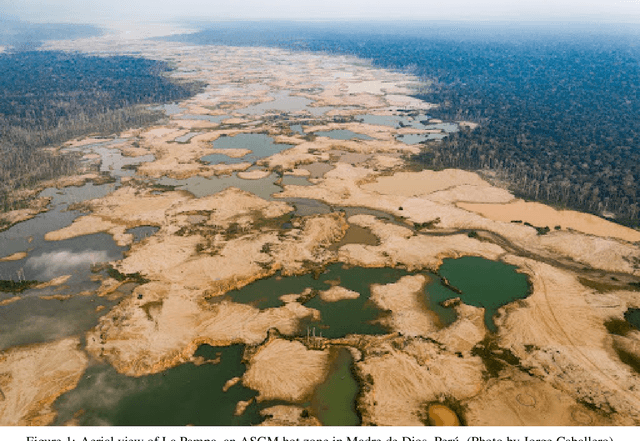

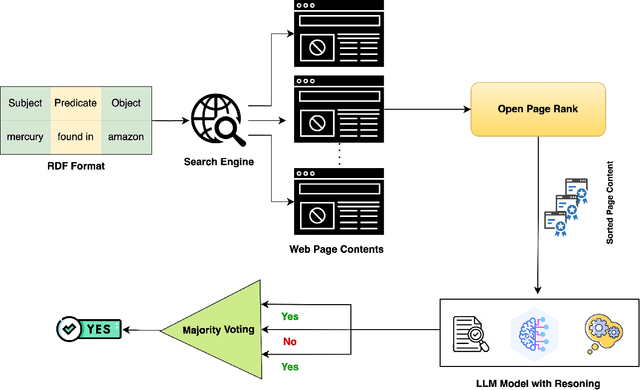
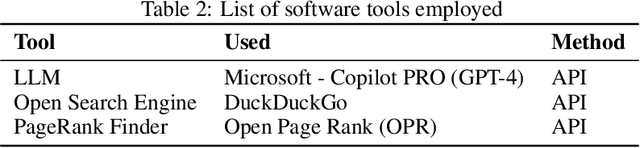
Artisanal and Small-Scale Gold Mining (ASGM) is a low-cost yet highly destructive mining practice, leading to environmental disasters across the world's tropical watersheds. The topic of ASGM spans multiple domains of research and information, including natural and social systems, and knowledge is often atomized across a diversity of media and documents. We therefore introduce a knowledge graph (ASGM-KG) that consolidates and provides crucial information about ASGM practices and their environmental effects. The current version of ASGM-KG consists of 1,899 triples extracted using a large language model (LLM) from documents and reports published by both non-governmental and governmental organizations. These documents were carefully selected by a group of tropical ecologists with expertise in ASGM. This knowledge graph was validated using two methods. First, a small team of ASGM experts reviewed and labeled triples as factual or non-factual. Second, we devised and applied an automated factual reduction framework that relies on a search engine and an LLM for labeling triples. Our framework performs as well as five baselines on a publicly available knowledge graph and achieves over 90 accuracy on our ASGM-KG validated by domain experts. ASGM-KG demonstrates an advancement in knowledge aggregation and representation for complex, interdisciplinary environmental crises such as ASGM.