 Add to Chrome
 Add to Firefox
 Add to Edge
A Sovereign, Open-Source Foundation Model for German and English
Jul 13, 2026
We present Soofi S 30B-A3B, a sovereign, open-source Mixture-of-Experts (MoE) hybrid Mamba Transformer foundation model for German and English. Its hybrid design activates only 3B of 30B parameters per token and keeps the inference cache near-constant as context grows, giving it a decisive throughput advantage over dense models for long-context, high-concurrency deployment. Pretrained on roughly 27 trillion tokens with deliberately up-weighted German, Soofi S matches dense 14 to 27B models on aggregate English and German benchmarks while achieving the best code aggregates in both languages among 17 open base models, and outperforms every European sovereign baseline in our comparison, including ones far larger in active parameters. Among fully open models, Soofi S obtains the highest English and German evaluation scores, ahead of Olmo 3 32B and Apertus 70B. Soofi S was built end-to-end on the German Industrial AI Cloud, a sovereign HPC scale AI infrastructure operated by Deutsche Telekom in Munich. Soofi S will be released under highly permissive, open-access terms: weights, selected intermediate checkpoints, full per-source data accounting, hyperparameters, and training and evaluation code. Where source licenses permit, data-construction artifacts are released under permissive licenses; commercially licensed sources are documented with aggregate statistics and exact mixture accounting.

Modalities, a PyTorch-native Framework For Large-scale LLM Training and Research
Feb 09, 2026Today's LLM (pre-) training and research workflows typically allocate a significant amount of compute to large-scale ablation studies. Despite the substantial compute costs of these ablations, existing open-source frameworks provide limited tooling for these experiments, often forcing researchers to write their own wrappers and scripts. We propose Modalities, an end-to-end PyTorch-native framework that integrates data-driven LLM research with large-scale model training from two angles. Firstly, by integrating state-of-the-art parallelization strategies, it enables both efficient pretraining and systematic ablations at trillion-token and billion-parameter scale. Secondly, Modalities adopts modular design with declarative, self-contained configuration, enabling reproducibility and extensibility levels that are difficult to achieve out-of-the-box with existing LLM training frameworks.
Inter-case Predictive Process Monitoring: A candidate for Quantum Machine Learning?
Jun 30, 2023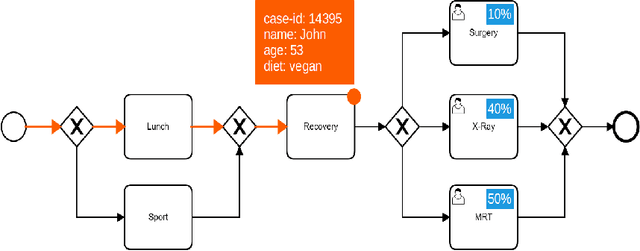
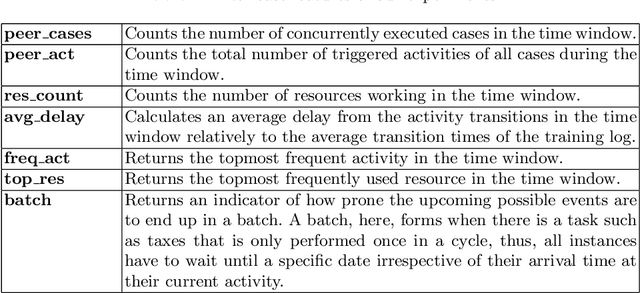
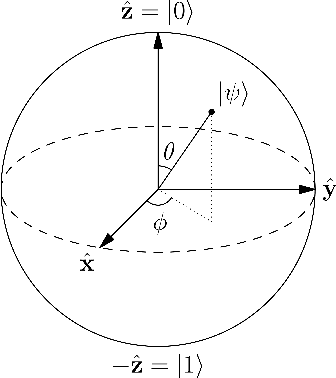
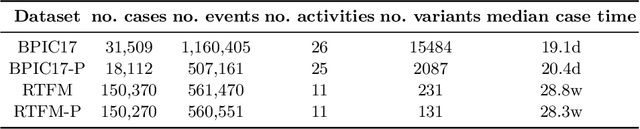
Regardless of the domain, forecasting the future behaviour of a running process instance is a question of interest for decision makers, especially when multiple instances interact. Fostered by the recent advances in machine learning research, several methods have been proposed to predict the next activity, outcome or remaining time of a process automatically. Still, building a model with high predictive power requires both - intrinsic knowledge of how to extract meaningful features from the event log data and a model that captures complex patterns in data. This work builds upon the recent progress in inter-case Predictive Process Monitoring (PPM) and comprehensively benchmarks the impact of inter-case features on prediction accuracy. Moreover, it includes quantum machine learning models, which are expected to provide an advantage over classical models with a scaling amount of feature dimensions. The evaluation on real-world training data from the BPI challenge shows that the inter-case features provide a significant boost by more than four percent in accuracy and quantum algorithms are indeed competitive in a handful of feature configurations. Yet, as quantum hardware is still in its early stages of development, this paper critically discusses these findings in the light of runtime, noise and the risk to overfit on the training data. Finally, the implementation of an open-source plugin demonstrates the technical feasibility to connect a state-of-the-art workflow engine such as Camunda to an IBM quantum computing cloud service.