 Add to Chrome
 Add to Firefox
 Add to Edge
PlumeQuant: Uncertainty-aware consistency assessment of methane plume masks and emission-rate estimates
Jul 15, 2026
Imaging spectrometers increasingly distribute source-resolved methane plume products in which the plume mask, integrated mass enhancement (IME), plume length, emission rate, and uncertainty are physically and algorithmically linked. Using 63 EMIT-derived Carbon Mapper plume records from 27 scenes, we show that these published scalar quantities do not uniquely constrain the plume boundary: substantially different yet plausible masks reproduce the same IME, plume length, and emission rate. Genetic-algorithm (GA) ensembles conditioned on the published IME and plume length make this equifinality explicit: the high-confidence core selected by nearly all target-consistent masks covers a median of 13% of the plausible footprint envelope, and ambiguity is largest for weak, low-overlap plumes. The diagnostics come from PlumeQuant, which recomputes IME, plume length, emission rate, and five-term uncertainty from distributed product components under stated conventions and evaluates four mask representations: the distributed reference mask, a transparent Carbon Mapper-informed analogue (CM-like), the GA ensemble, and optional expert edits. The CM-like mask is generated per plume without access to the reference mask or published quantities, with settings fixed once on a scene-disjoint 44-plume development split. It reproduced published IME with +0.72% median difference and emission rate with +0.16% (6.98% mean absolute), reached 0.843 median intersection-over-union against the reference masks, and matched the published uncertainty scale (median ratio 1.01). Holdout mean absolute errors were 7.6% (IME), 9.5% (length), and 6.1% (rate). These are product-level consistency diagnostics, not independent validation. They flag weak, offset, or ambiguous plumes for expert review.

LLMs for Explainable AI: A Comprehensive Survey
Mar 31, 2025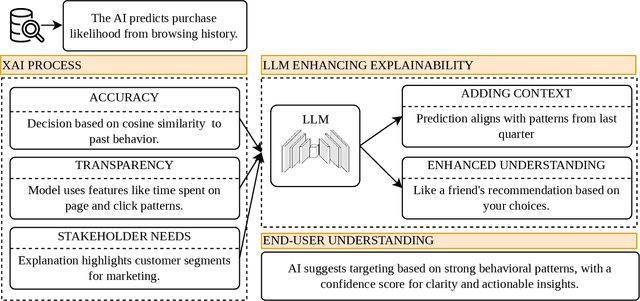
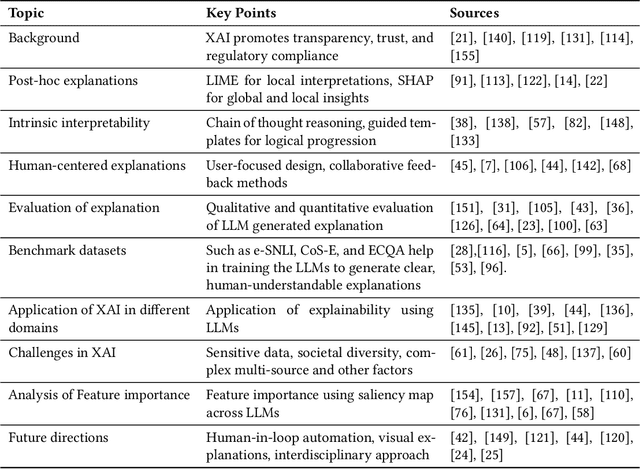
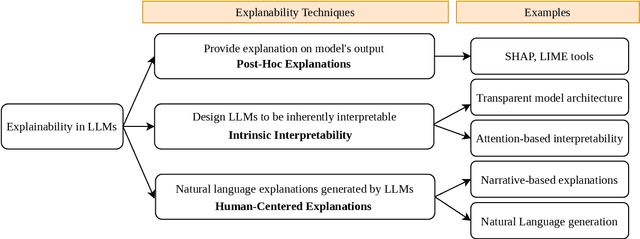
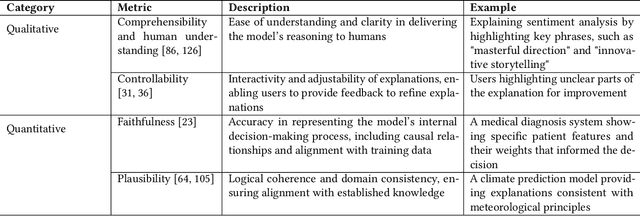
Large Language Models (LLMs) offer a promising approach to enhancing Explainable AI (XAI) by transforming complex machine learning outputs into easy-to-understand narratives, making model predictions more accessible to users, and helping bridge the gap between sophisticated model behavior and human interpretability. AI models, such as state-of-the-art neural networks and deep learning models, are often seen as "black boxes" due to a lack of transparency. As users cannot fully understand how the models reach conclusions, users have difficulty trusting decisions from AI models, which leads to less effective decision-making processes, reduced accountabilities, and unclear potential biases. A challenge arises in developing explainable AI (XAI) models to gain users' trust and provide insights into how models generate their outputs. With the development of Large Language Models, we want to explore the possibilities of using human language-based models, LLMs, for model explainabilities. This survey provides a comprehensive overview of existing approaches regarding LLMs for XAI, and evaluation techniques for LLM-generated explanation, discusses the corresponding challenges and limitations, and examines real-world applications. Finally, we discuss future directions by emphasizing the need for more interpretable, automated, user-centric, and multidisciplinary approaches for XAI via LLMs.
Cross-referencing Social Media and Public Surveillance Camera Data for Disaster Response
Jan 19, 2019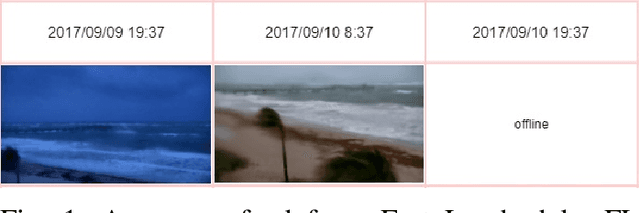
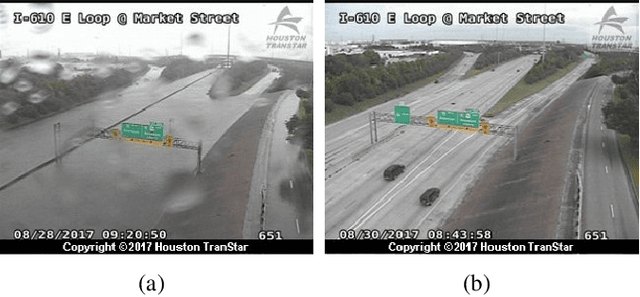
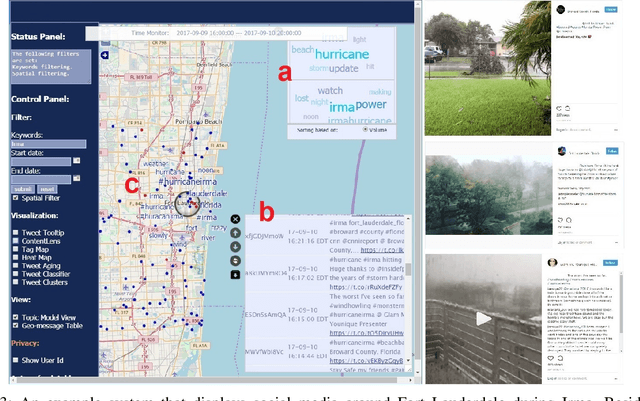
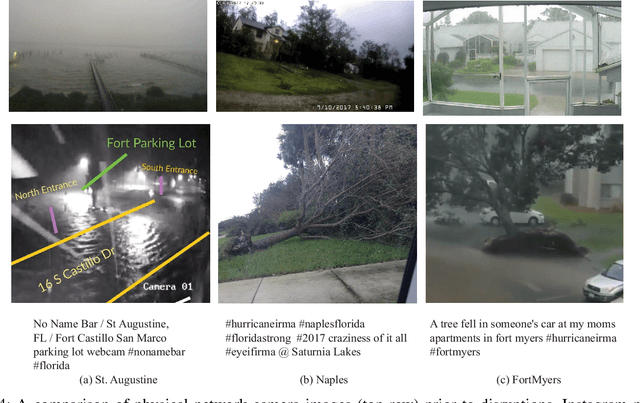
Physical media (like surveillance cameras) and social media (like Instagram and Twitter) may both be useful in attaining on-the-ground information during an emergency or disaster situation. However, the intersection and reliability of both surveillance cameras and social media during a natural disaster are not fully understood. To address this gap, we tested whether social media is of utility when physical surveillance cameras went off-line during Hurricane Irma in 2017. Specifically, we collected and compared geo-tagged Instagram and Twitter posts in the state of Florida during times and in areas where public surveillance cameras went off-line. We report social media content and frequency and content to determine the utility for emergency managers or first responders during a natural disaster.