 Add to Chrome
 Add to Firefox
 Add to Edge
A Robust Optimization Approach to Sparse Principal Component Analysis
Jun 02, 2026
While principal component analysis (PCA) is a fundamental tool for dimensionality reduction, its dense representations make it ill-suited for high-dimensional data. Existing methods address this by promoting sparsity through explicit $\ell_1$-penalties, but these are not obvious to tune due to the unsupervised nature of the task. In contrast, we propose Adversarial PCA (AdvPCA), which leverages robust optimization to achieve sparsity by optimizing the reconstruction objective against bounded, worst-case latent space perturbations. We show that this formulation admits a closed-form reduction, leading to a practical iterative algorithm that alternates between adversarial linear regression-style updates for the sparse encoder and orthogonal updates for the decoder. By theoretically characterizing the solution, we derive a data-adaptive parameterization that allows the algorithm to perform effectively out of the box. We validate these claims through numerical experiments on synthetic and real-world genomics data.

Learning plug-in surrogate endpoints for randomized experiments
May 12, 2026Surrogate endpoints are used in place of long-term outcomes in randomized experiments when observing the real outcome for a large enough cohort is prohibitively expensive or impractical. A short-term surrogate is good if the result of an experiment using the surrogate is predictive of the result of a hypothetical study using the real outcome. Much attention has been paid to formalizing this property in causal terms, but most criteria are unidentifiable and cannot be turned into practical algorithms for learning surrogate endpoints from data. To address this, we study plug-in composite surrogates, functions of post-treatment variables that may be substituted directly for the primary outcome in a randomized experiment. We propose two methods for learning plug-in surrogates that maximize effect predictiveness, and characterize the possibility of finding endpoints that yield unbiased effect estimates in representative scenarios. Finally, in both synthetic experiments with known effects and in data from a real-world experiment, we find that our method, based on directly modeling the surrogate effect, returns plug-in endpoints more predictive of the primary effect than established methods.
Anytime-Valid Conformal Risk Control
Feb 04, 2026Prediction sets provide a means of quantifying the uncertainty in predictive tasks. Using held out calibration data, conformal prediction and risk control can produce prediction sets that exhibit statistically valid error control in a computationally efficient manner. However, in the standard formulations, the error is only controlled on average over many possible calibration datasets of fixed size. In this paper, we extend the control to remain valid with high probability over a cumulatively growing calibration dataset at any time point. We derive such guarantees using quantile-based arguments and illustrate the applicability of the proposed framework to settings involving distribution shift. We further establish a matching lower bound and show that our guarantees are asymptotically tight. Finally, we demonstrate the practical performance of our methods through both simulations and real-world numerical examples.
Learning Treatment Allocations with Risk Control Under Partial Identifiability
May 13, 2025Learning beneficial treatment allocations for a patient population is an important problem in precision medicine. Many treatments come with adverse side effects that are not commensurable with their potential benefits. Patients who do not receive benefits after such treatments are thereby subjected to unnecessary harm. This is a `treatment risk' that we aim to control when learning beneficial allocations. The constrained learning problem is challenged by the fact that the treatment risk is not in general identifiable using either randomized trial or observational data. We propose a certifiable learning method that controls the treatment risk with finite samples in the partially identified setting. The method is illustrated using both simulated and real data.
Target Tracking using Robust Sensor Motion Control
Feb 28, 2025We consider the problem of tracking moving targets using mobile wireless sensors (of possibly different types). This is a joint estimation and control problem in which a tracking system must take into account both target and sensor dynamics. We make minimal assumptions about the target dynamics, namely only that their accelerations are bounded. We develop a control law that determines the sensor motion control signals so as to maximize target resolvability as the target dynamics evolve. The method is given a tractable formulation that is amenable to an efficient search method and is evaluated in a series of experiments involving both round-trip time based ranging and Doppler frequency shift measurements
Certified Inventory Control of Critical Resources
May 23, 2024Inventory control is subject to service-level requirements, in which sufficient stock levels must be maintained despite an unknown demand. We propose a data-driven order policy that certifies any prescribed service level under minimal assumptions on the unknown demand process. The policy achieves this using any online learning method along with integral action. We further propose an inference method that is valid in finite samples. The properties and theoretical guarantees of the method are illustrated using both synthetic and real-world data.
Adaptive Parameter-Free Robust Learning using Latent Bernoulli Variables
Dec 01, 2023
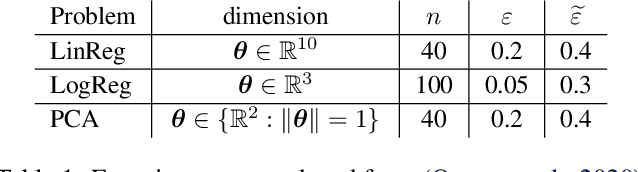
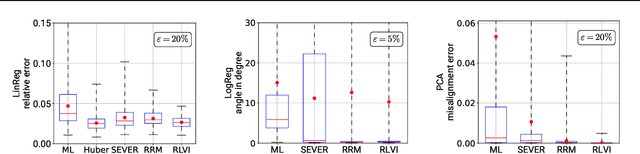
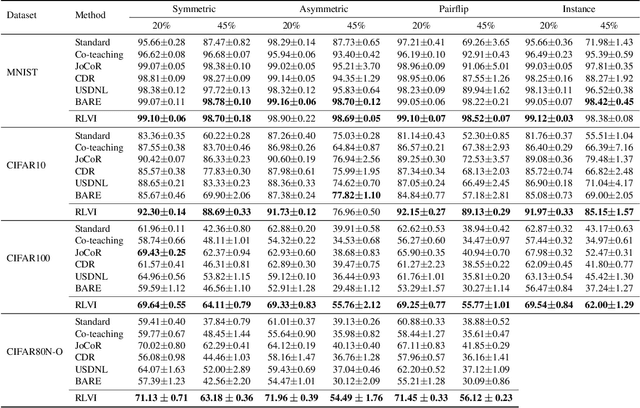
We present an efficient parameter-free approach for statistical learning from corrupted training sets. We identify corrupted and non-corrupted samples using latent Bernoulli variables, and therefore formulate the robust learning problem as maximization of the likelihood where latent variables are marginalized out. The resulting optimization problem is solved via variational inference using an efficient Expectation-Maximization based method. The proposed approach improves over the state-of-the-art by automatically inferring the corruption level and identifying outliers, while adding minimal computational overhead. We demonstrate our robust learning method on a wide variety of machine learning tasks including online learning and deep learning where it exhibits ability to adapt to different levels of noise and attain high prediction accuracy.
Externally Valid Policy Evaluation Combining Trial and Observational Data
Oct 23, 2023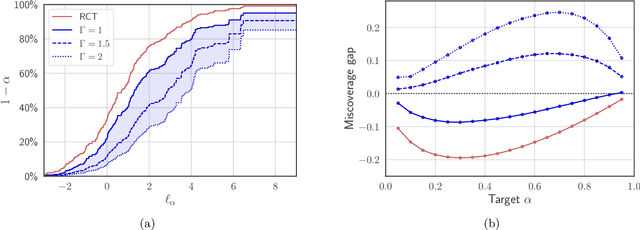
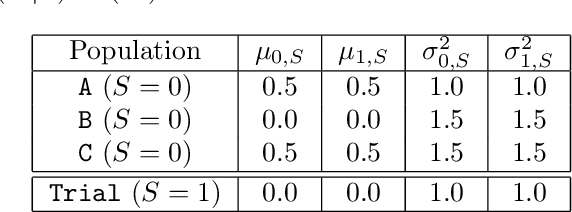
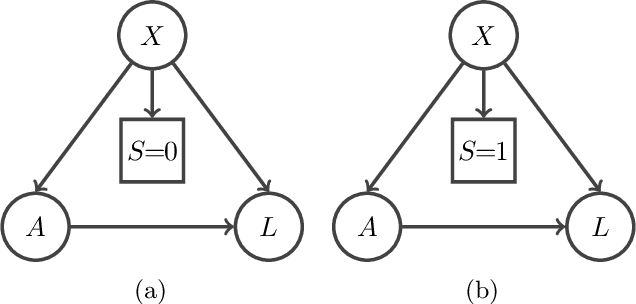
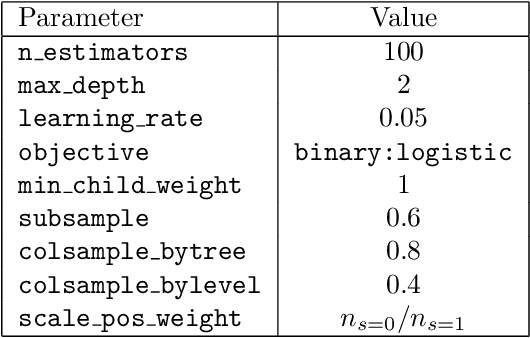
Randomized trials are widely considered as the gold standard for evaluating the effects of decision policies. Trial data is, however, drawn from a population which may differ from the intended target population and this raises a problem of external validity (aka. generalizability). In this paper we seek to use trial data to draw valid inferences about the outcome of a policy on the target population. Additional covariate data from the target population is used to model the sampling of individuals in the trial study. We develop a method that yields certifiably valid trial-based policy evaluations under any specified range of model miscalibrations. The method is nonparametric and the validity is assured even with finite samples. The certified policy evaluations are illustrated using both simulated and real data.
Regularization properties of adversarially-trained linear regression
Oct 16, 2023State-of-the-art machine learning models can be vulnerable to very small input perturbations that are adversarially constructed. Adversarial training is an effective approach to defend against it. Formulated as a min-max problem, it searches for the best solution when the training data were corrupted by the worst-case attacks. Linear models are among the simple models where vulnerabilities can be observed and are the focus of our study. In this case, adversarial training leads to a convex optimization problem which can be formulated as the minimization of a finite sum. We provide a comparative analysis between the solution of adversarial training in linear regression and other regularization methods. Our main findings are that: (A) Adversarial training yields the minimum-norm interpolating solution in the overparameterized regime (more parameters than data), as long as the maximum disturbance radius is smaller than a threshold. And, conversely, the minimum-norm interpolator is the solution to adversarial training with a given radius. (B) Adversarial training can be equivalent to parameter shrinking methods (ridge regression and Lasso). This happens in the underparametrized region, for an appropriate choice of adversarial radius and zero-mean symmetrically distributed covariates. (C) For $\ell_\infty$-adversarial training -- as in square-root Lasso -- the choice of adversarial radius for optimal bounds does not depend on the additive noise variance. We confirm our theoretical findings with numerical examples.
Offline Policy Evaluation with Out-of-Sample Guarantees
Jan 20, 2023We consider the problem of evaluating the performance of a decision policy using past observational data. The outcome of a policy is measured in terms of a loss or disutility (or negative reward) and the problem is to draw valid inferences about the out-of-sample loss of the specified policy when the past data is observed under a, possibly unknown, policy. Using a sample-splitting method, we show that it is possible to draw such inferences with finite-sample coverage guarantees that evaluate the entire loss distribution. Importantly, the method takes into account model misspecifications of the past policy -- including unmeasured confounding. The evaluation method can be used to certify the performance of a policy using observational data under an explicitly specified range of credible model assumptions.