 Add to Chrome
 Add to Firefox
 Add to Edge
Nemotron 3 Ultra: Open, Efficient Mixture-of-Experts Hybrid Mamba-Transformer Model for Agentic Reasoning
Jun 12, 2026
We introduce Nemotron 3 Ultra, a 550 billion total and 55 billion active parameter Mixture-of-Experts Hybrid Mamba-Attention language model. We pre-trained Nemotron 3 Ultra on 20 trillion text tokens, then extended the context length to 1M tokens, and post-trained using Supervised Fine Tuning (SFT), Reinforcement Learning (RL), and Multi-teacher On-Policy Distillation (MOPD). Nemotron 3 Ultra is our most capable model yet, employing multiple key technologies - LatentMoE, Multi Token Prediction (MTP), NVFP4 pre-training, multi-environment RLVR, MOPD, and reasoning budget control. Nemotron 3 Ultra achieves up to ~6x higher inference throughput as compared to state-of-the-art publicly available LLMs while attaining on-par accuracy. The state-of-the-art accuracy, high inference throughput, and 1M token context length make Nemotron 3 Ultra ideal for long-running autonomous agentic tasks. We open-source the base, post-trained, and quantized checkpoints, along with the training data and recipe on HuggingFace.

Nemotron 3 Super: Open, Efficient Mixture-of-Experts Hybrid Mamba-Transformer Model for Agentic Reasoning
Apr 14, 2026We describe the pre-training, post-training, and quantization of Nemotron 3 Super, a 120 billion (active 12 billion) parameter hybrid Mamba-Attention Mixture-of-Experts model. Nemotron 3 Super is the first model in the Nemotron 3 family to 1) be pre-trained in NVFP4, 2) leverage LatentMoE, a new Mixture-of-Experts architecture that optimizes for both accuracy per FLOP and accuracy per parameter, and 3) include MTP layers for inference acceleration through native speculative decoding. We pre-trained Nemotron 3 Super on 25 trillion tokens followed by post-training using supervised fine tuning (SFT) and reinforcement learning (RL). The final model supports up to 1M context length and achieves comparable accuracy on common benchmarks, while also achieving up to 2.2x and 7.5x higher inference throughput compared to GPT-OSS-120B and Qwen3.5-122B, respectively. Nemotron 3 Super datasets, along with the base, post-trained, and quantized checkpoints, are open-sourced on HuggingFace.
NVIDIA Nemotron 3: Efficient and Open Intelligence
Dec 24, 2025We introduce the Nemotron 3 family of models - Nano, Super, and Ultra. These models deliver strong agentic, reasoning, and conversational capabilities. The Nemotron 3 family uses a Mixture-of-Experts hybrid Mamba-Transformer architecture to provide best-in-class throughput and context lengths of up to 1M tokens. Super and Ultra models are trained with NVFP4 and incorporate LatentMoE, a novel approach that improves model quality. The two larger models also include MTP layers for faster text generation. All Nemotron 3 models are post-trained using multi-environment reinforcement learning enabling reasoning, multi-step tool use, and support granular reasoning budget control. Nano, the smallest model, outperforms comparable models in accuracy while remaining extremely cost-efficient for inference. Super is optimized for collaborative agents and high-volume workloads such as IT ticket automation. Ultra, the largest model, provides state-of-the-art accuracy and reasoning performance. Nano is released together with its technical report and this white paper, while Super and Ultra will follow in the coming months. We will openly release the model weights, pre- and post-training software, recipes, and all data for which we hold redistribution rights.
Nemotron 3 Nano: Open, Efficient Mixture-of-Experts Hybrid Mamba-Transformer Model for Agentic Reasoning
Dec 23, 2025We present Nemotron 3 Nano 30B-A3B, a Mixture-of-Experts hybrid Mamba-Transformer language model. Nemotron 3 Nano was pretrained on 25 trillion text tokens, including more than 3 trillion new unique tokens over Nemotron 2, followed by supervised fine tuning and large-scale RL on diverse environments. Nemotron 3 Nano achieves better accuracy than our previous generation Nemotron 2 Nano while activating less than half of the parameters per forward pass. It achieves up to 3.3x higher inference throughput than similarly-sized open models like GPT-OSS-20B and Qwen3-30B-A3B-Thinking-2507, while also being more accurate on popular benchmarks. Nemotron 3 Nano demonstrates enhanced agentic, reasoning, and chat abilities and supports context lengths up to 1M tokens. We release both our pretrained Nemotron 3 Nano 30B-A3B Base and post-trained Nemotron 3 Nano 30B-A3B checkpoints on Hugging Face.
Distance Metric Learning through Minimization of the Free Energy
Jun 10, 2021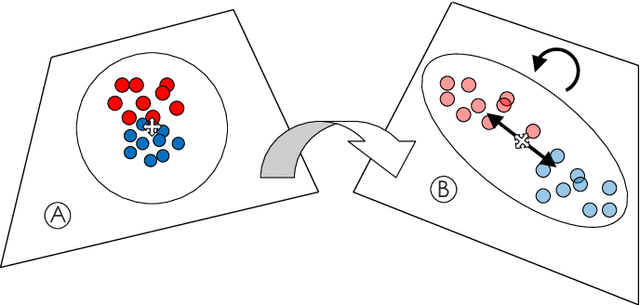
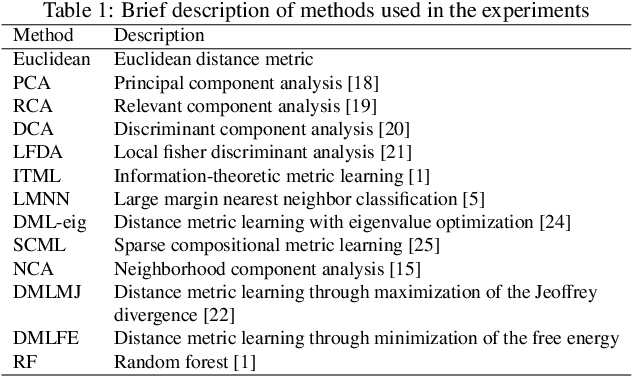
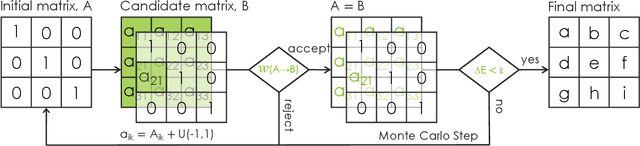
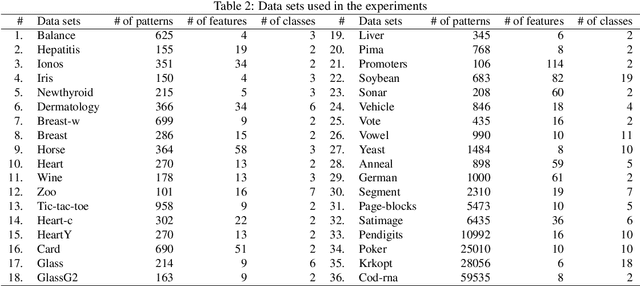
Distance metric learning has attracted a lot of interest for solving machine learning and pattern recognition problems over the last decades. In this work we present a simple approach based on concepts from statistical physics to learn optimal distance metric for a given problem. We formulate the task as a typical statistical physics problem: distances between patterns represent constituents of a physical system and the objective function corresponds to energy. Then we express the problem as a minimization of the free energy of a complex system, which is equivalent to distance metric learning. Much like for many problems in physics, we propose an approach based on Metropolis Monte Carlo to find the best distance metric. This provides a natural way to learn the distance metric, where the learning process can be intuitively seen as stretching and rotating the metric space until some heuristic is satisfied. Our proposed method can handle a wide variety of constraints including those with spurious local minima. The approach works surprisingly well with stochastic nearest neighbors from neighborhood component analysis (NCA). Experimental results on artificial and real-world data sets reveal a clear superiority over a number of state-of-the-art distance metric learning methods for nearest neighbors classification.
Search Spaces for Neural Model Training
May 27, 2021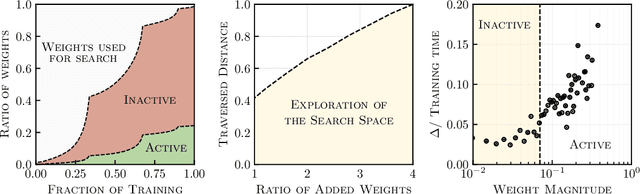
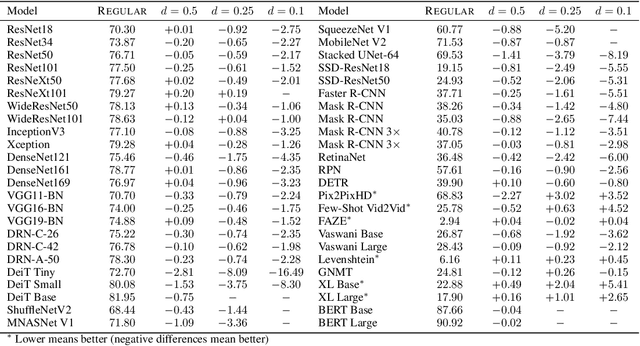
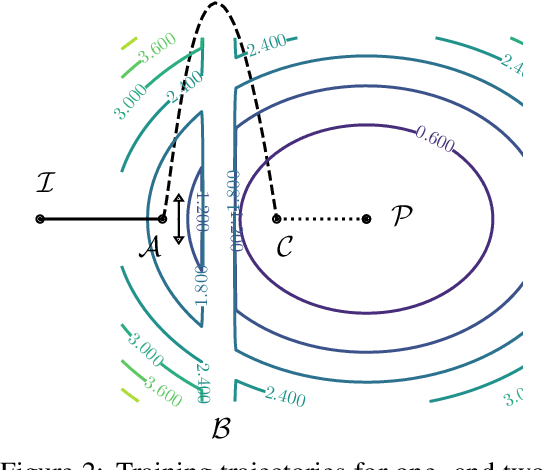
While larger neural models are pushing the boundaries of what deep learning can do, often more weights are needed to train models rather than to run inference for tasks. This paper seeks to understand this behavior using search spaces -- adding weights creates extra degrees of freedom that form new paths for optimization (or wider search spaces) rendering neural model training more effective. We then show how we can augment search spaces to train sparse models attaining competitive scores across dozens of deep learning workloads. They are also are tolerant of structures targeting current hardware, opening avenues for training and inference acceleration. Our work encourages research to explore beyond massive neural models being used today.
Accelerating Sparse Deep Neural Networks
Apr 16, 2021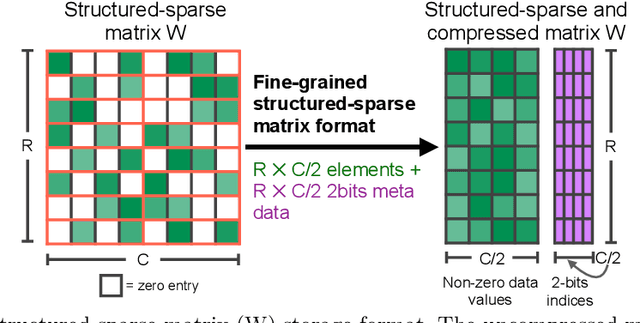
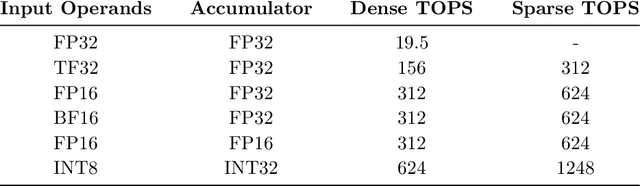
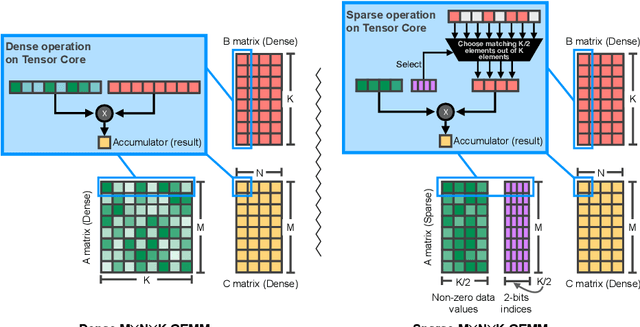
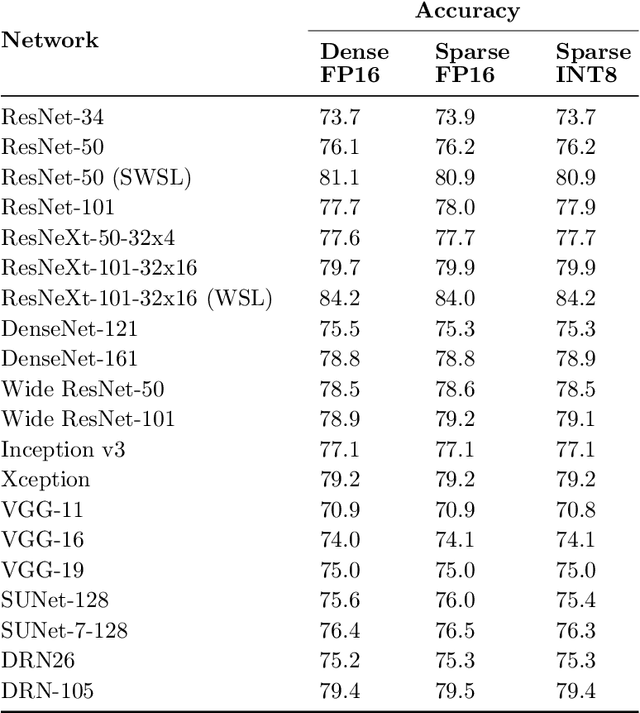
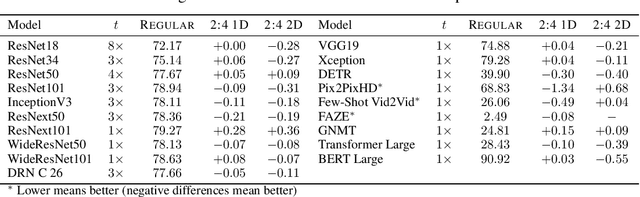
As neural network model sizes have dramatically increased, so has the interest in various techniques to reduce their parameter counts and accelerate their execution. An active area of research in this field is sparsity - encouraging zero values in parameters that can then be discarded from storage or computations. While most research focuses on high levels of sparsity, there are challenges in universally maintaining model accuracy as well as achieving significant speedups over modern matrix-math hardware. To make sparsity adoption practical, the NVIDIA Ampere GPU architecture introduces sparsity support in its matrix-math units, Tensor Cores. We present the design and behavior of Sparse Tensor Cores, which exploit a 2:4 (50%) sparsity pattern that leads to twice the math throughput of dense matrix units. We also describe a simple workflow for training networks that both satisfy 2:4 sparsity pattern requirements and maintain accuracy, verifying it on a wide range of common tasks and model architectures. This workflow makes it easy to prepare accurate models for efficient deployment on Sparse Tensor Cores.