 Add to Chrome
 Add to Firefox
 Add to Edge
Neither Replacement nor Panacea: Comparing LLM-Based Conversational and Graphical Decision Support in Industrial Tasks
May 29, 2026
Managers in manufacturing settings rely on digital interfaces to interpret operational data for decision-making, but growing data volume and complexity can make relevant insights difficult to identify efficiently. While dashboards remain dominant in industrial contexts, Large Language Model (LLM)-based conversational agents (CAs), accessed through conversational user interfaces (CUIs), may provide more direct access to such data. However, their effectiveness may depend on the information-processing demands of the task. This study compares an LLM-based CA delivered through a CUI with a dashboard in a manufacturing decision-support scenario. In a mixed factorial experiment with a 2x3 design, 134 industrial decision-makers were assigned to one interface condition and completed three tasks of increasing complexity. We examined perceived Mental Workload (MWL), decision accuracy, completion time, and intended reliance, and tested self-reported data literacy as a moderator. Results showed that the CUI reduced perceived MWL overall and supported faster completion in less demanding tasks, but both advantages diminished as task complexity increased. Neither interface produced a consistent overall advantage in decision accuracy, and the CUI was not preferred as a sole basis for subsequent decisions. Furthermore, data literacy did not reliably moderate interface effects. These findings indicate that conversational interaction offers conditional rather than universal benefits for industrial decision support. LLM-based CAs may reduce information-access effort, whereas complex decisions continue to benefit from persistent, inspectable visual representations.

Comparing LLM-Based Conversational and Graphical Interfaces for Industrial Decision Tasks: An Exploratory Mixed-Methods Study
May 29, 2026The use of Generative AI Conversational User Interfaces (CUI) as a new way to access and analyze data is growing in all sectors, and the industrial one is no exception. There, large amounts of data produced by IoT devices are flowing through user interfaces and may require them a new adaptation to the new analyses needs of decision-makers. LLM-based CUIs are promising a new way to directly interact with those data through the directness of natural language and without the learning costs that every GUI design has. Moreover, the capabilities of LLMs and their agency open up the possibility to automate some tasks and help with the reasoning during decision-making activities. But are this promises well founded? We try to scope this general question with a mixed-approach study comparing a state-of-the-art dashboard with a conversational agent. A total of 20 participants used both interfaces to complete four simulated industrial decision tasks of varying complexity. We combined measures of mental workload, completion time, and decision accuracy with a post-study questionnaire and semi-structured interviews analyzed through thematic analysis. The findings suggest that the conversational agent can reduce interactional effort by supporting more direct access to information, while the dashboard remains valuable for overview and verification. However, these benefits may vary across tasks and require validation through larger-scale studies.
Towards a Taxonomy of Industrial Challenges and Enabling Technologies in Industry 4.0
Nov 29, 2022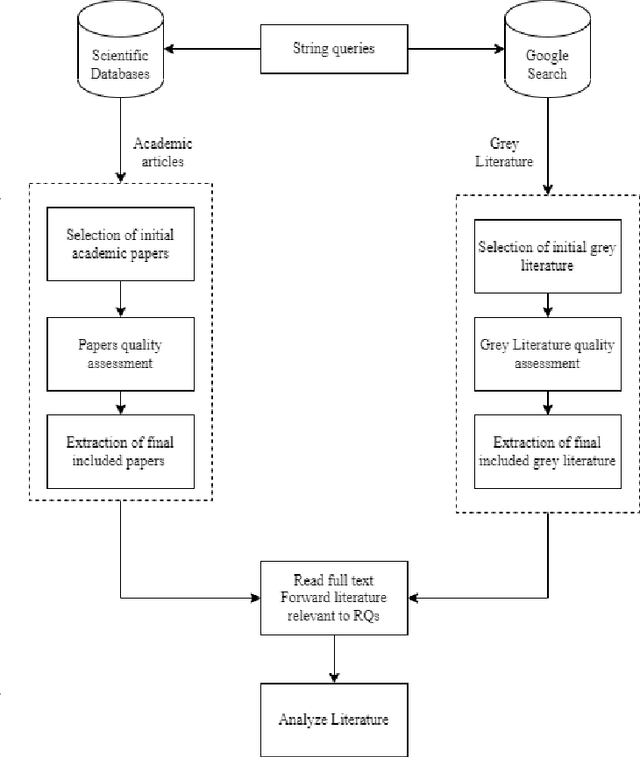
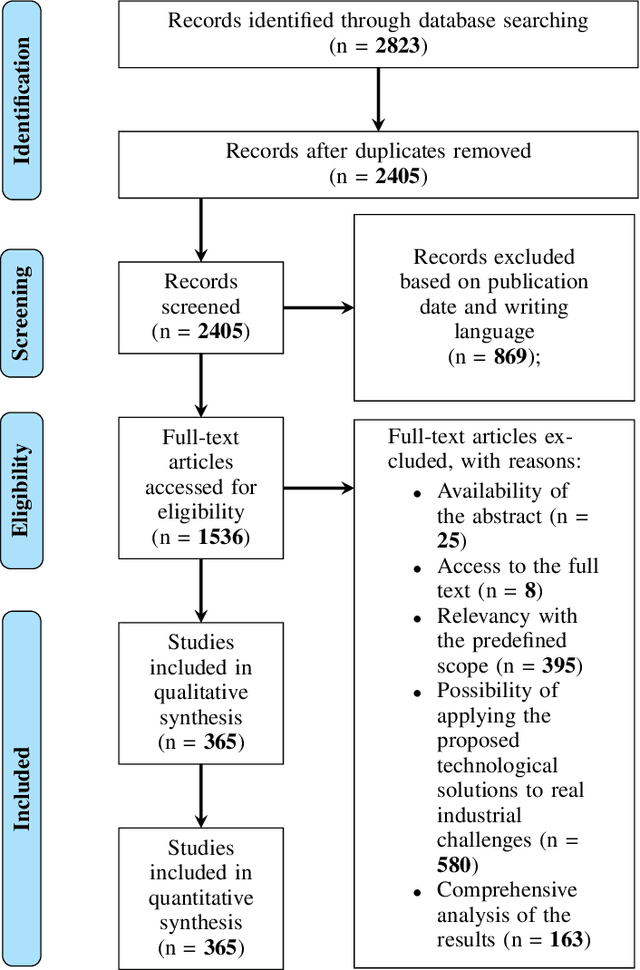
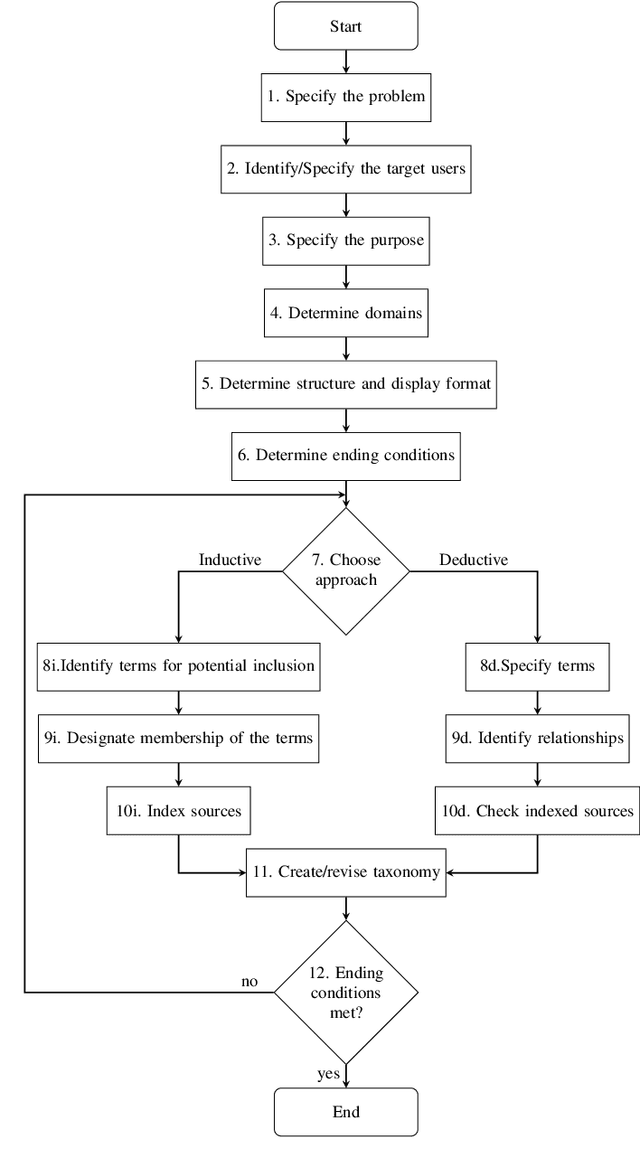
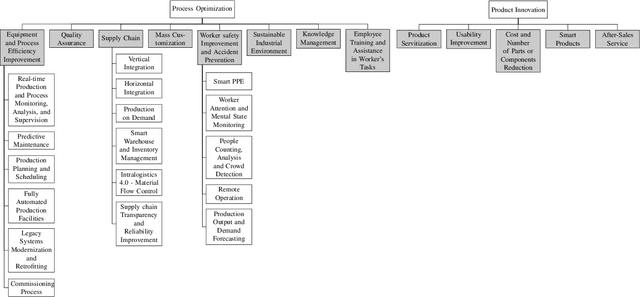
Today, one of the biggest challenges for digital transformation in the Industry 4.0 paradigm is the lack of mutual understanding between the academic and the industrial world. On the one hand, the industry fails to apply new technologies and innovations from scientific research. At the same time, academics struggle to find and focus on real-world applications for their developing technological solutions. Moreover, the increasing complexity of industrial challenges and technologies is widening this hiatus. To reduce this knowledge and communication gap, this article proposes a mixed approach of humanistic and engineering techniques applied to the technological and enterprise fields. The study's results are represented by a taxonomy in which industrial challenges and I4.0-focused technologies are categorized and connected through academic and grey literature analysis. This taxonomy also formed the basis for creating a public web platform where industrial practitioners can identify candidate solutions for an industrial challenge. At the same time, from the educational perspective, the learning procedure can be supported since, through this tool, academics can identify real-world scenarios to integrate digital technologies' teaching process.
TEACHING -- Trustworthy autonomous cyber-physical applications through human-centred intelligence
Jul 14, 2021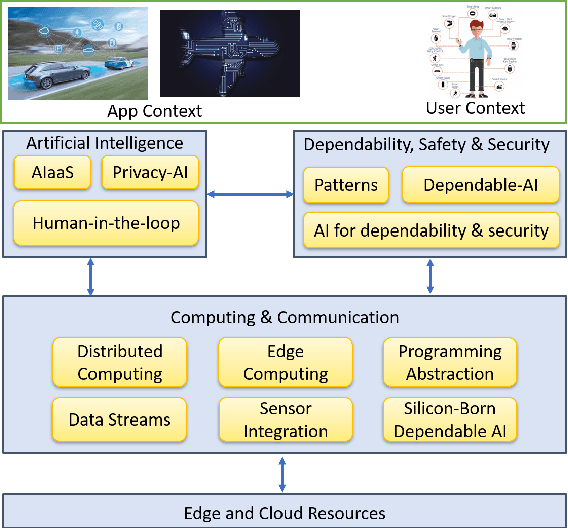
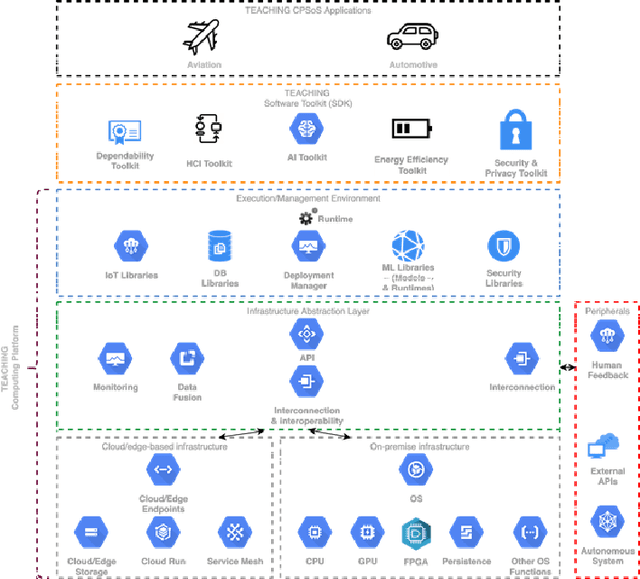
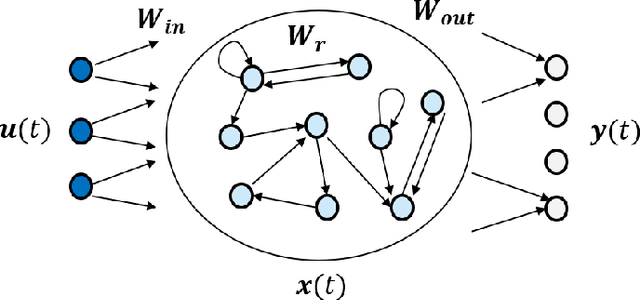
This paper discusses the perspective of the H2020 TEACHING project on the next generation of autonomous applications running in a distributed and highly heterogeneous environment comprising both virtual and physical resources spanning the edge-cloud continuum. TEACHING puts forward a human-centred vision leveraging the physiological, emotional, and cognitive state of the users as a driver for the adaptation and optimization of the autonomous applications. It does so by building a distributed, embedded and federated learning system complemented by methods and tools to enforce its dependability, security and privacy preservation. The paper discusses the main concepts of the TEACHING approach and singles out the main AI-related research challenges associated with it. Further, we provide a discussion of the design choices for the TEACHING system to tackle the aforementioned challenges
Towards Automatic building of Human-Machine Conversational System to support Maintenance Processes
May 13, 2020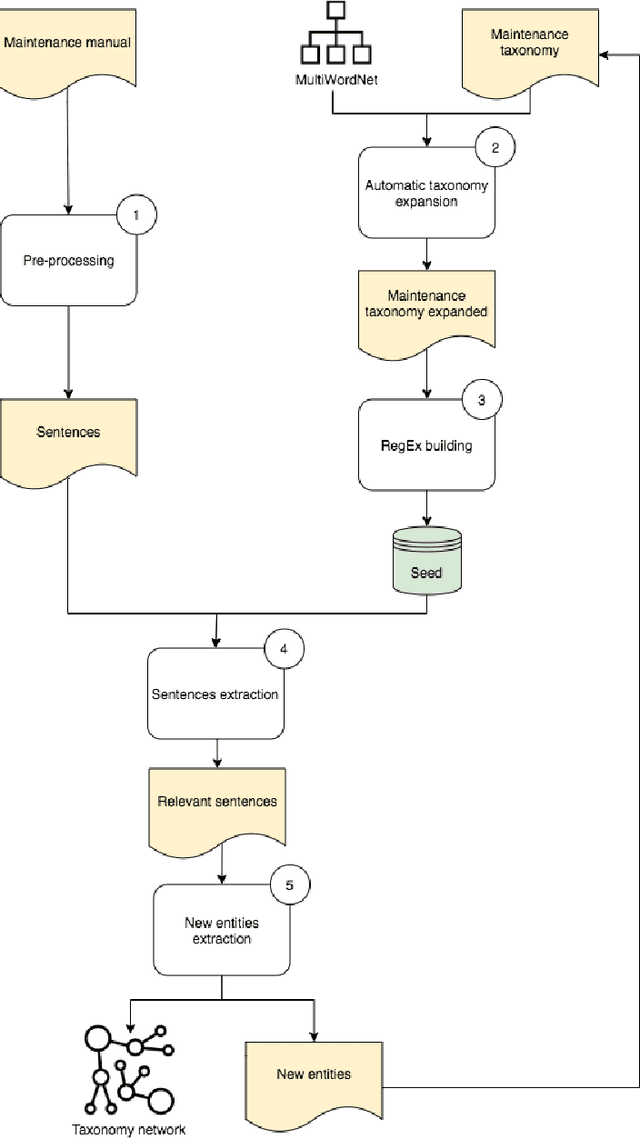
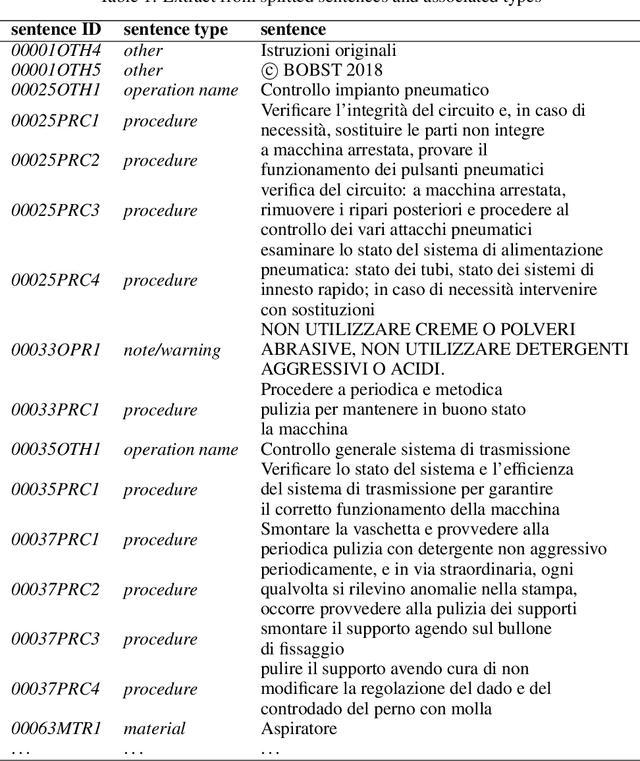
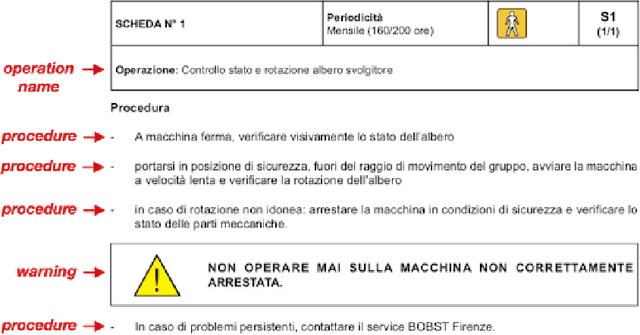
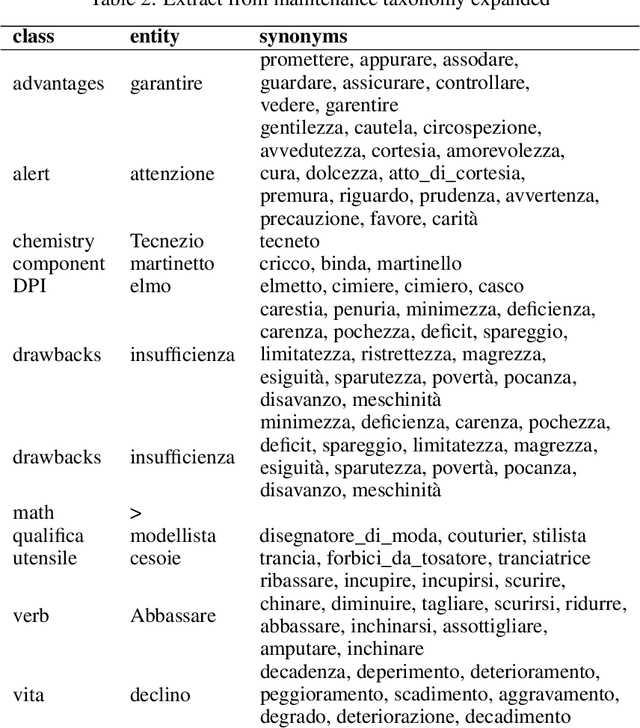
Companies are dealing with many cognitive changes with the introduction of the Industry 4.0 paradigm. In this constantly changing environment, knowledge management is a key factor. Dialog systems, being able to hold a conversation with humans, could support the knowledge management in business environment. Although, these systems are currently hand-coded and need the intervention of a human being in writing all the possible questions and answers, and then planning the interactions. This process, besides being time-consuming, is not scalable. Conversely, a dialog system, also referred to as chatbot, can be built from scratch by simply extracting rules from technical documentation. So, the goal of this research is designing a methodology for automatic building of human-machine conversational system, able to interact in an industrial environment. An initial taxonomy, containing entities expected to be found in maintenance manuals, is used to identify the relevant sentences of a manual provided by the company BOBST SA and applying text mining techniques, it is automatically expanded. The final result is a taxonomy network representing the entities and their relation, that will be used in future works for managing the interactions of a maintenance chatbot.