 Add to Chrome
 Add to Firefox
 Add to Edge
Amortized Bayesian inference for actigraph time sheet data from mobile devices
Feb 24, 2026
Mobile data technologies use ``actigraphs'' to furnish information on health variables as a function of a subject's movement. The advent of wearable devices and related technologies has propelled the creation of health databases consisting of human movement data to conduct research on mobility patterns and health outcomes. Statistical methods for analyzing high-resolution actigraph data depend on the specific inferential context, but the advent of Artificial Intelligence (AI) frameworks require that the methods be congruent to transfer learning and amortization. This article devises amortized Bayesian inference for actigraph time sheets. We pursue a Bayesian approach to ensure full propagation of uncertainty and its quantification using a hierarchical dynamic linear model. We build our analysis around actigraph data from the Physical Activity through Sustainable Transport Approaches in Los Angeles (PASTA-LA) study conducted by the Fielding School of Public Health in the University of California, Los Angeles. Apart from achieving probabilistic imputation of actigraph time sheets, we are also able to statistically learn about the time-varying impact of explanatory variables on the magnitude of acceleration (MAG) for a cohort of subjects.

Personalized Search Via Neural Contextual Semantic Relevance Ranking
Sep 10, 2023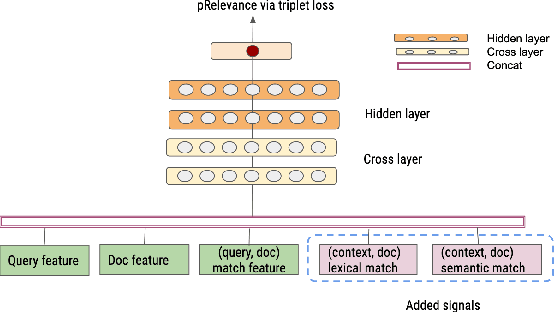
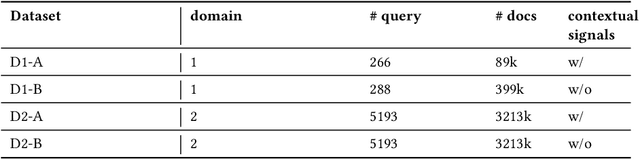
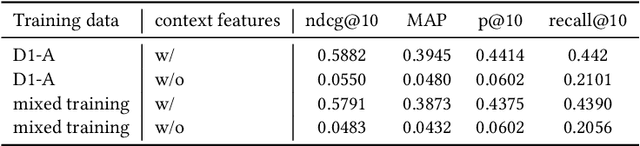
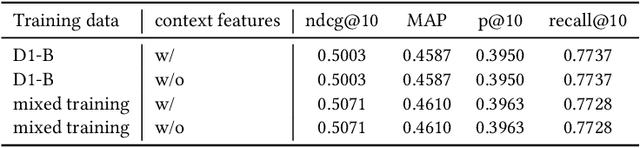
Existing neural relevance models do not give enough consideration for query and item context information which diversifies the search results to adapt for personal preference. To bridge this gap, this paper presents a neural learning framework to personalize document ranking results by leveraging the signals to capture how the document fits into users' context. In particular, it models the relationships between document content and user query context using both lexical representations and semantic embeddings such that the user's intent can be better understood by data enrichment of personalized query context information. Extensive experiments performed on the search dataset, demonstrate the effectiveness of the proposed method.