 Add to Chrome
 Add to Firefox
 Add to Edge
Security-by-Design for LLM-Based Code Generation: Leveraging Internal Representations for Concept-Driven Steering Mechanisms
Mar 11, 2026
Large Language Models (LLMs) show remarkable capabilities in understanding natural language and generating complex code. However, as practitioners adopt CodeLLMs for increasingly critical development tasks, research reveals that these models frequently generate functionally correct yet insecure code, posing significant security risks. While multiple approaches have been proposed to improve security in AI-based code generation, combined benchmarks show these methods remain insufficient for practical use, achieving only limited improvements in both functional correctness and security. This stems from a fundamental gap in understanding the internal mechanisms of code generation and the root causes of security vulnerabilities, forcing researchers to rely on heuristics and empirical observations. In this work, we investigate the internal representation of security concepts in CodeLLMs, revealing that models are often aware of vulnerabilities as they generate insecure code. Through systematic evaluation, we demonstrate that CodeLLMs can distinguish between security subconcepts, enabling a more fine-grained analysis than prior black-box approaches. Leveraging these insights, we propose Secure Concept Steering for CodeLLMs (SCS-Code). During token generation, SCS-Code steers LLMs' internal representations toward secure and functional code output, enabling a lightweight and modular mechanism that can be integrated into existing code models. Our approach achieves superior performance compared to state-of-the-art methods across multiple secure coding benchmarks.

Imbalance in Regression Datasets
Feb 19, 2024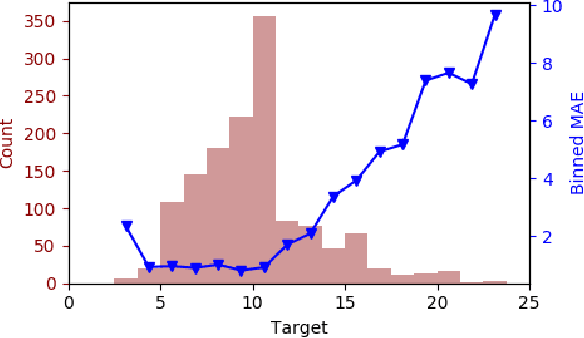
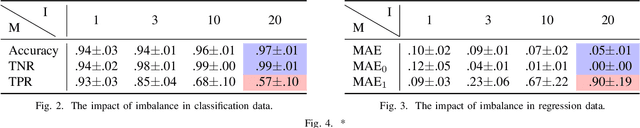
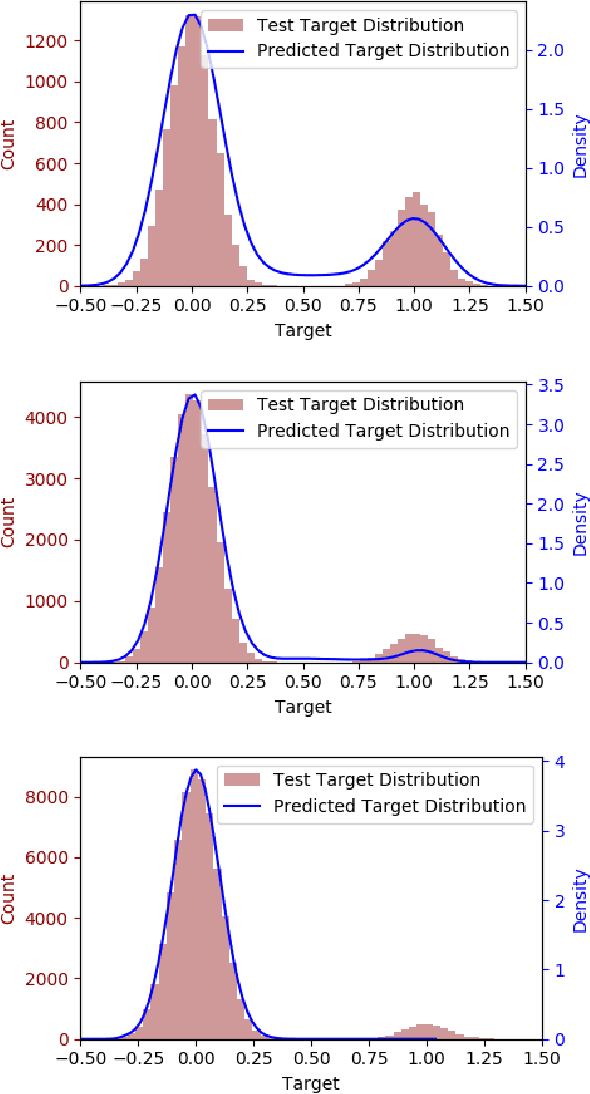

For classification, the problem of class imbalance is well known and has been extensively studied. In this paper, we argue that imbalance in regression is an equally important problem which has so far been overlooked: Due to under- and over-representations in a data set's target distribution, regressors are prone to degenerate to naive models, systematically neglecting uncommon training data and over-representing targets seen often during training. We analyse this problem theoretically and use resulting insights to develop a first definition of imbalance in regression, which we show to be a generalisation of the commonly employed imbalance measure in classification. With this, we hope to turn the spotlight on the overlooked problem of imbalance in regression and to provide common ground for future research.
Data Poisoning Attacks on Regression Learning and Corresponding Defenses
Sep 15, 2020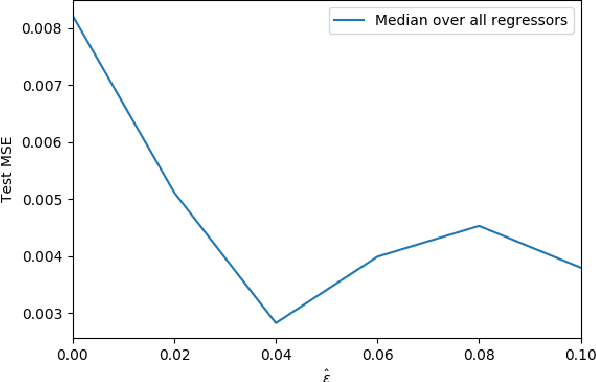
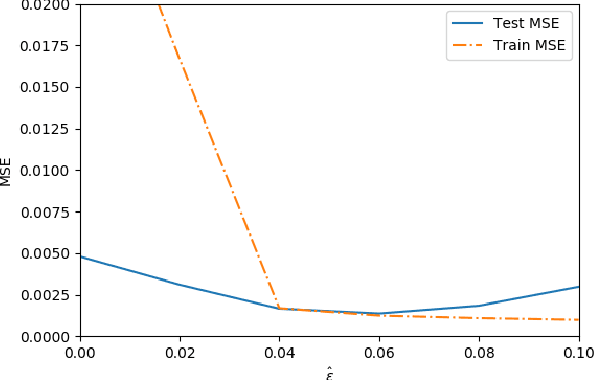
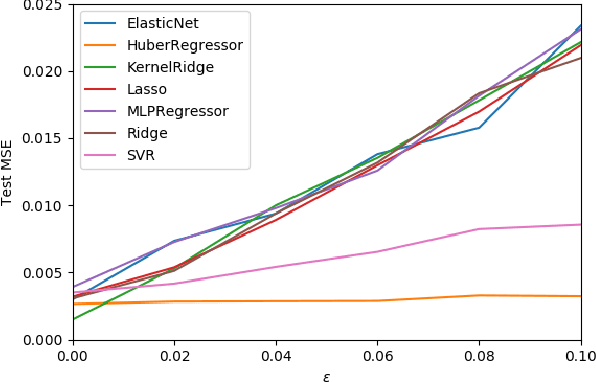
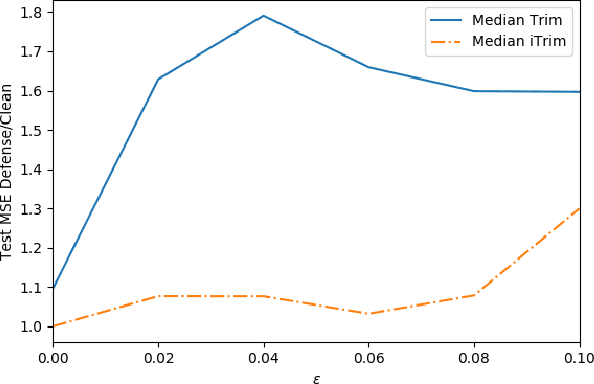
Adversarial data poisoning is an effective attack against machine learning and threatens model integrity by introducing poisoned data into the training dataset. So far, it has been studied mostly for classification, even though regression learning is used in many mission critical systems (such as dosage of medication, control of cyber-physical systems and managing power supply). Therefore, in the present research, we aim to evaluate all aspects of data poisoning attacks on regression learning, exceeding previous work both in terms of breadth and depth. We present realistic scenarios in which data poisoning attacks threaten production systems and introduce a novel black-box attack, which is then applied to a real-word medical use-case. As a result, we observe that the mean squared error (MSE) of the regressor increases to 150 percent due to inserting only two percent of poison samples. Finally, we present a new defense strategy against the novel and previous attacks and evaluate it thoroughly on 26 datasets. As a result of the conducted experiments, we conclude that the proposed defence strategy effectively mitigates the considered attacks.