 Add to Chrome
 Add to Firefox
 Add to Edge
Make Your VLA More Robust Without More Data By Interleaving Motion Planning
May 31, 2026
Vision-Language-Action (VLA) models have shown remarkable progress for mobile manipulation, but their performance on long-horizon tasks remains poor. These tasks are especially challenging because (1) progress toward high-level goals must be maintained across extended sequences of spatially distributed subtasks, and (2) early execution errors compound rapidly over the task horizon. These challenges persist despite finetuning on large human teleoperated mobile manipulation data, indicating that more data alone may not resolve the problem. To address these challenges, we propose MPVI: Motion Planner / VLA Interleaving, a framework that integrates model-based motion planning with VLAs to improve robustness without further training. The proposed integration enables localization and navigation to distant or occluded target objects through cluttered scenes using open-vocabulary object detection, frontier exploration and motion planning. However, such integration is non-trivial, requiring reliable switching between modules; we show one way forward via VLM-based completion checking with proprioceptive triggers. We evaluate our approach on the BEHAVIOR-1K benchmark and demonstrate 113% improvement in task progress over a top end-to-end VLA baseline. Additional details are available at the project page: https://mpvi.netlify.app/.

Seeing, Saying, Solving: An LLM-to-TL Framework for Cooperative Robots
May 19, 2025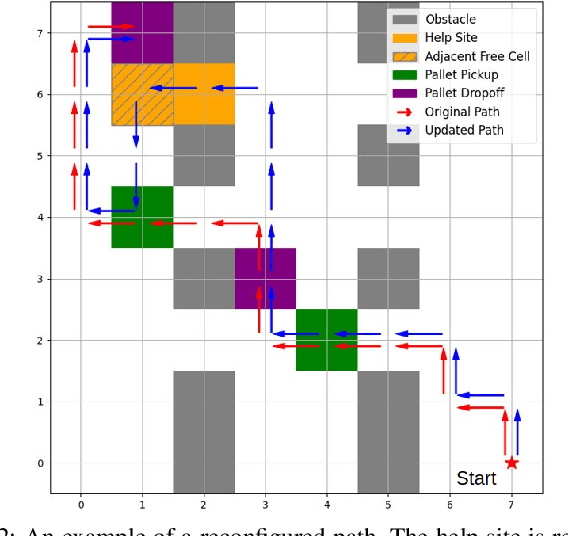
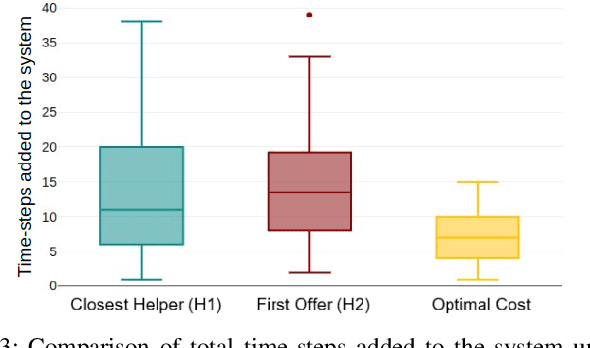
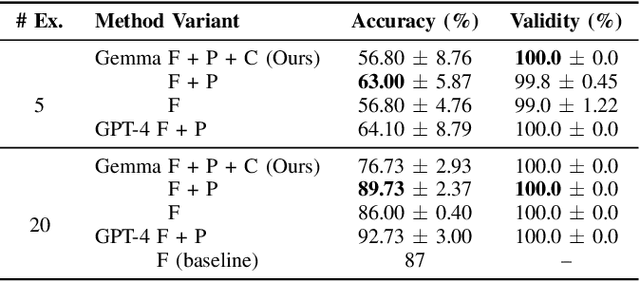
Increased robot deployment, such as in warehousing, has revealed a need for seamless collaboration among heterogeneous robot teams to resolve unforeseen conflicts. To address this challenge, we propose a novel, decentralized framework for robots to request and provide help. The framework begins with robots detecting conflicts using a Vision Language Model (VLM), then reasoning over whether help is needed. If so, it crafts and broadcasts a natural language (NL) help request using a Large Language Model (LLM). Potential helper robots reason over the request and offer help (if able), along with information about impact to their current tasks. Helper reasoning is implemented via an LLM grounded in Signal Temporal Logic (STL) using a Backus-Naur Form (BNF) grammar to guarantee syntactically valid NL-to-STL translations, which are then solved as a Mixed Integer Linear Program (MILP). Finally, the requester robot chooses a helper by reasoning over impact on the overall system. We evaluate our system via experiments considering different strategies for choosing a helper, and find that a requester robot can minimize overall time impact on the system by considering multiple help offers versus simple heuristics (e.g., selecting the nearest robot to help).