 Add to Chrome
 Add to Firefox
 Add to Edge
EVOTS: Evolutionary Transformer Search for Time Series Forecasting
Jun 30, 2026
Evolutionary neural architecture design for multivariate time-series forecasting remains underexplored, with most approaches relying on fixed Transformer architectures despite substantial variation across tasks and forecasting settings. This paper introduces an evolutionary neural architecture search framework for discovering task-adaptive Transformer-like models for time-series forecasting (EVOTS). Architectures are encoded using a modular genome representation that enables flexible composition of attention, feed-forward, and projection components, while a repair mechanism enforces structural validity throughout the evolutionary process. This formulation allows effective exploration of a diverse architecture space without relying on hand-crafted design rules. The proposed approach is evaluated on four benchmark datasets from the ETT family (ETTh1, ETTh2, ETTm1, and ETTm2) under multiple forecasting settings, including univariate-to-univariate, multivariate-to-univariate, and multivariate-to-multivariate prediction, with horizons of 96, 192, 336, and 720. In the multivariate-to-multivariate setting, the evolved architectures achieve competitive and, in several cases, improved mean squared error relative to a strong Transformer-based baseline. Additional analyses examine performance differences across forecasting settings and report wall-clock training time to provide a coarse indication of computational cost. Overall, the results demonstrate that evolutionary search can effectively discover flexible and high-performing Transformer-like architectures for multivariate time-series forecasting within practical runtime constraints.

Uncertainty-Aware 3D Position Refinement for Multi-UAV Systems
May 13, 2026Reliable real-time 3D localization is essential for multi-UAV navigation, collision avoidance, and coordinated flight, yet onboard estimates can degrade under GNSS multipath, non-line-of-sight reception, vertical drift, and intentional interference. This paper presents a decentralized, lightweight 3D position-refinement layer that improves robustness by fusing each Unmanned Aerial Vehicle (UAV)'s local estimate with neighbor-shared state summaries and inter-UAV range or proximity constraints. The method performs uncertainty-aware neighborhood fusion by weighting each UAV's prior according to its reported covariance and weighting neighbor constraints according to link quality, ranging uncertainty, and a learned trust score. To support practical deployment, the framework explicitly handles cold start and temporary localization loss by inflating or substituting weak priors, allowing trusted neighborhood constraints to bootstrap and stabilize estimates until absolute sensing recovers. To mitigate the impact of faulty or malicious participants, each UAV applies a local range-consistency check, smoothed over time, to down-weight or exclude neighbors whose reported positions are incompatible with observed inter-UAV distances. Simulation experiments with 10 UAVs in a 3D volume show that the proposed refinement substantially reduces mean localization error during cold start, remains competitive after local estimators stabilize, and maintains lower error as the fraction of malicious nodes increases compared with fusion without trust. These results suggest that the approach can serve as a practical resilience layer for swarm operation in challenging environments.
Best Practices For Empirical Meta-Algorithmic Research: Guidelines from the COSEAL Research Network
Dec 19, 2025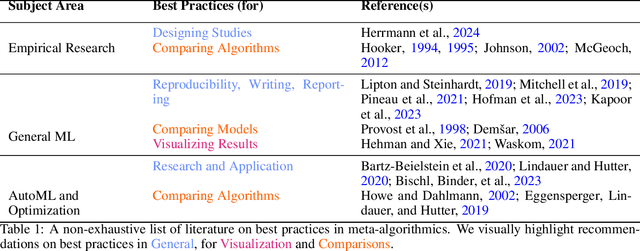
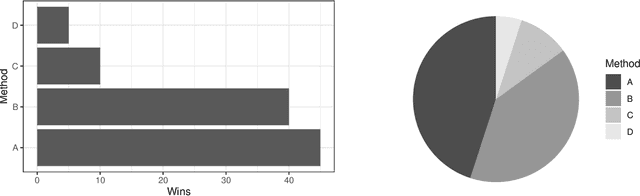
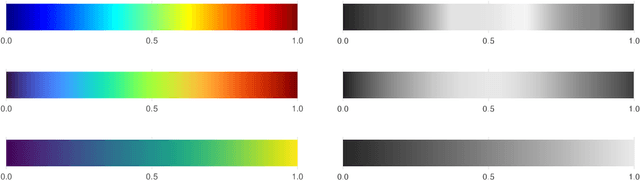
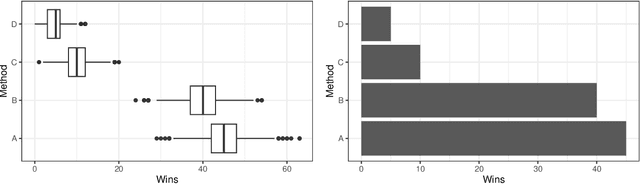
Empirical research on meta-algorithmics, such as algorithm selection, configuration, and scheduling, often relies on extensive and thus computationally expensive experiments. With the large degree of freedom we have over our experimental setup and design comes a plethora of possible error sources that threaten the scalability and validity of our scientific insights. Best practices for meta-algorithmic research exist, but they are scattered between different publications and fields, and continue to evolve separately from each other. In this report, we collect good practices for empirical meta-algorithmic research across the subfields of the COSEAL community, encompassing the entire experimental cycle: from formulating research questions and selecting an experimental design, to executing experiments, and ultimately, analyzing and presenting results impartially. It establishes the current state-of-the-art practices within meta-algorithmic research and serves as a guideline to both new researchers and practitioners in meta-algorithmic fields.