 Add to Chrome
 Add to Firefox
 Add to Edge
A Taxonomy of Runtime Faults in Model Context Protocol Servers
Jun 03, 2026
MCP (Model Context Protocol) enables LLMs (Large Language Models) to interact with external tools and data sources via a standardized protocol. Its rapid adoption in tool-augmented Artificial Intelligence (AI) workflows has introduced new reliability challenges, such as configuration parameters that are accepted but not enforced at runtime, leading to unintended default behavior, whose runtime fault characteristics remain empirically unexamined. We present the first empirical taxonomy of runtime faults in MCP servers. We manually analyzed 837 MCP-specific runtime fault threads from 473 actively maintained MCP server GitHub repositories and derived a taxonomy using a bottom-up open coding procedure. The taxonomy comprises 11 top-level categories and 27 subcategories (73 leaf fault types), covering recurrent failures across protocol interactions, tool invocations, schema enforcement, state management, model-provider integration, security validation, and timeouts or explicit cancellations of in-progress operations. To assess the taxonomy's external validity, we surveyed 55 MCP server developers. Respondents reported experiencing an average of 20 of the 27 fault subcategories, and no category remained unobserved. These results indicate that the taxonomy reflects widely observed runtime failures in MCP-based systems and shall assist AI software maintenance and evolution in the future.

IaC Generation with LLMs: An Error Taxonomy and A Study on Configuration Knowledge Injection
Dec 16, 2025Large Language Models (LLMs) currently exhibit low success rates in generating correct and intent-aligned Infrastructure as Code (IaC). This research investigated methods to improve LLM-based IaC generation, specifically for Terraform, by systematically injecting structured configuration knowledge. To facilitate this, an existing IaC-Eval benchmark was significantly enhanced with cloud emulation and automated error analysis. Additionally, a novel error taxonomy for LLM-assisted IaC code generation was developed. A series of knowledge injection techniques was implemented and evaluated, progressing from Naive Retrieval-Augmented Generation (RAG) to more sophisticated Graph RAG approaches. These included semantic enrichment of graph components and modeling inter-resource dependencies. Experimental results demonstrated that while baseline LLM performance was poor (27.1% overall success), injecting structured configuration knowledge increased technical validation success to 75.3% and overall success to 62.6%. Despite these gains in technical correctness, intent alignment plateaued, revealing a "Correctness-Congruence Gap" where LLMs can become proficient "coders" but remain limited "architects" in fulfilling nuanced user intent.
Recursive Self-Similarity in Deep Weight Spaces of Neural Architectures: A Fractal and Coarse Geometry Perspective
Mar 18, 2025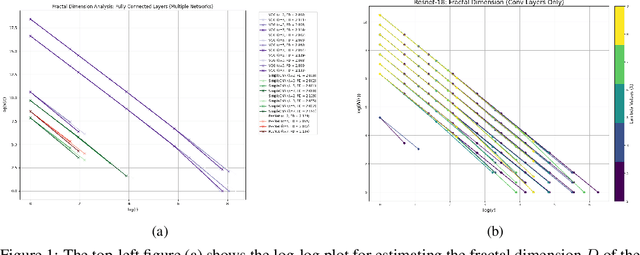
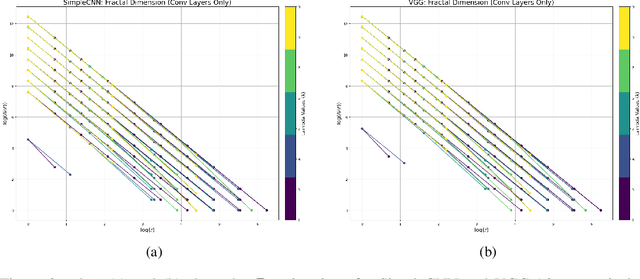
This paper conceptualizes the Deep Weight Spaces (DWS) of neural architectures as hierarchical, fractal-like, coarse geometric structures observable at discrete integer scales through recursive dilation. We introduce a coarse group action termed the fractal transformation, $T_{r_k} $, acting under the symmetry group $G = (\mathbb{Z}, +) $, to analyze neural parameter matrices or tensors, by segmenting the underlying discrete grid $\Omega$ into $N(r_k)$ fractals across varying observation scales $ r_k $. This perspective adopts a box count technique, commonly used to assess the hierarchical and scale-related geometry of physical structures, which has been extensively formalized under the topic of fractal geometry. We assess the structural complexity of neural layers by estimating the Hausdorff-Besicovitch dimension of their layers and evaluating a degree of self-similarity. The fractal transformation features key algebraic properties such as linearity, identity, and asymptotic invertibility, which is a signature of coarse structures. We show that the coarse group action exhibits a set of symmetries such as Discrete Scale Invariance (DSI) under recursive dilation, strong invariance followed by weak equivariance to permutations, alongside respecting the scaling equivariance of activation functions, defined by the intertwiner group relations. Our framework targets large-scale structural properties of DWS, deliberately overlooking minor inconsistencies to focus on significant geometric characteristics of neural networks. Experiments on CIFAR-10 using ResNet-18, VGG-16, and a custom CNN validate our approach, demonstrating effective fractal segmentation and structural analysis.
DataOps for Societal Intelligence: a Data Pipeline for Labor Market Skills Extraction and Matching
Apr 05, 2021

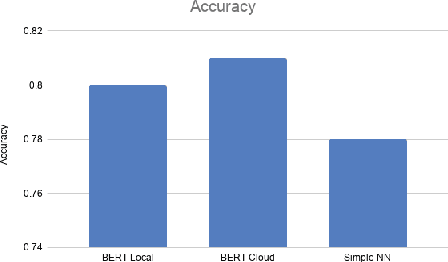
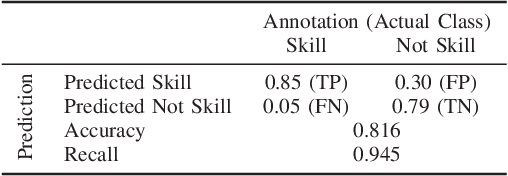
Big Data analytics supported by AI algorithms can support skills localization and retrieval in the context of a labor market intelligence problem. We formulate and solve this problem through specific DataOps models, blending data sources from administrative and technical partners in several countries into cooperation, creating shared knowledge to support policy and decision-making. We then focus on the critical task of skills extraction from resumes and vacancies featuring state-of-the-art machine learning models. We showcase preliminary results with applied machine learning on real data from the employment agencies of the Netherlands and the Flemish region in Belgium. The final goal is to match these skills to standard ontologies of skills, jobs and occupations.