 Add to Chrome
 Add to Firefox
 Add to Edge
MedRule-KG: A Knowledge-Graph--Steered Scaffold for Reliable Mathematical and Biomedical Reasoning
Nov 17, 2025
We study how to impose domain-consistent structure on large language models (LLMs) used for scientific reasoning and early-stage drug discovery. We present MedRule-KG, a compact knowledge-graph scaffold paired with a lightweight verifier that steers generation toward mathematically and biomedically valid outputs. The system injects curated symbolic facts into prompts and then enforces rule satisfaction with a deterministic checker. We formalize generation as constrained inference, introduce a soft guidance surrogate suitable for decoding, and perform a thorough statistical analysis with uncertainty quantification. Across 90 tasks spanning reaction feasibility, metabolic compatibility, and toxicity screening, MedRule-KG reduces violation counts by 83.2\% relative to a strong chain-of-thought baseline while improving exact match. Results remain stable under stratification and scale with dataset size, and the verifier adds negligible latency, making the approach practical for interactive design.

Hierarchical Bayesian Model for Gene Deconvolution and Functional Analysis in Human Endometrium Across the Menstrual Cycle
Oct 31, 2025Bulk tissue RNA sequencing of heterogeneous samples provides averaged gene expression profiles, obscuring cell type-specific dynamics. To address this, we present a probabilistic hierarchical Bayesian model that deconvolves bulk RNA-seq data into constituent cell-type expression profiles and proportions, leveraging a high-resolution single-cell reference. We apply our model to human endometrial tissue across the menstrual cycle, a context characterized by dramatic hormone-driven cellular composition changes. Our extended framework provides a principled inference of cell type proportions and cell-specific gene expression changes across cycle phases. We demonstrate the model's structure, priors, and inference strategy in detail, and we validate its performance with simulations and comparisons to existing methods. The results reveal dynamic shifts in epithelial, stromal, and immune cell fractions between menstrual phases, and identify cell-type-specific differential gene expression associated with endometrial function (e.g., decidualization markers in stromal cells during the secretory phase). We further conduct robustness tests and show that our Bayesian approach is resilient to reference mismatches and noise. Finally, we discuss the biological significance of our findings, potential clinical implications for fertility and endometrial disorders, and future directions, including integration of spatial transcriptomics.
Integrating Ontologies with Large Language Models for Enhanced Control Systems in Chemical Engineering
Oct 30, 2025This work presents an ontology-integrated large language model (LLM) framework for chemical engineering that unites structured domain knowledge with generative reasoning. The proposed pipeline aligns model training and inference with the COPE ontology through a sequence of data acquisition, semantic preprocessing, information extraction, and ontology mapping steps, producing templated question-answer pairs that guide fine-tuning. A control-focused decoding stage and citation gate enforce syntactic and factual grounding by constraining outputs to ontology-linked terms, while evaluation metrics quantify both linguistic quality and ontological accuracy. Feedback and future extensions, including semantic retrieval and iterative validation, further enhance the system's interpretability and reliability. This integration of symbolic structure and neural generation provides a transparent, auditable approach for applying LLMs to process control, safety analysis, and other critical engineering contexts.
Seasonality Patterns in 311-Reported Foodborne Illness Cases and Machine Learning-Identified Indications of Foodborne Illnesses from Yelp Reviews, New York City, 2022-2023
May 09, 2024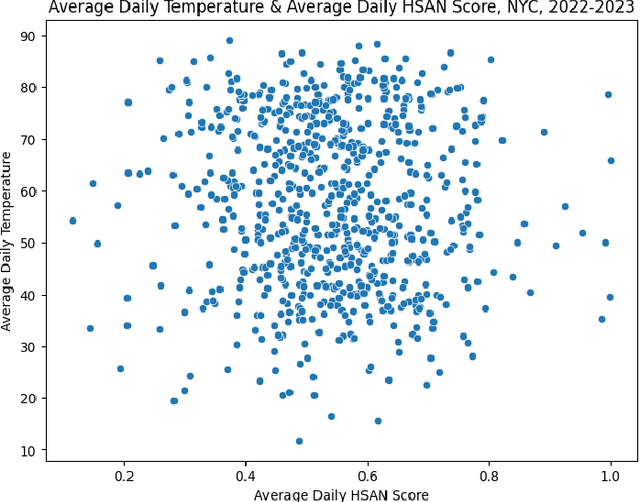
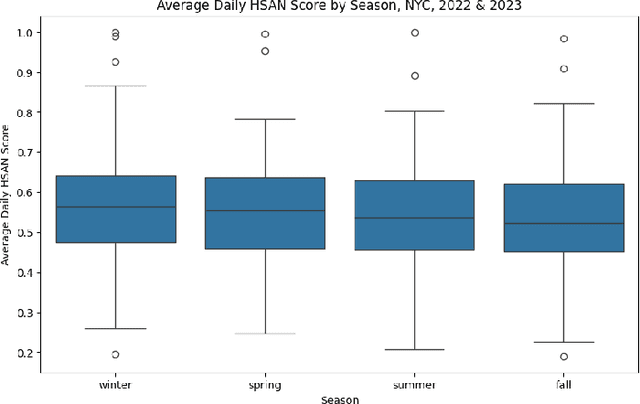
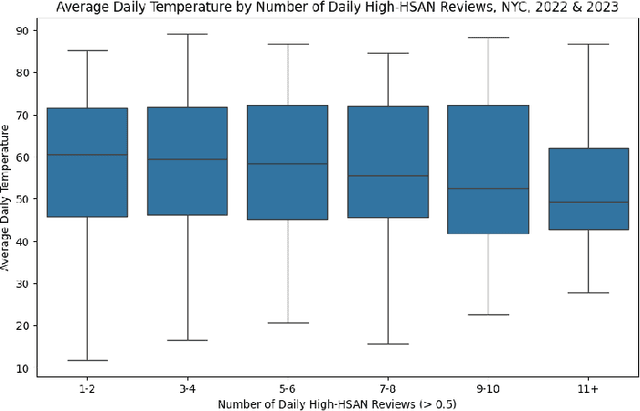
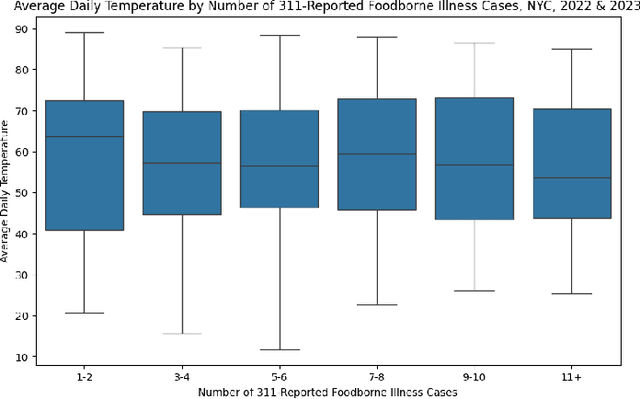
Restaurants are critical venues at which to investigate foodborne illness outbreaks due to shared sourcing, preparation, and distribution of foods. Formal channels to report illness after food consumption, such as 311, New York City's non-emergency municipal service platform, are underutilized. Given this, online social media platforms serve as abundant sources of user-generated content that provide critical insights into the needs of individuals and populations. We extracted restaurant reviews and metadata from Yelp to identify potential outbreaks of foodborne illness in connection with consuming food from restaurants. Because the prevalence of foodborne illnesses may increase in warmer months as higher temperatures breed more favorable conditions for bacterial growth, we aimed to identify seasonal patterns in foodborne illness reports from 311 and identify seasonal patterns of foodborne illness from Yelp reviews for New York City restaurants using a Hierarchical Sigmoid Attention Network (HSAN). We found no evidence of significant bivariate associations between any variables of interest. Given the inherent limitations of relying solely on user-generated data for public health insights, it is imperative to complement these sources with other data streams and insights from subject matter experts. Future investigations should involve conducting these analyses at more granular spatial and temporal scales to explore the presence of such differences or associations.