 Add to Chrome
 Add to Firefox
 Add to Edge
An Event-triggered System for Social Persuasion and Danger Alert in Elder Home Monitoring
Nov 19, 2025
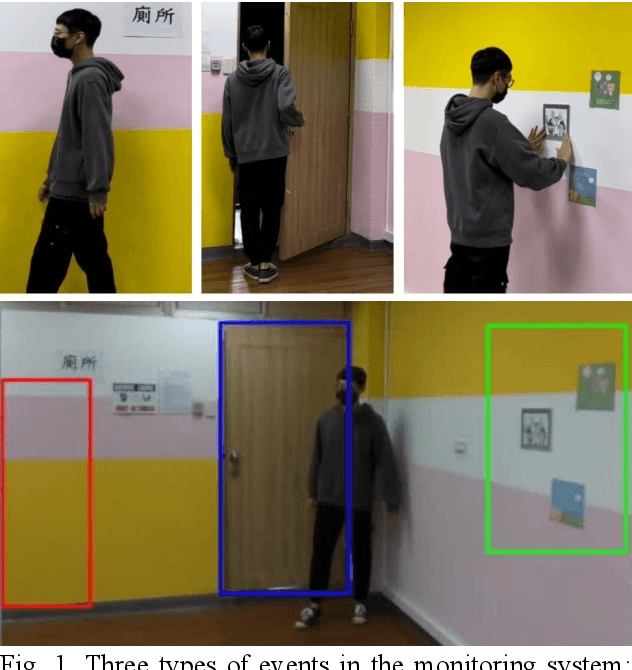
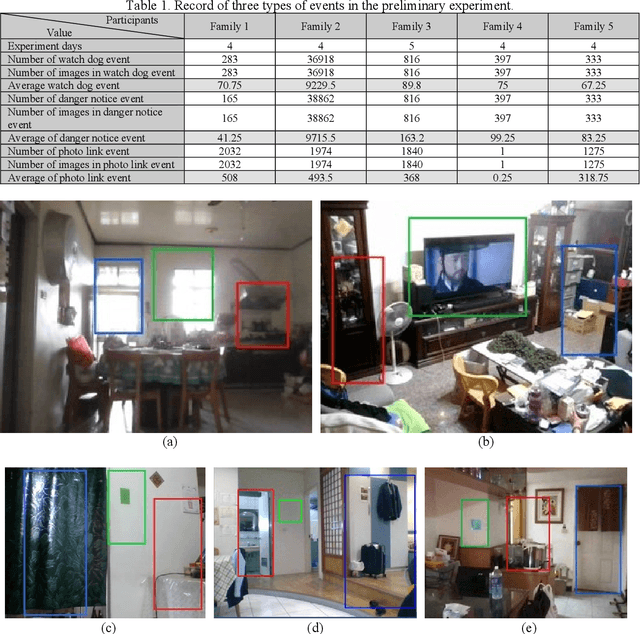
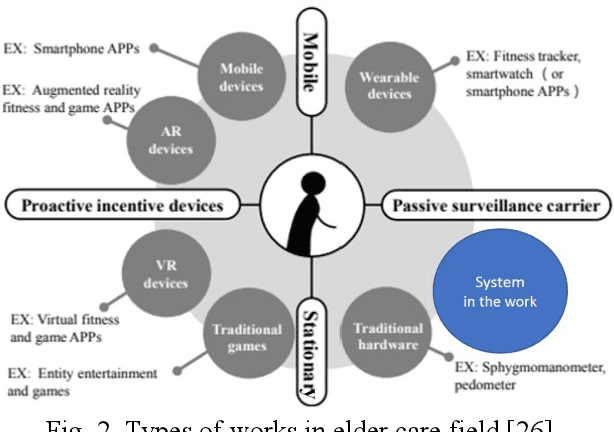

In the study, the physical state and mental state of elders are both considered, and an event-triggered system has developed to detect events: watch dog, danger notice and photo link. By adopting GMM background modeling, the motion behavior of visitors and elders can be detected in the watch dog event and danger notice event respectively. Experiments set in home scenarios and 5 families participated in the experiments for detecting and recording three types of events from their life activities. In addition, the captured images were analyzed using SVM machine learning. For lack of technical experiences of elders, an intuitive operation as normal life activity was designed to create communication between elder and relatives via social media.

Understanding the Mechanism of Deep Learning Framework for Lesion Detection in Pathological Images with Breast Cancer
Mar 04, 2019

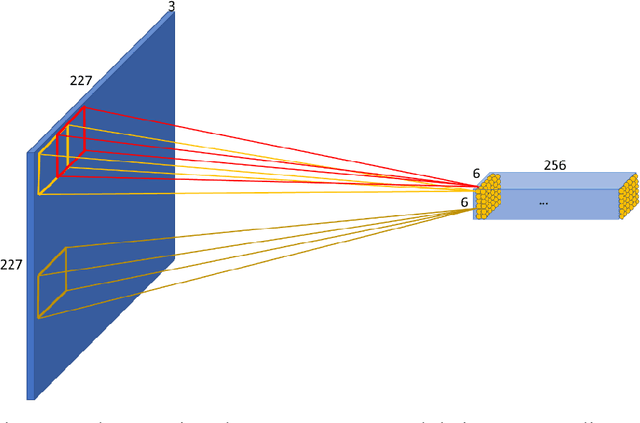

The computer-aided detection (CADe) systems are developed to assist pathologists in slide assessment, increasing diagnosis efficiency and reducing missing inspections. Many studies have shown such a CADe system with deep learning approaches outperforms the one using conventional methods that rely on hand-crafted features based on field-knowledge. However, most developers who adopted deep learning models directly focused on the efficacy of outcomes, without providing comprehensive explanations on why their proposed frameworks can work effectively. In this study, we designed four experiments to verify the consecutive concepts, showing that the deep features learned from pathological patches are interpretable by domain knowledge of pathology and enlightening for clinical diagnosis in the task of lesion detection. The experimental results show the activation features work as morphological descriptors for specific cells or tissues, which agree with the clinical rules in classification. That is, the deep learning framework not only detects the distribution of tumor cells but also recognizes lymphocytes, collagen fibers, and some other non-cell structural tissues. Most of the characteristics learned by the deep learning models have summarized the detection rules that can be recognized by the experienced pathologists, whereas there are still some features may not be intuitive to domain experts but discriminative in classification for machines. Those features are worthy to be further studied in order to find out the reasonable correlations to pathological knowledge, from which pathological experts may draw inspirations for exploring new characteristics in diagnosis.