 Add to Chrome
 Add to Firefox
 Add to Edge
An exponential mechanism based on quadratic approximations for fine-tuning machine learning models with privacy guarantees
May 19, 2026
Fine-tuning adapts a pretrained machine learning model to a small, sensitive dataset, but this process risks memorizing individual new data points, making the model vulnerable to adversaries who seek to extract sensitive information. In this work, we develop a randomized algorithm based on the exponential mechanism for fine-tuning while ensuring differential privacy. Our key idea is to construct a simple utility function that combines a local quadratic approximation of the pretrained model with information from the new dataset. The resulting exponential mechanism admits exact sampling from a multivariate normal distribution in closed form. We establish theoretical privacy guarantees, sensitivity bounds, and accuracy estimations for our method. We further introduce a random-projection strategy that makes the approach scalable to high-dimensional models. Numerical experiments on the MNIST benchmark and the MIMIC clinical dataset demonstrate competitive performance against existing differentially private fine-tuning techniques.

Computer-aided abnormality detection in chest radiographs in a clinical setting via domain-adaptation
Dec 19, 2020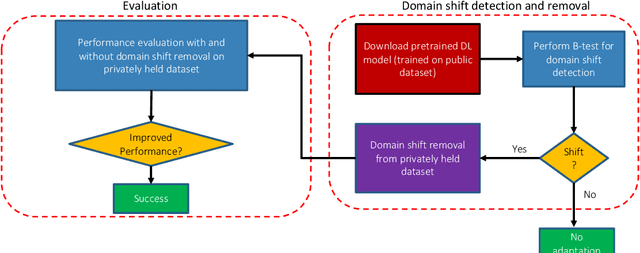
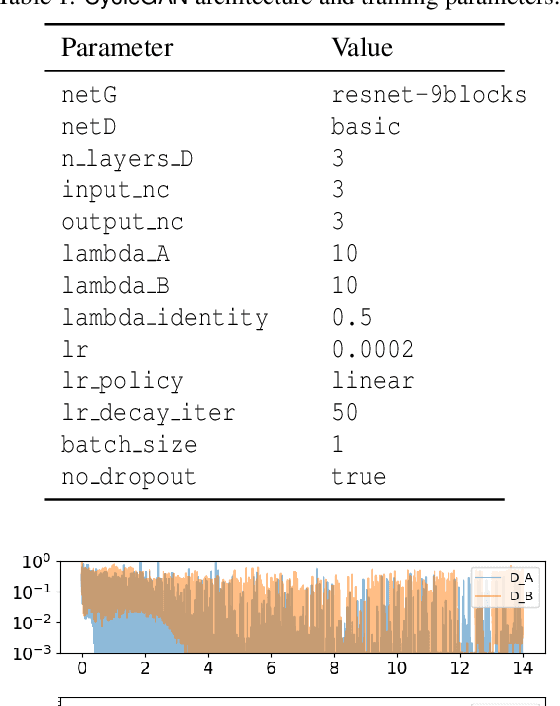
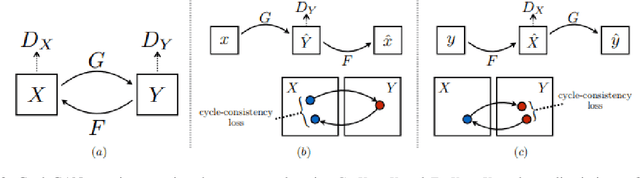
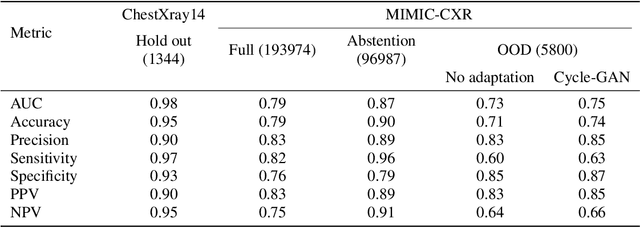
Deep learning (DL) models are being deployed at medical centers to aid radiologists for diagnosis of lung conditions from chest radiographs. Such models are often trained on a large volume of publicly available labeled radiographs. These pre-trained DL models' ability to generalize in clinical settings is poor because of the changes in data distributions between publicly available and privately held radiographs. In chest radiographs, the heterogeneity in distributions arises from the diverse conditions in X-ray equipment and their configurations used for generating the images. In the machine learning community, the challenges posed by the heterogeneity in the data generation source is known as domain shift, which is a mode shift in the generative model. In this work, we introduce a domain-shift detection and removal method to overcome this problem. Our experimental results show the proposed method's effectiveness in deploying a pre-trained DL model for abnormality detection in chest radiographs in a clinical setting.