 Add to Chrome
 Add to Firefox
 Add to Edge
Multi-modal transformer for signal classification in nanopore blockade experiments
Jul 22, 2026
Nanopore devices have emerged as powerful tools for single-molecule sensing, with potential for rapid, portable diagnostics. They detect changes in ionic current as analytes enter nanometer-scale pores, providing a means of identifying diverse biomarkers from their characteristic signal patterns. However, these signals are highly complex, and reliably assigning them to specific molecules remains a major challenge. Here, we address this by introducing a multi-modal deep learning architecture that jointly processes multiple signal representations, including raw time-series data, wavelet-based images, and static feature vectors. Our approach surpasses existing methods by more than 10 percentage points on a 42-peptide benchmark and transfers to a 20-amino-acid dataset with near-perfect accuracy. The model integrates complementary information from these representations, with attention analysis showing that the time-series and wavelet-image inputs emphasize different features of the same event. Together, these results demonstrate the potential of machine learning to enable robust, high-accuracy molecular identification with nanopore sensors.

Reinforcement Learning Enables Autonomous Microrobot Navigation and Intervention in Simulated Blood Capillaries
Jun 23, 2026Autonomous microrobots navigating biological vasculature could enable targeted drug delivery and thrombolysis, yet training control policies for realistic environments remains an open challenge. Prior reinforcement learning (RL) studies of microrobotic navigation have been limited to idealized geometries that omit complex hydrodynamic flow fields, confined branching structures, and dense cellular obstacles found in vivo. Here, we develop a physically grounded simulation of a blood capillary network, incorporating realistic hydrodynamic flow fields, explicit red blood cell dynamics, and anatomically derived branching geometry, and train deep RL agents to navigate it via chemotaxis. We systematically map the physical limits of navigation across robot size and swimming speed, revealing a forbidden regime where Brownian motion and flow overcome propulsion. Successful agents independently discover multiple universal strategy types, including run-and-rotate and energy-efficient search-and-sit policies, regardless of robot parameters. Without retraining, these agents perform targeted blocking and unblocking of capillary flow, restoring throughput to healthy baseline levels. These results establish RL as a viable framework for developing autonomous microrobotic intervention strategies in complex biological environments.
Spectral Reach: Understanding Neural Scaling as Progress into the Spectral Tail
May 29, 2026Neural scaling laws describe predictable power-law relationships between model size, dataset size, compute, and performance. While these laws guide the development of modern foundation models, the mechanisms underpinning them remain poorly understood, in part due to the absence of scalable analysis tools. To close this gap, we introduce "spectral position": a scalable measure of which eigenvalues of the empirical neural tangent kernel (eNTK) currently drive loss reduction. Applying this measure to scaling experiments, we find that spectral position decreases throughout training: learning shifts from dominant eigenmodes into the spectral tail. Larger models reach further into the tail than smaller models, revealing a size-dependent capacity we call "spectral reach". This suggests why larger models achieve lower losses: they sustain learning on weak spectral signals inaccessible to smaller models. We further identify feature learning as a key enabler of spectral reach. It adaptively amplifies gradient magnitudes as learning advances, sustaining progress where frozen representations stall. This points to concrete interventions through architecture and optimizer design.
Deep Learning-Driven Peptide Classification in Biological Nanopores
Sep 17, 2025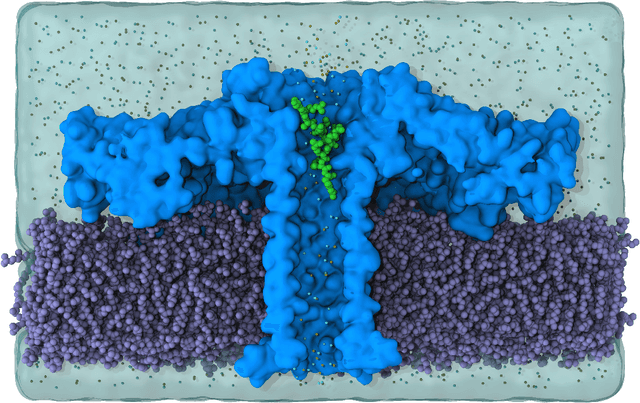
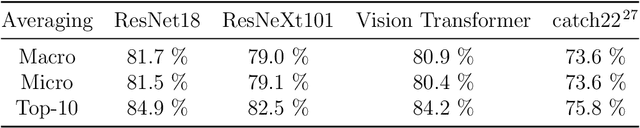
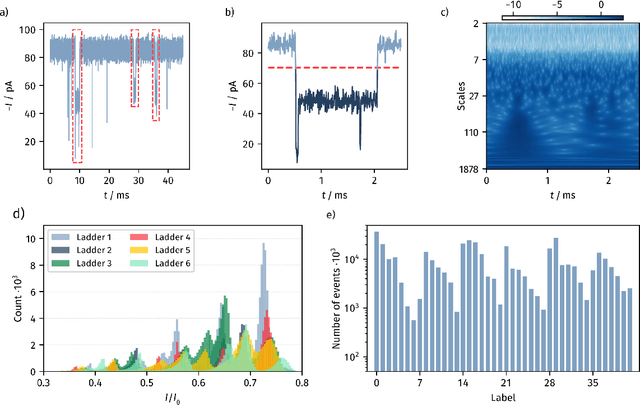
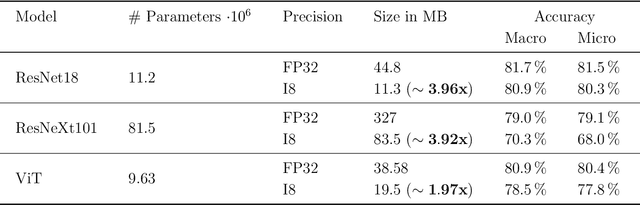
A device capable of performing real time classification of proteins in a clinical setting would allow for inexpensive and rapid disease diagnosis. One such candidate for this technology are nanopore devices. These devices work by measuring a current signal that arises when a protein or peptide enters a nanometer-length-scale pore. Should this current be uniquely related to the structure of the peptide and its interactions with the pore, the signals can be used to perform identification. While such a method would allow for real time identification of peptides and proteins in a clinical setting, to date, the complexities of these signals limit their accuracy. In this work, we tackle the issue of classification by converting the current signals into scaleogram images via wavelet transforms, capturing amplitude, frequency, and time information in a modality well-suited to machine learning algorithms. When tested on 42 peptides, our method achieved a classification accuracy of ~$81\,\%$, setting a new state-of-the-art in the field and taking a step toward practical peptide/protein diagnostics at the point of care. In addition, we demonstrate model transfer techniques that will be critical when deploying these models into real hardware, paving the way to a new method for real-time disease diagnosis.
The interplay of robustness and generalization in quantum machine learning
Jun 10, 2025While adversarial robustness and generalization have individually received substantial attention in the recent literature on quantum machine learning, their interplay is much less explored. In this chapter, we address this interplay for variational quantum models, which were recently proposed as function approximators in supervised learning. We discuss recent results quantifying both robustness and generalization via Lipschitz bounds, which explicitly depend on model parameters. Thus, they give rise to a regularization-based training approach for robust and generalizable quantum models, highlighting the importance of trainable data encoding strategies. The practical implications of the theoretical results are demonstrated with an application to time series analysis.
Collective variables of neural networks: empirical time evolution and scaling laws
Oct 09, 2024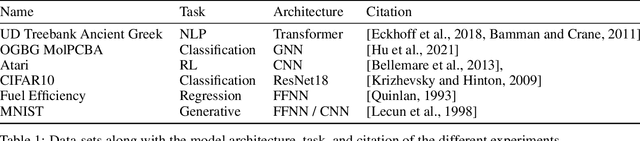
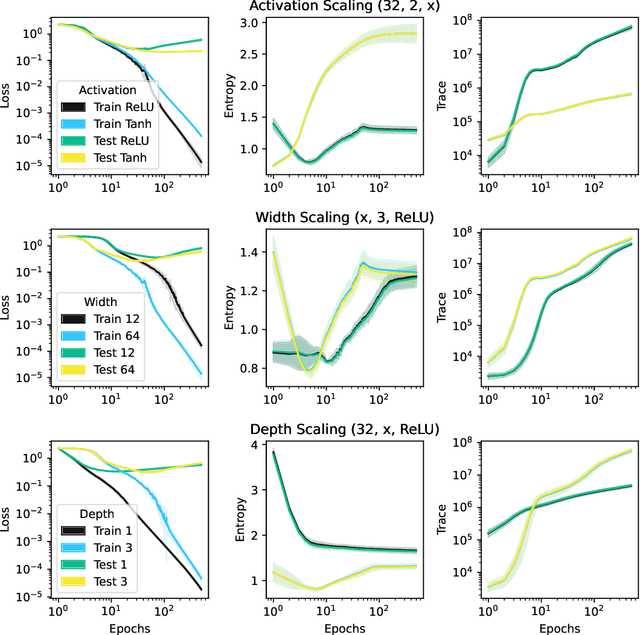
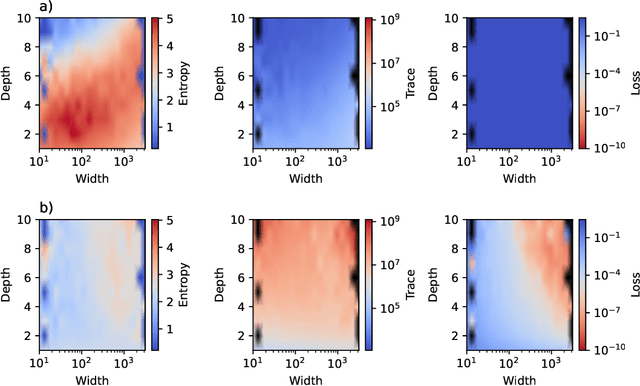
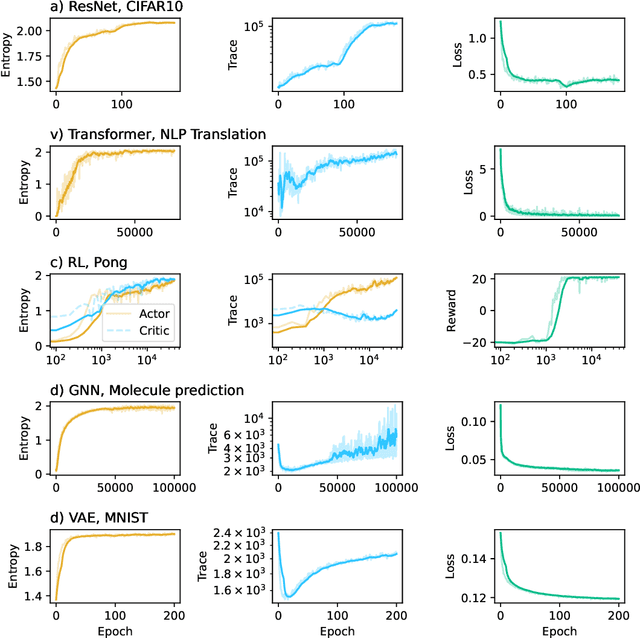
This work presents a novel means for understanding learning dynamics and scaling relations in neural networks. We show that certain measures on the spectrum of the empirical neural tangent kernel, specifically entropy and trace, yield insight into the representations learned by a neural network and how these can be improved through architecture scaling. These results are demonstrated first on test cases before being shown on more complex networks, including transformers, auto-encoders, graph neural networks, and reinforcement learning studies. In testing on a wide range of architectures, we highlight the universal nature of training dynamics and further discuss how it can be used to understand the mechanisms behind learning in neural networks. We identify two such dominant mechanisms present throughout machine learning training. The first, information compression, is seen through a reduction in the entropy of the NTK spectrum during training, and occurs predominantly in small neural networks. The second, coined structure formation, is seen through an increasing entropy and thus, the creation of structure in the neural network representations beyond the prior established by the network at initialization. Due to the ubiquity of the latter in deep neural network architectures and its flexibility in the creation of feature-rich representations, we argue that this form of evolution of the network's entropy be considered the onset of a deep learning regime.
SwarmRL: Building the Future of Smart Active Systems
Apr 25, 2024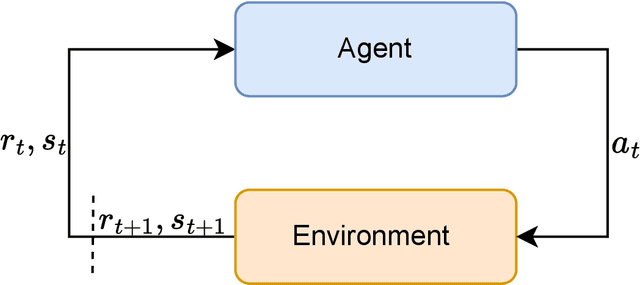
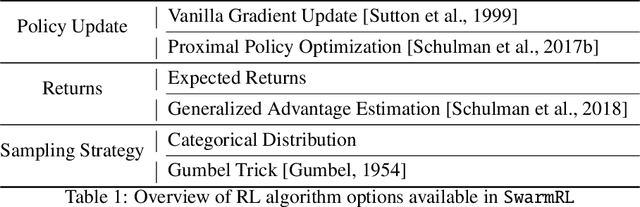
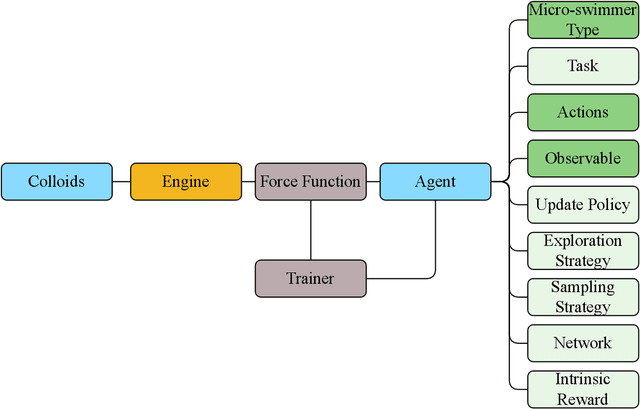

This work introduces SwarmRL, a Python package designed to study intelligent active particles. SwarmRL provides an easy-to-use interface for developing models to control microscopic colloids using classical control and deep reinforcement learning approaches. These models may be deployed in simulations or real-world environments under a common framework. We explain the structure of the software and its key features and demonstrate how it can be used to accelerate research. With SwarmRL, we aim to streamline research into micro-robotic control while bridging the gap between experimental and simulation-driven sciences. SwarmRL is available open-source on GitHub at https://github.com/SwarmRL/SwarmRL.
Emergence of Chemotactic Strategies with Multi-Agent Reinforcement Learning
Apr 02, 2024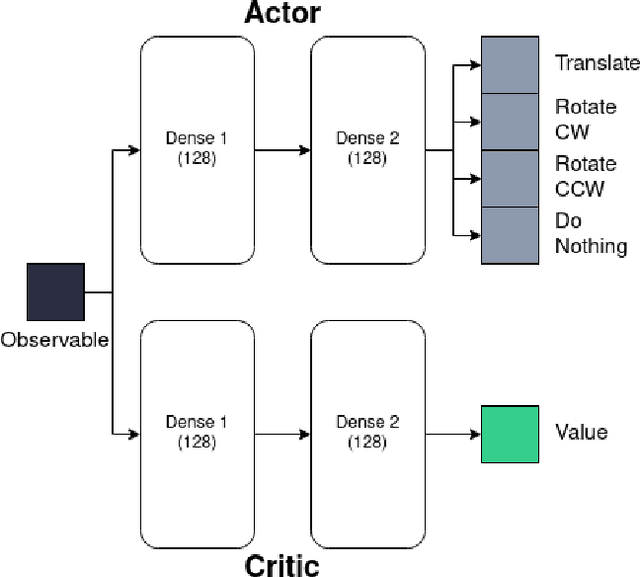
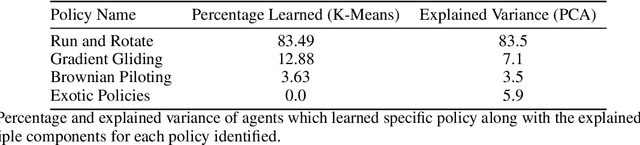
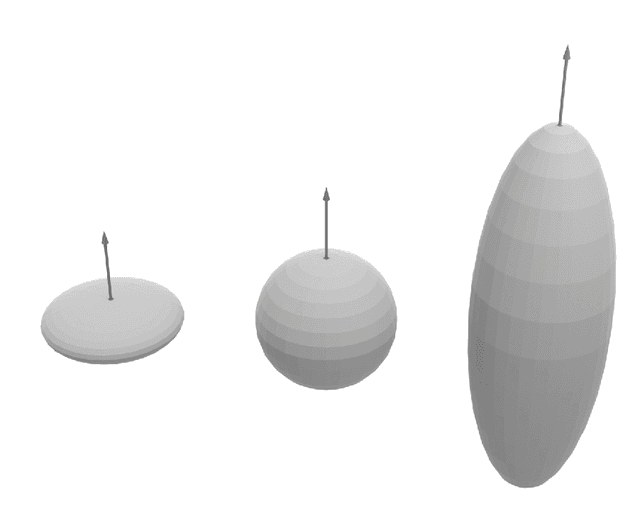
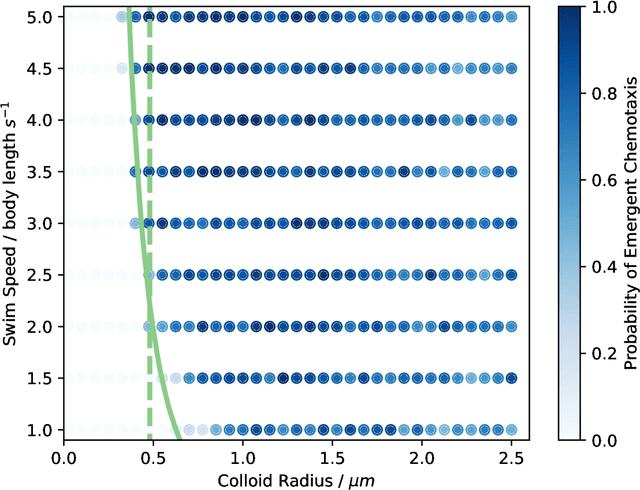
Reinforcement learning (RL) is a flexible and efficient method for programming micro-robots in complex environments. Here we investigate whether reinforcement learning can provide insights into biological systems when trained to perform chemotaxis. Namely, whether we can learn about how intelligent agents process given information in order to swim towards a target. We run simulations covering a range of agent shapes, sizes, and swim speeds to determine if the physical constraints on biological swimmers, namely Brownian motion, lead to regions where reinforcement learners' training fails. We find that the RL agents can perform chemotaxis as soon as it is physically possible and, in some cases, even before the active swimming overpowers the stochastic environment. We study the efficiency of the emergent policy and identify convergence in agent size and swim speeds. Finally, we study the strategy adopted by the reinforcement learning algorithm to explain how the agents perform their tasks. To this end, we identify three emerging dominant strategies and several rare approaches taken. These strategies, whilst producing almost identical trajectories in simulation, are distinct and give insight into the possible mechanisms behind which biological agents explore their environment and respond to changing conditions.
Zero Shot Molecular Generation via Similarity Kernels
Feb 13, 2024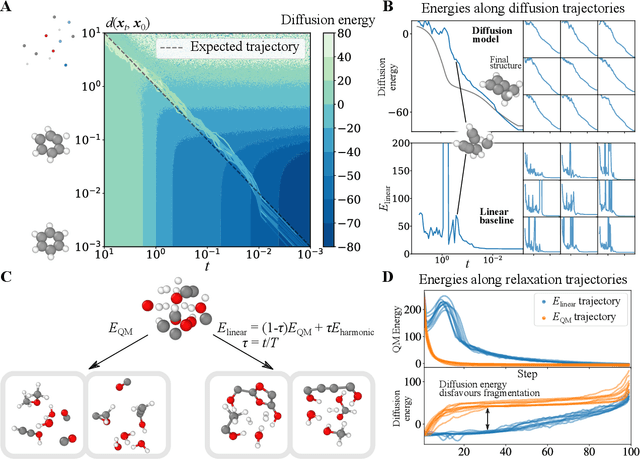
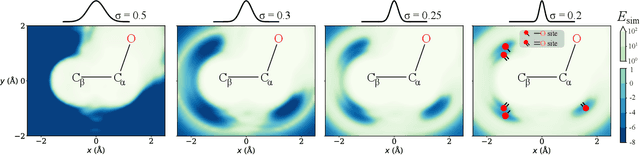
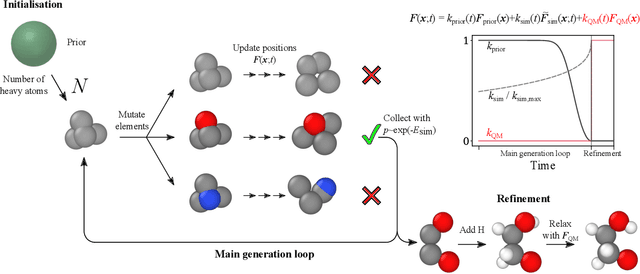
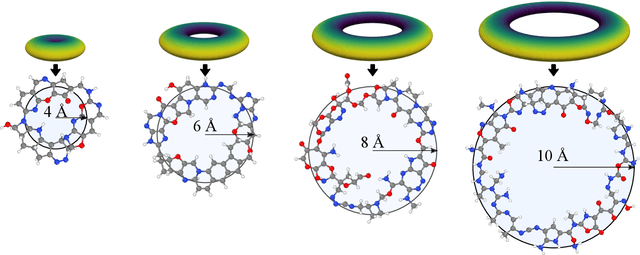
Generative modelling aims to accelerate the discovery of novel chemicals by directly proposing structures with desirable properties. Recently, score-based, or diffusion, generative models have significantly outperformed previous approaches. Key to their success is the close relationship between the score and physical force, allowing the use of powerful equivariant neural networks. However, the behaviour of the learnt score is not yet well understood. Here, we analyse the score by training an energy-based diffusion model for molecular generation. We find that during the generation the score resembles a restorative potential initially and a quantum-mechanical force at the end. In between the two endpoints, it exhibits special properties that enable the building of large molecules. Using insights from the trained model, we present Similarity-based Molecular Generation (SiMGen), a new method for zero shot molecular generation. SiMGen combines a time-dependent similarity kernel with descriptors from a pretrained machine learning force field to generate molecules without any further training. Our approach allows full control over the molecular shape through point cloud priors and supports conditional generation. We also release an interactive web tool that allows users to generate structures with SiMGen online (https://zndraw.icp.uni-stuttgart.de).
ZnTrack -- Data as Code
Jan 19, 2024The past decade has seen tremendous breakthroughs in computation and there is no indication that this will slow any time soon. Machine learning, large-scale computing resources, and increased industry focus have resulted in rising investments in computer-driven solutions for data management, simulations, and model generation. However, with this growth in computation has come an even larger expansion of data and with it, complexity in data storage, sharing, and tracking. In this work, we introduce ZnTrack, a Python-driven data versioning tool. ZnTrack builds upon established version control systems to provide a user-friendly and easy-to-use interface for tracking parameters in experiments, designing workflows, and storing and sharing data. From this ability to reduce large datasets to a simple Python script emerges the concept of Data as Code, a core component of the work presented here and an undoubtedly important concept as the age of computation continues to evolve. ZnTrack offers an open-source, FAIR data compatible Python package to enable users to harness these concepts of the future.