 Add to Chrome
 Add to Firefox
 Add to Edge
Multi-modal transformer for signal classification in nanopore blockade experiments
Jul 22, 2026
Nanopore devices have emerged as powerful tools for single-molecule sensing, with potential for rapid, portable diagnostics. They detect changes in ionic current as analytes enter nanometer-scale pores, providing a means of identifying diverse biomarkers from their characteristic signal patterns. However, these signals are highly complex, and reliably assigning them to specific molecules remains a major challenge. Here, we address this by introducing a multi-modal deep learning architecture that jointly processes multiple signal representations, including raw time-series data, wavelet-based images, and static feature vectors. Our approach surpasses existing methods by more than 10 percentage points on a 42-peptide benchmark and transfers to a 20-amino-acid dataset with near-perfect accuracy. The model integrates complementary information from these representations, with attention analysis showing that the time-series and wavelet-image inputs emphasize different features of the same event. Together, these results demonstrate the potential of machine learning to enable robust, high-accuracy molecular identification with nanopore sensors.

Latent space mapping of interpretable structural coordinates from stochastic single-molecule signals
Jun 15, 2026Nanopores are versatile single-molecular sensors, but their utility is fundamentally constrained by stochastic translocation dynamics warping any encoded information. We resolve it by shifting from time-domain analysis to a learned latent-space mapping via a contrastive encoder trained exclusively on simulated signals from a physics-informed model. This encoder maps solid-state nanopore signals of engineered DNA barcodes into an interpretable molecular coordinate system. The learned representation is responsive to structural barcode parameters while remaining invariant to acquisition conditions and translocation conformation, allowing data pooling across devices. Molecule identification requires a single pass through the encoder, reducing computational cost by three orders of magnitude relative to alignment-based methods. We experimentally validate through mixture quantification, rare-variant detection, consensus barcode reconstruction, and real-time signal acquisition. This shift from temporal analysis to mapping structural coordinates into a latent space changes the paradigm behind analyzing stochastic sensor signals by linking classification to interpretable encoded molecular information.
Deep Learning-Driven Peptide Classification in Biological Nanopores
Sep 17, 2025
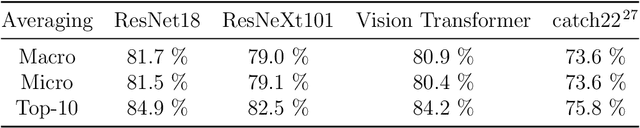
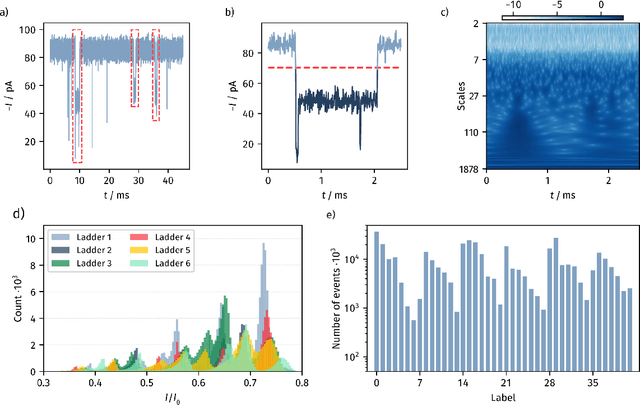
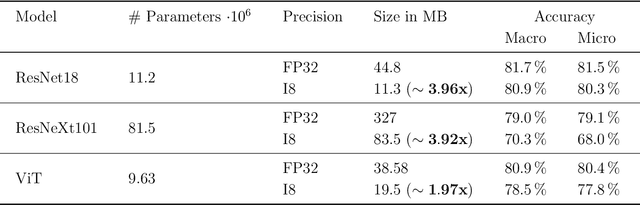
A device capable of performing real time classification of proteins in a clinical setting would allow for inexpensive and rapid disease diagnosis. One such candidate for this technology are nanopore devices. These devices work by measuring a current signal that arises when a protein or peptide enters a nanometer-length-scale pore. Should this current be uniquely related to the structure of the peptide and its interactions with the pore, the signals can be used to perform identification. While such a method would allow for real time identification of peptides and proteins in a clinical setting, to date, the complexities of these signals limit their accuracy. In this work, we tackle the issue of classification by converting the current signals into scaleogram images via wavelet transforms, capturing amplitude, frequency, and time information in a modality well-suited to machine learning algorithms. When tested on 42 peptides, our method achieved a classification accuracy of ~$81\,\%$, setting a new state-of-the-art in the field and taking a step toward practical peptide/protein diagnostics at the point of care. In addition, we demonstrate model transfer techniques that will be critical when deploying these models into real hardware, paving the way to a new method for real-time disease diagnosis.