 Add to Chrome
 Add to Firefox
 Add to Edge
Dissecting the Black Box: Circuit-Level Analysis of LLM Vulnerability Detection
May 28, 2026
Large language models (LLMs) can detect software vulnerabilities, but how do they actually identify vulnerable code? We address this question using mechanistic interpretability; analyzing the internal computations of a neural network to understand its reasoning process.Using Circuit Tracer on Gemma-2-2b, we trace the computational pathways activated when the model classifies 472 C/C++ code samples as vulnerable or safe. Our analysis reveals a surprising finding: the model primarily relies on safety detectors, attention heads that recognize safe coding patterns, rather than directly detecting vulnerability signatures. When these safety detectors fail to activate, the model classifies code as vulnerable. We identify the critical neural components: specific attention heads in early layers (L5, L7) that focus on safety patterns, and Multilayer Perceptron (MLP) neurons in Layer 7 that encode vulnerability-related features. Ablation experiments confirm their causal role; removing Layer 11 drops vulnerability detection accuracy from 100% to 6%, while ablating just 20 neurons in Layer 7 reduces it by 50%.Our findings show that LLM vulnerability detection uses sparse, interpretable circuits (only 16% of model capacity), enabling circuit-level explanations for security predictions and targeted improvements to detection systems.

SAMSEM -- A Generic and Scalable Approach for IC Metal Line Segmentation
Mar 17, 2026In light of globalized hardware supply chains, the assurance of hardware components has gained significant interest, particularly in cryptographic applications and high-stakes scenarios. Identifying metal lines on scanning electron microscope (SEM) images of integrated circuits (ICs) is one essential step in verifying the absence of malicious circuitry in chips manufactured in untrusted environments. Due to varying manufacturing processes and technologies, such verification usually requires tuning parameters and algorithms for each target IC. Often, a machine learning model trained on images of one IC fails to accurately detect metal lines on other ICs. To address this challenge, we create SAMSEM by adapting Meta's Segment Anything Model 2 (SAM2) to the domain of IC metal line segmentation. Specifically, we develop a multi-scale segmentation approach that can handle SEM images of varying sizes, resolutions, and magnifications. Furthermore, we deploy a topology-based loss alongside pixel-based losses to focus our segmentation on electrical connectivity rather than pixel-level accuracy. Based on a hyperparameter optimization, we then fine-tune the SAM2 model to obtain a model that generalizes across different technology nodes, manufacturing materials, sample preparation methods, and SEM imaging technologies. To this end, we leverage an unprecedented dataset of SEM images obtained from 48 metal layers across 14 different ICs. When fine-tuned on seven ICs, SAMSEM achieves an error rate as low as 0.72% when evaluated on other images from the same ICs. For the remaining seven unseen ICs, it still achieves error rates as low as 5.53%. Finally, when fine-tuned on all 14 ICs, we observe an error rate of 0.62%. Hence, SAMSEM proves to be a reliable tool that significantly advances the frontier in metal line segmentation, a key challenge in post-manufacturing IC verification.
Attacks Against Mobility Prediction in 5G Networks
Feb 29, 2024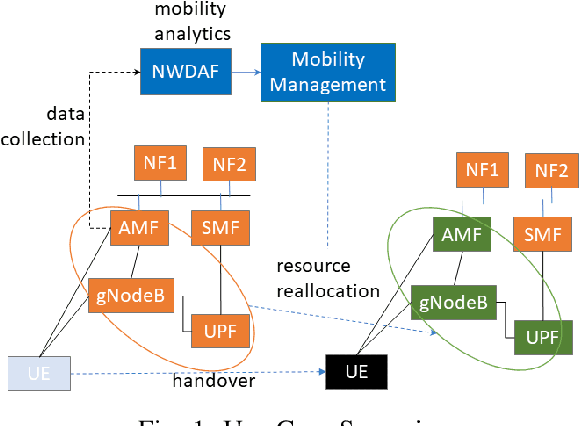
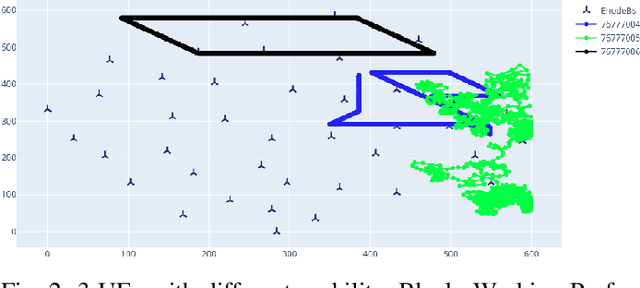
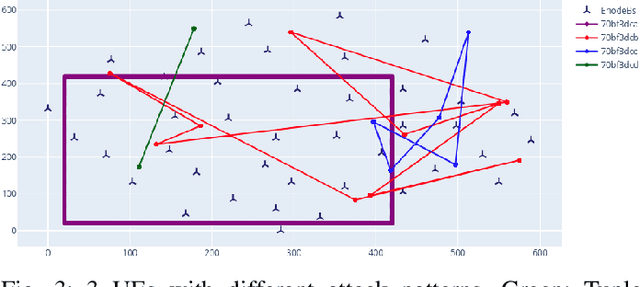

The $5^{th}$ generation of mobile networks introduces a new Network Function (NF) that was not present in previous generations, namely the Network Data Analytics Function (NWDAF). Its primary objective is to provide advanced analytics services to various entities within the network and also towards external application services in the 5G ecosystem. One of the key use cases of NWDAF is mobility trajectory prediction, which aims to accurately support efficient mobility management of User Equipment (UE) in the network by allocating ``just in time'' necessary network resources. In this paper, we show that there are potential mobility attacks that can compromise the accuracy of these predictions. In a semi-realistic scenario with 10,000 subscribers, we demonstrate that an adversary equipped with the ability to hijack cellular mobile devices and clone them can significantly reduce the prediction accuracy from 75\% to 40\% using just 100 adversarial UEs. While a defense mechanism largely depends on the attack and the mobility types in a particular area, we prove that a basic KMeans clustering is effective in distinguishing legitimate and adversarial UEs.