 Add to Chrome
 Add to Firefox
 Add to Edge
Validating Generalist Robots with Situation Calculus and STL Falsification
Jan 06, 2026
Generalist robots are becoming a reality, capable of interpreting natural language instructions and executing diverse operations. However, their validation remains challenging because each task induces its own operational context and correctness specification, exceeding the assumptions of traditional validation methods. We propose a two-layer validation framework that combines abstract reasoning with concrete system falsification. At the abstract layer, situation calculus models the world and derives weakest preconditions, enabling constraint-aware combinatorial testing to systematically generate diverse, semantically valid world-task configurations with controllable coverage strength. At the concrete layer, these configurations are instantiated for simulation-based falsification with STL monitoring. Experiments on tabletop manipulation tasks show that our framework effectively uncovers failure cases in the NVIDIA GR00T controller, demonstrating its promise for validating general-purpose robot autonomy.

ComOpT: Combination and Optimization for Testing Autonomous Driving Systems
Oct 02, 2021

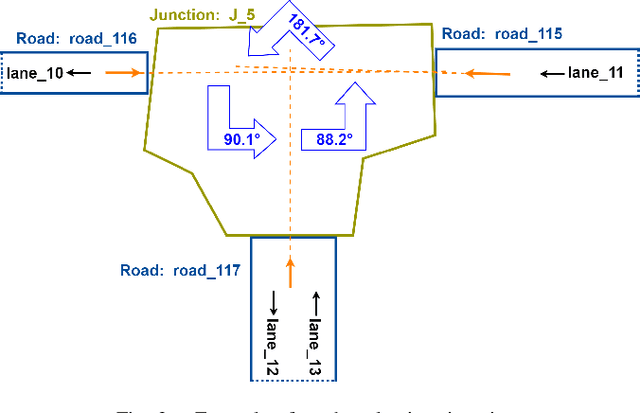

ComOpT is an open-source research tool for coverage-driven testing of autonomous driving systems, focusing on planning and control. Starting with (i) a meta-model characterizing discrete conditions to be considered and (ii) constraints specifying the impossibility of certain combinations, ComOpT first generates constraint-feasible abstract scenarios while maximally increasing the coverage of k-way combinatorial testing. Each abstract scenario can be viewed as a conceptual equivalence class, which is then instantiated into multiple concrete scenarios by (1) randomly picking one local map that fulfills the specified geographical condition, and (2) assigning all actors accordingly with parameters within the range. Finally, ComOpT evaluates each concrete scenario against a set of KPIs and performs local scenario variation via spawning a new agent that might lead to a collision at designated points. We use ComOpT to test the Apollo~6 autonomous driving software stack. ComOpT can generate highly diversified scenarios with limited test budgets while uncovering problematic situations such as inabilities to make simple right turns, uncomfortable accelerations, and dangerous driving patterns. ComOpT participated in the 2021 IEEE AI Autonomous Vehicle Testing Challenge and won first place among more than 110 contending teams.