 Add to Chrome
 Add to Firefox
 Add to Edge
UI-Venus-1.5 Technical Report
Feb 09, 2026
GUI agents have emerged as a powerful paradigm for automating interactions in digital environments, yet achieving both broad generality and consistently strong task performance remains challenging.In this report, we present UI-Venus-1.5, a unified, end-to-end GUI Agent designed for robust real-world applications.The proposed model family comprises two dense variants (2B and 8B) and one mixture-of-experts variant (30B-A3B) to meet various downstream application scenarios.Compared to our previous version, UI-Venus-1.5 introduces three key technical advances: (1) a comprehensive Mid-Training stage leveraging 10 billion tokens across 30+ datasets to establish foundational GUI semantics; (2) Online Reinforcement Learning with full-trajectory rollouts, aligning training objectives with long-horizon, dynamic navigation in large-scale environments; and (3) a single unified GUI Agent constructed via Model Merging, which synthesizes domain-specific models (grounding, web, and mobile) into one cohesive checkpoint. Extensive evaluations demonstrate that UI-Venus-1.5 establishes new state-of-the-art performance on benchmarks such as ScreenSpot-Pro (69.6%), VenusBench-GD (75.0%), and AndroidWorld (77.6%), significantly outperforming previous strong baselines. In addition, UI-Venus-1.5 demonstrates robust navigation capabilities across a variety of Chinese mobile apps, effectively executing user instructions in real-world scenarios. Code: https://github.com/inclusionAI/UI-Venus; Model: https://huggingface.co/collections/inclusionAI/ui-venus

AdaDiffSR: Adaptive Region-aware Dynamic Acceleration Diffusion Model for Real-World Image Super-Resolution
Oct 23, 2024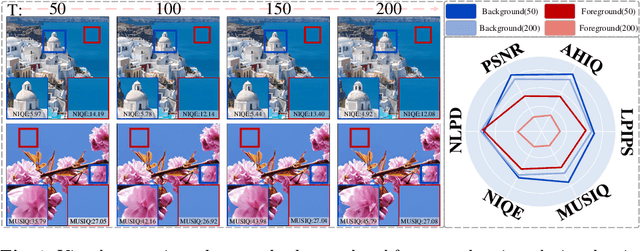
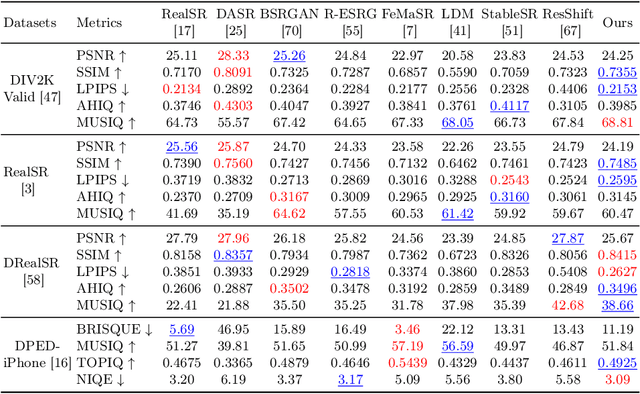
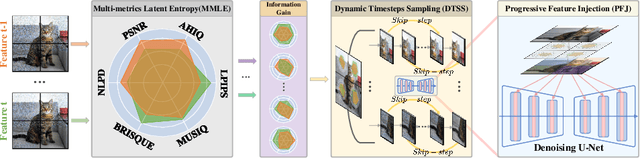
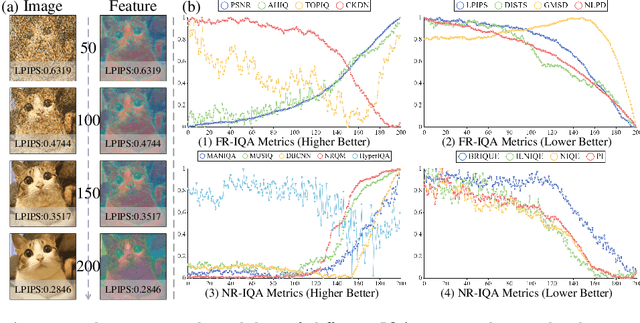
Diffusion models (DMs) have shown promising results on single-image super-resolution and other image-to-image translation tasks. Benefiting from more computational resources and longer inference times, they are able to yield more realistic images. Existing DMs-based super-resolution methods try to achieve an overall average recovery over all regions via iterative refinement, ignoring the consideration that different input image regions require different timesteps to reconstruct. In this work, we notice that previous DMs-based super-resolution methods suffer from wasting computational resources to reconstruct invisible details. To further improve the utilization of computational resources, we propose AdaDiffSR, a DMs-based SR pipeline with dynamic timesteps sampling strategy (DTSS). Specifically, by introducing the multi-metrics latent entropy module (MMLE), we can achieve dynamic perception of the latent spatial information gain during the denoising process, thereby guiding the dynamic selection of the timesteps. In addition, we adopt a progressive feature injection module (PFJ), which dynamically injects the original image features into the denoising process based on the current information gain, so as to generate images with both fidelity and realism. Experiments show that our AdaDiffSR achieves comparable performance over current state-of-the-art DMs-based SR methods while consuming less computational resources and inference time on both synthetic and real-world datasets.