 Add to Chrome
 Add to Firefox
 Add to Edge
Learning to Trigger: Reinforcement Learning at the Large Hadron Collider
Jun 24, 2026
High-throughput scientific facilities such as the Large Hadron Collider depend on real-time event filtering (\textit{triggering}) under tight constraints on bandwidth, latency, and storage. In practice, trigger menus are largely static and hand-tuned and can become suboptimal as detector conditions, pileup, and background composition drift over time. We cast online threshold tuning as a sequential decision-making problem: a reinforcement learning agent ingests streaming summaries of recent rates and signal-sensitive features and updates trigger thresholds to maximize signal efficiency while tracking a target background rate within a tolerance band. We adapt Group-Filtered Policy Optimization (GFPO) to streaming control and introduce two variants (GFPO-F, GFPO-FR) that enforce background rate feasibility during training. On a benchmark that emulates realistic collider operation, we study two representative triggers: a total transverse energy ($H_{T}$) trigger sensitive to pileup variation, and an anomaly-detection (AD) trigger based on reconstruction loss for rare or non-standard signatures. On Monte Carlo streams, our agent increases the fraction of in-tolerance time intervals by 48\% ($H_T$) and 28\% (AD), with a cumulative gain of up to 2\% in signal efficiency on those in-tolerance intervals. Transferring from simulation to \emph{real} collision data (CMS Run 283408), the same agent, without fine-tuning, achieves a 56\% ($H_T$) and 28\% (AD) in-tolerance improvement over baselines, with further signal-efficiency gain on both triggers. To our knowledge, this is the \emph{first} demonstration of RL-based trigger control on real Large Hadron Collider collision data. Code is available at https://github.com/Zixind/GFPO\_LHC.

Towards a Self-Driving Trigger at the LHC: Adaptive Response in Real Time
Jan 13, 2026Real-time data filtering and selection -- or trigger -- systems at high-throughput scientific facilities such as the experiments at the Large Hadron Collider (LHC) must process extremely high-rate data streams under stringent bandwidth, latency, and storage constraints. Yet these systems are typically designed as static, hand-tuned menus of selection criteria grounded in prior knowledge and simulation. In this work, we further explore the concept of a self-driving trigger, an autonomous data-filtering framework that reallocates resources and adjusts thresholds dynamically in real-time to optimize signal efficiency, rate stability, and computational cost as instrumentation and environmental conditions evolve. We introduce a benchmark ecosystem to emulate realistic collider scenarios and demonstrate real-time optimization of a menu including canonical energy sum triggers as well as modern anomaly-detection algorithms that target non-standard event topologies using machine learning. Using simulated data streams and publicly available collision data from the Compact Muon Solenoid (CMS) experiment, we demonstrate the capability to dynamically and automatically optimize trigger performance under specific cost objectives without manual retuning. Our adaptive strategy shifts trigger design from static menus with heuristic tuning to intelligent, automated, data-driven control, unlocking greater flexibility and discovery potential in future high-energy physics analyses.
Advanced Multi-Variate Analysis Methods for New Physics Searches at the Large Hadron Collider
May 16, 2021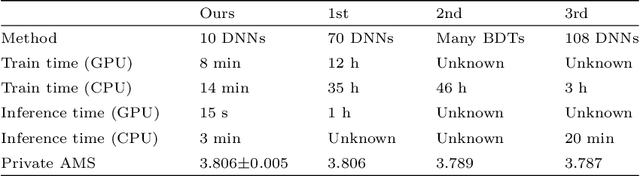
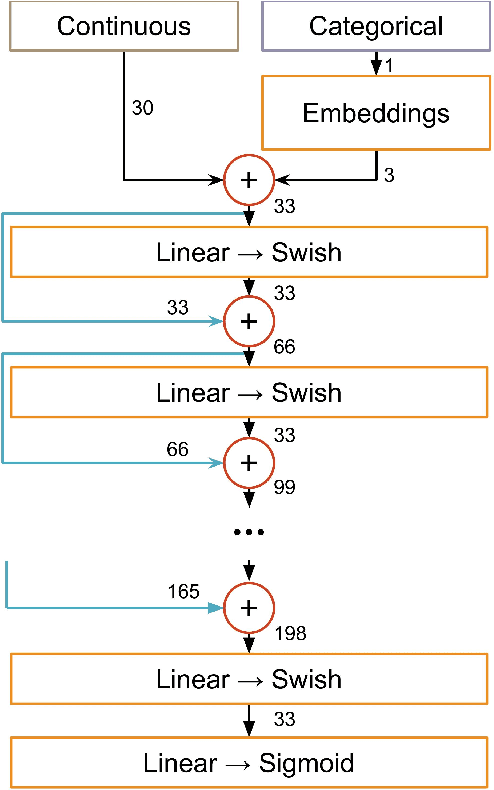
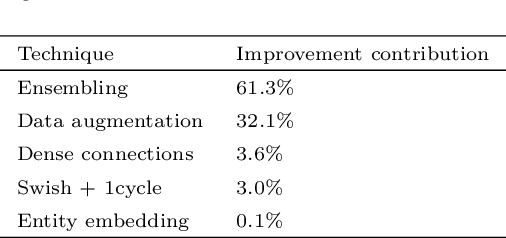
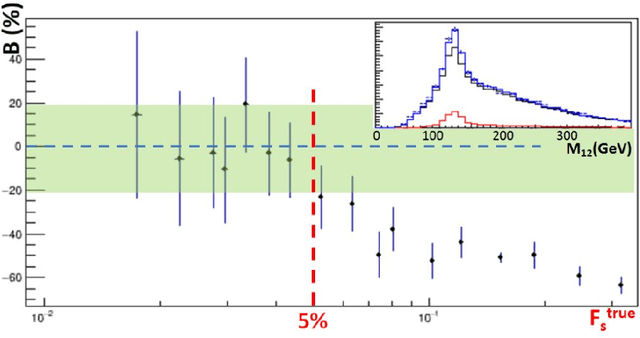
Between the years 2015 and 2019, members of the Horizon 2020-funded Innovative Training Network named "AMVA4NewPhysics" studied the customization and application of advanced multivariate analysis methods and statistical learning tools to high-energy physics problems, as well as developed entirely new ones. Many of those methods were successfully used to improve the sensitivity of data analyses performed by the ATLAS and CMS experiments at the CERN Large Hadron Collider; several others, still in the testing phase, promise to further improve the precision of measurements of fundamental physics parameters and the reach of searches for new phenomena. In this paper, the most relevant new tools, among those studied and developed, are presented along with the evaluation of their performances.