 Add to Chrome
 Add to Firefox
 Add to Edge
Highly Adaptive Principal Component Regression
Feb 11, 2026
The Highly Adaptive Lasso (HAL) is a nonparametric regression method that achieves almost dimension-free convergence rates under minimal smoothness assumptions, but its implementation can be computationally prohibitive in high dimensions due to the large basis matrix it requires. The Highly Adaptive Ridge (HAR) has been proposed as a scalable alternative. Building on both procedures, we introduce the Principal Component based Highly Adaptive Lasso (PCHAL) and Principal Component based Highly Adaptive Ridge (PCHAR). These estimators constitute an outcome-blind dimension reduction which offer substantial gains in computational efficiency and match the empirical performances of HAL and HAR. We also uncover a striking spectral link between the leading principal components of the HAL/HAR Gram operator and a discrete sinusoidal basis, revealing an explicit Fourier-type structure underlying the PC truncation.

Neural interval-censored Cox regression with feature selection
Jun 15, 2022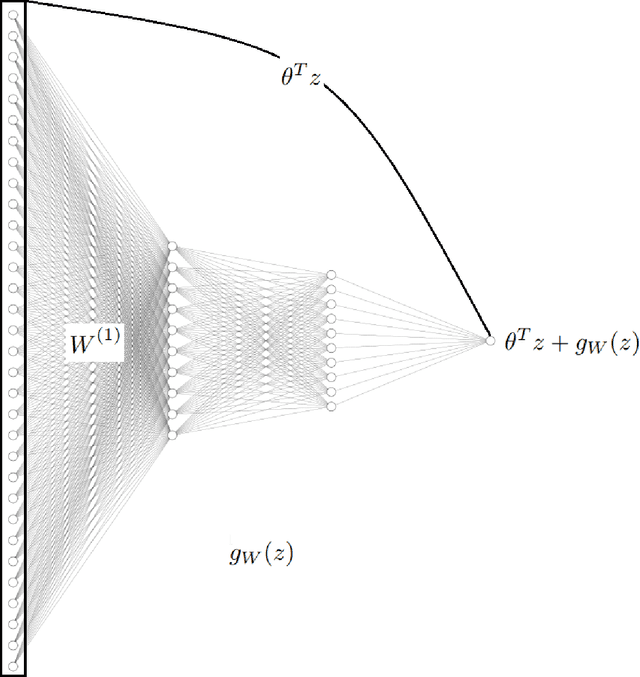
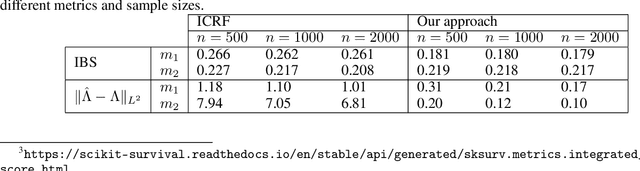
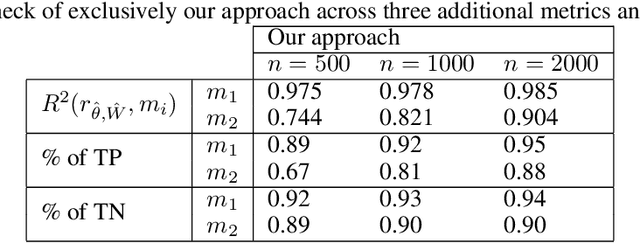
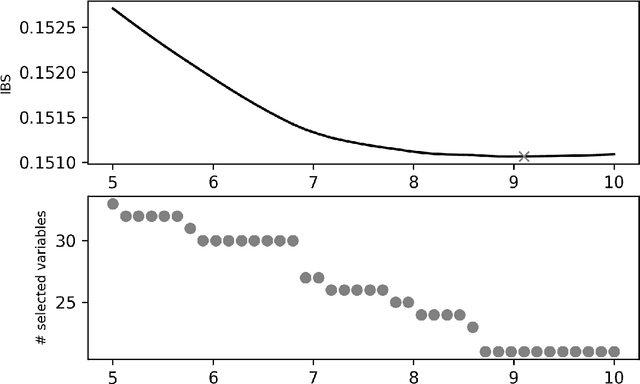
The classical Cox model emerged in 1972 promoting breakthroughs in how patient prognosis is quantified using time-to-event analysis in biomedicine. One of the most useful characteristics of the model for practitioners is the interpretability of the variables in the analysis. However, this comes at the price of introducing strong assumptions concerning the functional form of the regression model. To break this gap, this paper aims to exploit the explainability advantages of the classical Cox model in the setting of interval-censoring using a new Lasso neural network that simultaneously selects the most relevant variables while quantifying non-linear relations between predictors and survival times. The gain of the new method is illustrated empirically in an extensive simulation study with examples that involve linear and non-linear ground dependencies. We also demonstrate the performance of our strategy in the analysis of physiological, clinical and accelerometer data from the NHANES 2003-2006 waves to predict the effect of physical activity on the survival of patients. Our method outperforms the prior results in the literature that use the traditional Cox model.