 Add to Chrome
 Add to Firefox
 Add to Edge
End-user validation of BRIGHT with custom-developed graphical user interface applied to cervical cancer brachytherapy
Feb 18, 2026
Multi-objective optimisation using BRIGHT has proven insightful and effective in prostate cancer brachytherapy treatment planning. BRachytherapy via artificially Intelligent GOMEA-Heuristic based Treatment planning (BRIGHT) generates multiple treatment plans, each with a different trade-off between tumour coverage and organs-at-risk sparing. BRIGHT was recently extended to cervical cancer brachytherapy. In this study, we present a novel, custom-developed graphical user interface (GUI) that enables plan navigation, pairwise comparisons, dose distribution visualisation, and possibility for adjustments - essential for efficient clinical use of BRIGHT. End-user validation of BRIGHT with the dedicated GUI was conducted for cervical cancer brachytherapy by emulating clinical practice in ten previously treated patients. A multidisciplinary brachytherapy team used BRIGHT to create new treatment plans. GUI usability was assessed using the System Usability Scale (SUS). BRIGHT plan quality was compared to clinical practice via blinded one-on-one comparisons. The GUI offered helpful features for plan navigation and evaluation, giving users quick insight into whether planning aims are achievable and what treatment options are available. The overall SUS score was 83.3, indicating an 'excellent' system. BRIGHT outperformed clinical practice in five out of ten patients regarding the coverage-sparing trade-off and performed equally well in the remaining five. The BRIGHT plan was preferred over the clinical plan in eight out of ten patients, four of which showed clinically relevant differences. The clinical plan was preferred in two patients, neither with clinically relevant differences. In conclusion, BRIGHT, with its dedicated GUI, is a clinically viable and user-friendly tool for treatment planning in cervical cancer brachytherapy.

Adaptive Objective Configuration in Bi-Objective Evolutionary Optimization for Cervical Cancer Brachytherapy Treatment Planning
Mar 16, 2022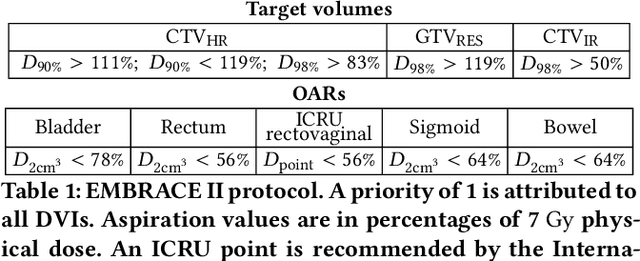
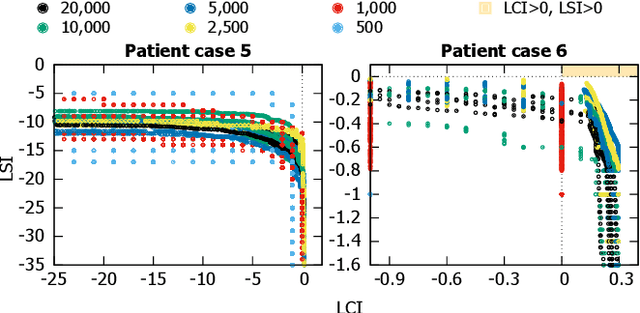

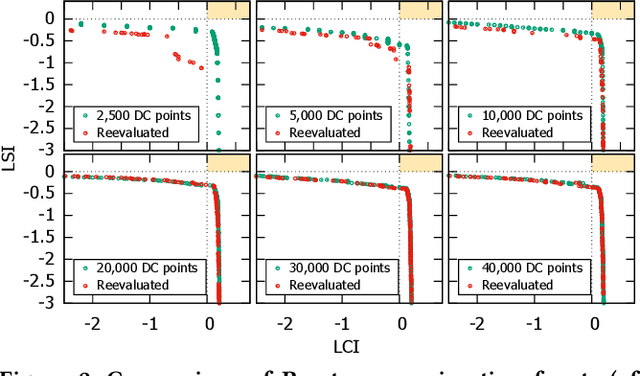
The Multi-Objective Real-Valued Gene-pool Optimal Mixing Evolutionary Algorithm (MO-RV-GOMEA) has been proven effective and efficient in solving real-world problems. A prime example is optimizing treatment plans for prostate cancer brachytherapy, an internal form of radiation treatment, for which equally important clinical aims from a base protocol are grouped into two objectives and bi-objectively optimized. This use of MO-RV-GOMEA was recently successfully introduced into clinical practice. Brachytherapy can also play an important role in treating cervical cancer. However, using the same approach to optimize treatment plans often does not immediately lead to clinically desirable results. Concordantly, medical experts indicate that they use additional aims beyond the cervix base protocol. Moreover, these aims have different priorities and can be patient-specifically adjusted. For this reason, we propose a novel adaptive objective configuration method to use with MO-RV-GOMEA so that we can accommodate additional aims of this nature. Based on results using only the base protocol, in consultation with medical experts, we configured key additional aims. We show how, for 10 patient cases, the new approach achieves the intended result, properly taking into account the additional aims. Consequently, plans resulting from the new approach are preferred by medical specialists in 8/10 cases.
Automated causal inference in application to randomized controlled clinical trials
Jan 20, 2022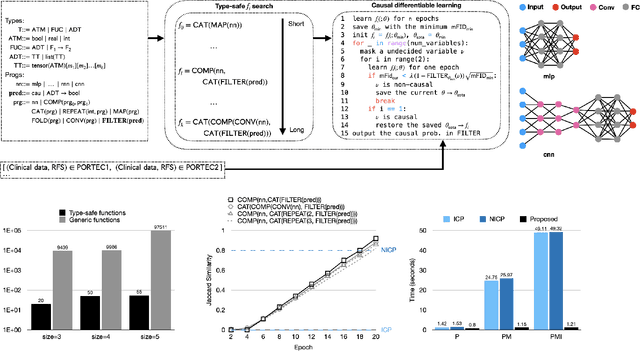
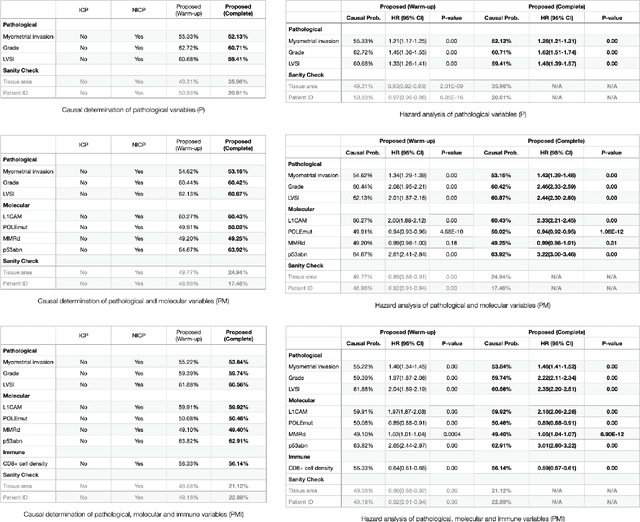
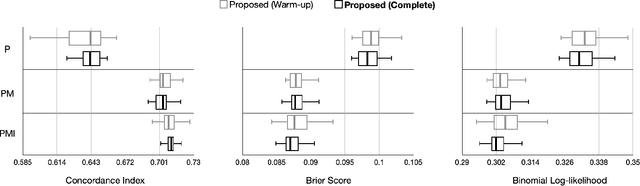
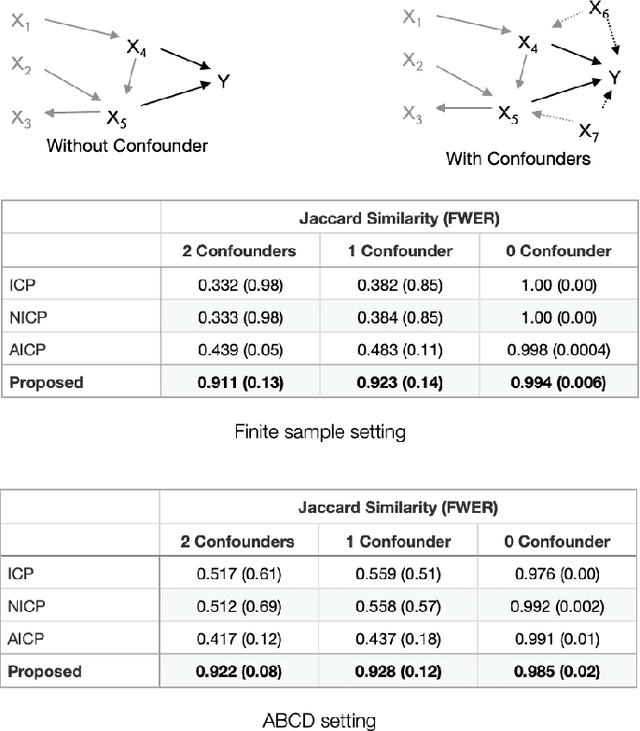
Randomized controlled trials (RCTs) are considered as the gold standard for testing causal hypotheses in the clinical domain. However, the investigation of prognostic variables of patient outcome in a hypothesized cause-effect route is not feasible using standard statistical methods. Here, we propose a new automated causal inference method (AutoCI) built upon the invariant causal prediction (ICP) framework for the causal re-interpretation of clinical trial data. Compared to existing methods, we show that the proposed AutoCI allows to efficiently determine the causal variables with a clear differentiation on two real-world RCTs of endometrial cancer patients with mature outcome and extensive clinicopathological and molecular data. This is achieved via suppressing the causal probability of non-causal variables by a wide margin. In ablation studies, we further demonstrate that the assignment of causal probabilities by AutoCI remain consistent in the presence of confounders. In conclusion, these results confirm the robustness and feasibility of AutoCI for future applications in real-world clinical analysis.