 Add to Chrome
 Add to Firefox
 Add to Edge
Simultaneous Model-Based Evolution of Constants and Expression Structure in GP-GOMEA for Symbolic Regression
Jun 01, 2026
Genetic programming (GP) approaches are among the state-of-the-art for symbolic regression, the task of constructing symbolic expressions that fit well with data. To find highly accurate symbolic expressions, both the expression structure and any contained real-valued constants, are important. GP-GOMEA, a modern model-based evolutionary algorithm, is one of the leading algorithms for finding accurate, yet compact expressions. Yet, GP-GOMEA does not perform dedicated constant optimization, but rather uses ephemeral random constants. Hence, the accuracy of GP-GOMEA may well still be improved upon by the incorporation of a constant optimization mechanism. Existing research into mixed discrete-continuous optimization with EAs has shown that a simultaneous and well-integrated approach to optimizing both discrete and continuous parts, leads to the best results on a variety of problems, especially when there are interactions between these parts. In this paper, we therefore propose a novel approach where constants in expressions are optimized at the same time as the expression structure by merging the real-valued variant of GOMEA with GP-GOMEA. The proposed approach is compared to other forms of handling constants in GP-GOMEA, and in the context of other commonly used techniques such as linear scaling, restarts, and constant tuning after GP optimization. Our results indicate that our novel approach generally performs best and confirms the importance of simultaneous constant optimization during evolution.

GP-GOMEA with GPU-Based Fitness Evaluations: Design and Performance Analysis
May 29, 2026GP-GOMEA is a state-of-the-art evolutionary algorithm for symbolic regression, known for discovering small and interpretable models. However, its computational cost remains substantial, limiting its applicability to larger datasets and more complex target expressions. In contrast, the rise of modern subsymbolic approaches, particularly deep learning, has been driven largely by the massive parallelism offered by GPUs. In this work, we take the first major step toward a fully GPU-accelerated GP-GOMEA by introducing a GPU-based fitness evaluation scheme. We design a GPU-friendly representation of GP-GOMEA's template-based individuals and a corresponding evaluation strategy that exploits the inherent parallelism of population-based search. This substantially increases evaluation throughput, enabling orders of magnitude more evaluations within the same time budget. Across four standard symbolic regression benchmarks, this increased evaluation capacity yields performance improvements, particularly for larger datasets and larger population sizes. Moreover, the ability to efficiently evaluate much larger datasets and more complex templates enables analyses that were previously infeasible, allowing us to systematically analyze what makes expressions increasingly difficult for GP-GOMEA, providing new insights into how expression structure affects search difficulty. Finally, for the first time, this expanded capability allows a problem-agnostic evolutionary algorithm to reliably regress one of the largest Feynman equations within four hours.
Evolving Features vs Evolving Entire Trees with GP for Interpretable Survival Analysis
May 28, 2026Survival analysis concerns the task of predicting the time until an event occurs. Often used in the medical field, survival analysis deals with incomplete (i.e., censored) data, for instance, from patients who did not experience the event during the duration of the study. For practical use, both accuracy and interpretability are important. Survival trees are easy-to-follow survival models that split the patient cohort recursively into discrete patient groups. Whilst survival trees can capture complex relationships, they typically need to grow large, threatening interpretability. Moreover, survival trees are often built using greedy approaches that may overlook globally optimal split combinations, limiting predictive performance. Shallow survival trees require expressive, higher-order feature combinations to achieve competitive accuracy. We therefore use genetic programming to multi-objectively evolve inherently inspectable feature sets and study how they interact with different tree induction strategies. We further introduce an evolutionary approach that jointly optimises the survival tree structure and the non-linear split logic. Our findings demonstrate that evolutionary feature construction improves predictive performance across different tree induction strategies on two real-world datasets and two different survival tree depths. Full joint evolution has the overall highest potential to propose multiple inherently inspectable shallow survival trees of good performance.
Parallel Adaptive Multi-Objective Evolutionary Learning of Discretized Bayesian Network Classifiers for Clinical Data
May 27, 2026Bayesian Networks (BNs) are of interest from an explainable AI viewpoint, offering transparent probabilistic models for decision support. Baymex is a recently introduced multi-objective evolutionary algorithm for learning discretized BNs, enabling experts to trade-off different objectives of interest, such as likelihood, model complexity, and prior beliefs. While Baymex has been shown to outperform state-of-the-art BN learning approaches, Baymex still 1) requires a lot of computation time and 2) has only been evaluated on synthetic data. To improve scalability, we introduce a parallelization strategy as well as a mechanism that enables adaptively steering optimization toward networks that overfit less. We furthermore reconfigure Baymex to train a BN classifier through multi-objective optimization of cross-entropy loss and the BIC complexity term so as to evaluate its performance on real-world clinical classification tasks. Besides observing speedups up to over 54 times on a 16-core CPU, comparisons against clinically familiar baselines (decision trees, logistic regression, naive Bayes, and random forests) on two open-source (RADCURE and SUPPORT) and one in-house dataset, show that Baymex obtains statistically similar or better predictive performance while producing compact, clinically inspectable BNs. Importantly, Baymex finds multiple plausible BN classifiers that contain predictors consistent with established clinical factors.
End-user validation of BRIGHT with custom-developed graphical user interface applied to cervical cancer brachytherapy
Feb 18, 2026Multi-objective optimisation using BRIGHT has proven insightful and effective in prostate cancer brachytherapy treatment planning. BRachytherapy via artificially Intelligent GOMEA-Heuristic based Treatment planning (BRIGHT) generates multiple treatment plans, each with a different trade-off between tumour coverage and organs-at-risk sparing. BRIGHT was recently extended to cervical cancer brachytherapy. In this study, we present a novel, custom-developed graphical user interface (GUI) that enables plan navigation, pairwise comparisons, dose distribution visualisation, and possibility for adjustments - essential for efficient clinical use of BRIGHT. End-user validation of BRIGHT with the dedicated GUI was conducted for cervical cancer brachytherapy by emulating clinical practice in ten previously treated patients. A multidisciplinary brachytherapy team used BRIGHT to create new treatment plans. GUI usability was assessed using the System Usability Scale (SUS). BRIGHT plan quality was compared to clinical practice via blinded one-on-one comparisons. The GUI offered helpful features for plan navigation and evaluation, giving users quick insight into whether planning aims are achievable and what treatment options are available. The overall SUS score was 83.3, indicating an 'excellent' system. BRIGHT outperformed clinical practice in five out of ten patients regarding the coverage-sparing trade-off and performed equally well in the remaining five. The BRIGHT plan was preferred over the clinical plan in eight out of ten patients, four of which showed clinically relevant differences. The clinical plan was preferred in two patients, neither with clinically relevant differences. In conclusion, BRIGHT, with its dedicated GUI, is a clinically viable and user-friendly tool for treatment planning in cervical cancer brachytherapy.
Introns and Templates Matter: Rethinking Linkage in GP-GOMEA
Feb 02, 2026GP-GOMEA is among the state-of-the-art for symbolic regression, especially when it comes to finding small and potentially interpretable solutions. A key mechanism employed in any GOMEA variant is the exploitation of linkage, the dependencies between variables, to ensure efficient evolution. In GP-GOMEA, mutual information between node positions in GP trees has so far been used to learn linkage. For this, a fixed expression template is used. This however leads to introns for expressions smaller than the full template. As introns have no impact on fitness, their occurrences are not directly linked to selection. Consequently, introns can adversely affect the extent to which mutual information captures dependencies between tree nodes. To overcome this, we propose two new measures for linkage learning, one that explicitly considers introns in mutual information estimates, and one that revisits linkage learning in GP-GOMEA from a grey-box perspective, yielding a measure that needs not to be learned from the population but is derived directly from the template. Across five standard symbolic regression problems, GP-GOMEA achieves substantial improvements using both measures. We also find that the newly learned linkage structure closely reflects the template linkage structure, and that explicitly using the template structure yields the best performance overall.
Sharing Knowledge without Sharing Data: Stitches can improve ensembles of disjointly trained models
Dec 19, 2025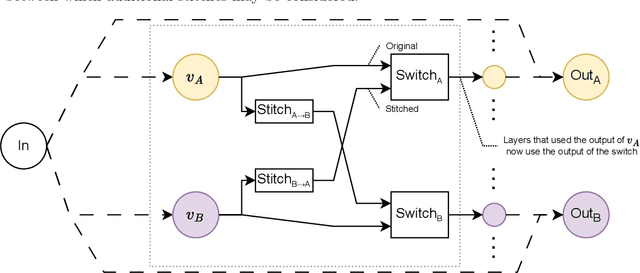
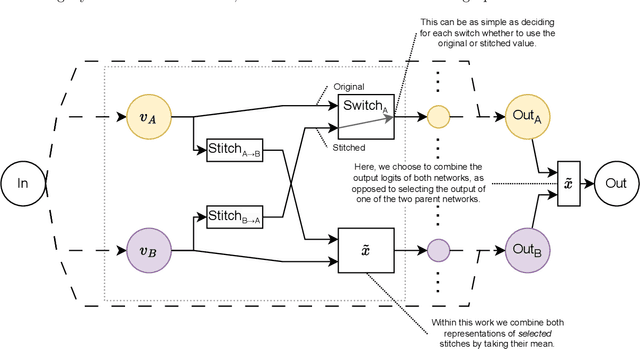
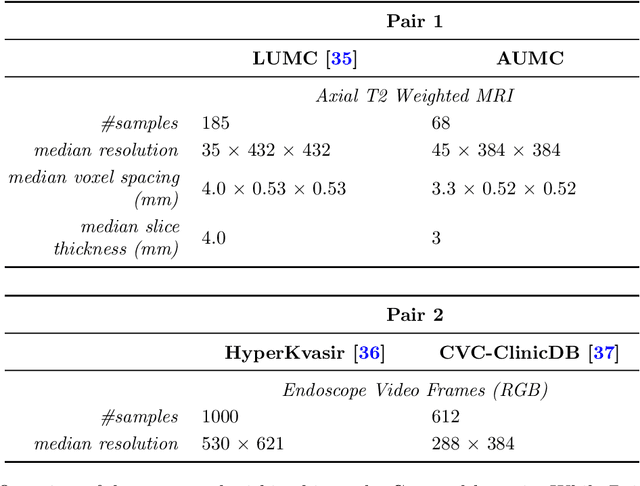
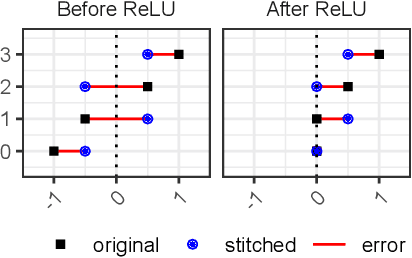
Deep learning has been shown to be very capable at performing many real-world tasks. However, this performance is often dependent on the presence of large and varied datasets. In some settings, like in the medical domain, data is often fragmented across parties, and cannot be readily shared. While federated learning addresses this situation, it is a solution that requires synchronicity of parties training a single model together, exchanging information about model weights. We investigate how asynchronous collaboration, where only already trained models are shared (e.g. as part of a publication), affects performance, and propose to use stitching as a method for combining models. Through taking a multi-objective perspective, where performance on each parties' data is viewed independently, we find that training solely on a single parties' data results in similar performance when merging with another parties' data, when considering performance on that single parties' data, while performance on other parties' data is notably worse. Moreover, while an ensemble of such individually trained networks generalizes better, performance on each parties' own dataset suffers. We find that combining intermediate representations in individually trained models with a well placed pair of stitching layers allows this performance to recover to a competitive degree while maintaining improved generalization, showing that asynchronous collaboration can yield competitive results.
Iterated Population Based Training with Task-Agnostic Restarts
Nov 12, 2025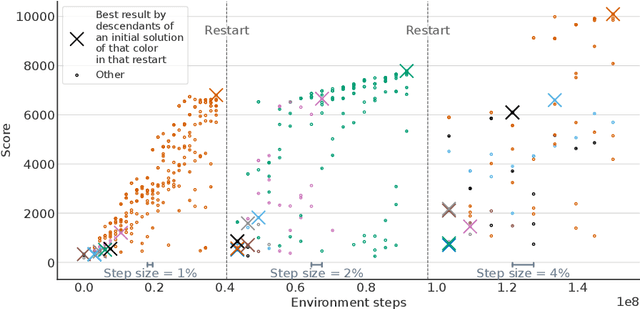
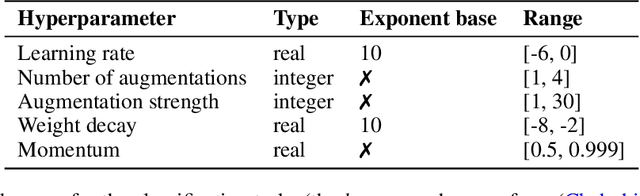
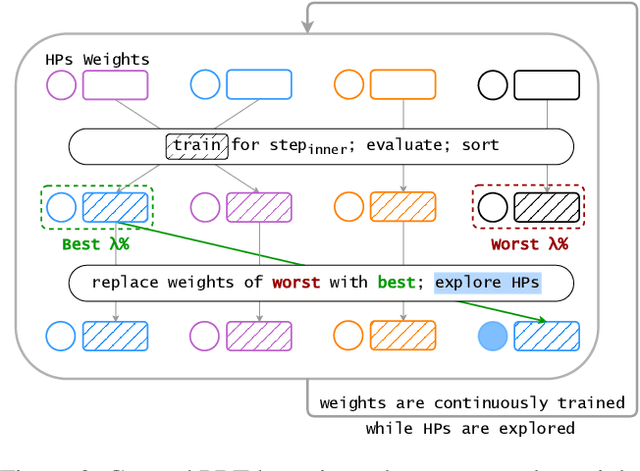
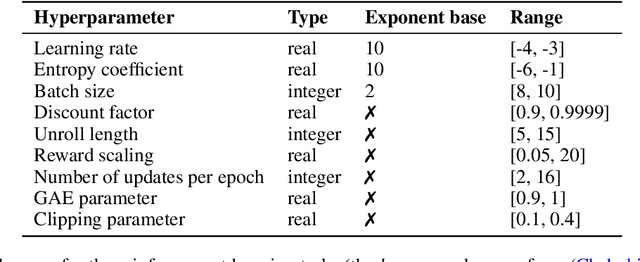
Hyperparameter Optimization (HPO) can lift the burden of tuning hyperparameters (HPs) of neural networks. HPO algorithms from the Population Based Training (PBT) family are efficient thanks to dynamically adjusting HPs every few steps of the weight optimization. Recent results indicate that the number of steps between HP updates is an important meta-HP of all PBT variants that can substantially affect their performance. Yet, no method or intuition is available for efficiently setting its value. We introduce Iterated Population Based Training (IPBT), a novel PBT variant that automatically adjusts this HP via restarts that reuse weight information in a task-agnostic way and leverage time-varying Bayesian optimization to reinitialize HPs. Evaluation on 8 image classification and reinforcement learning tasks shows that, on average, our algorithm matches or outperforms 5 previous PBT variants and other HPO algorithms (random search, ASHA, SMAC3), without requiring a budget increase or any changes to its HPs. The source code is available at https://github.com/AwesomeLemon/IPBT.
The Pitfalls and Potentials of Adding Gene-invariance to Optimal Mixing
Jun 18, 2025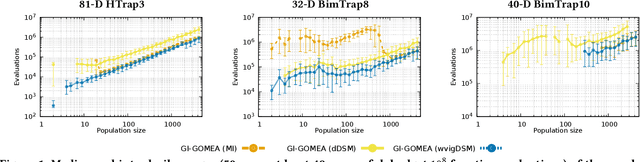
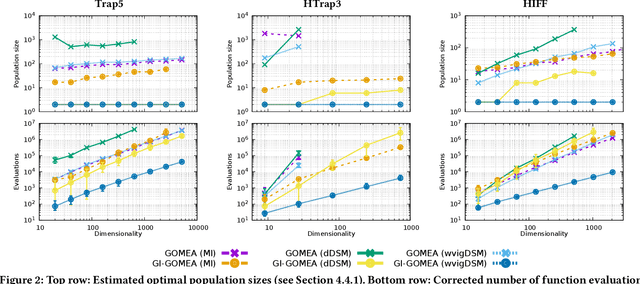

Optimal Mixing (OM) is a variation operator that integrates local search with genetic recombination. EAs with OM are capable of state-of-the-art optimization in discrete spaces, offering significant advantages over classic recombination-based EAs. This success is partly due to high selection pressure that drives rapid convergence. However, this can also negatively impact population diversity, complicating the solving of hierarchical problems, which feature multiple layers of complexity. While there have been attempts to address this issue, these solutions are often complicated and prone to bias. To overcome this, we propose a solution inspired by the Gene Invariant Genetic Algorithm (GIGA), which preserves gene frequencies in the population throughout the process. This technique is tailored to and integrated with the Gene-pool Optimal Mixing Evolutionary Algorithm (GOMEA), resulting in GI-GOMEA. The simple, yet elegant changes are found to have striking potential: GI-GOMEA outperforms GOMEA on a range of well-known problems, even when these problems are adjusted for pitfalls - biases in much-used benchmark problems that can be easily exploited by maintaining gene invariance. Perhaps even more notably, GI-GOMEA is also found to be effective at solving hierarchical problems, including newly introduced asymmetric hierarchical trap functions.
A Step towards Interpretable Multimodal AI Models with MultiFIX
May 16, 2025
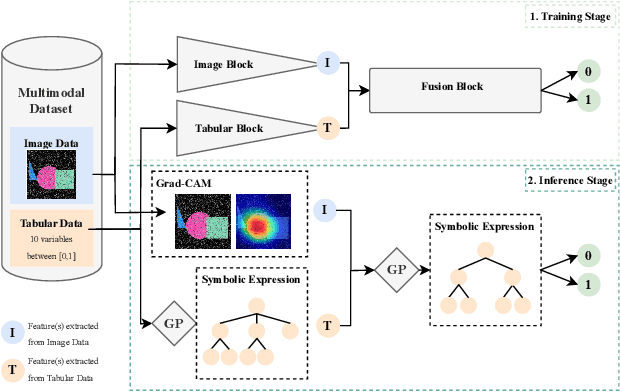
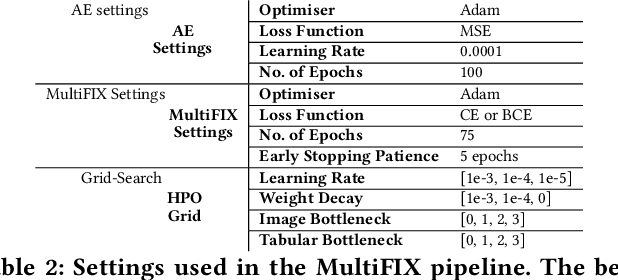
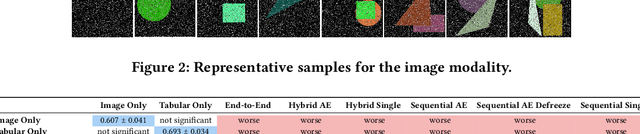
Real-world problems are often dependent on multiple data modalities, making multimodal fusion essential for leveraging diverse information sources. In high-stakes domains, such as in healthcare, understanding how each modality contributes to the prediction is critical to ensure trustworthy and interpretable AI models. We present MultiFIX, an interpretability-driven multimodal data fusion pipeline that explicitly engineers distinct features from different modalities and combines them to make the final prediction. Initially, only deep learning components are used to train a model from data. The black-box (deep learning) components are subsequently either explained using post-hoc methods such as Grad-CAM for images or fully replaced by interpretable blocks, namely symbolic expressions for tabular data, resulting in an explainable model. We study the use of MultiFIX using several training strategies for feature extraction and predictive modeling. Besides highlighting strengths and weaknesses of MultiFIX, experiments on a variety of synthetic datasets with varying degrees of interaction between modalities demonstrate that MultiFIX can generate multimodal models that can be used to accurately explain both the extracted features and their integration without compromising predictive performance.