 Add to Chrome
 Add to Firefox
 Add to Edge
Context-Matched Distillation: Teacher Causality for Autoregressive Video Distillation
Aug 13, 2026
Interactive autoregressive video generation demands both low-latency rollouts and precise online control. Few-step distillation accelerates generation by reducing denoising steps, while online control imposes a causal constraint: frames and blocks should depend on history and controls available during generation. Existing video distribution matching distillation (DMD) pipelines, however, often supervise causal few-step students using bidirectional teachers that score complete clips. The score for a target can therefore depend on future frames and controls that were unavailable when the student generated it, misaligning teacher supervision with the student's causal information set. We introduce Context-Matched Distillation (CMD), a causal DMD framework that aligns teacher supervision with the information available when each target is generated. CMD replaces bidirectional full-clip scoring with a causal teacher that evaluates each target without access to future frames or controls. The same causal teacher initializes the few-step student, establishing a consistent causal formulation across teacher training, student distillation, and inference. Beyond aligning the temporal information boundary, Prefix Scoring matches supervision to the student's realized rollout context by evaluating each target under the cached student-generated prefix that produced it. Prefix Corruption further stabilizes training by perturbing unreliable prefixes produced early in training while preserving this target-context alignment. With a simple causal formulation, CMD naturally extends to frame-wise and chunk-wise generation, long video distillation, and camera-conditioned distillation. Experiments demonstrate state-of-the-art aggregate performance among autoregressive methods on both short- and long-video benchmarks, together with substantially improved adherence to time-varying camera controls.

Model-assisted deep learning of rare extreme events from partial observations
Nov 04, 2021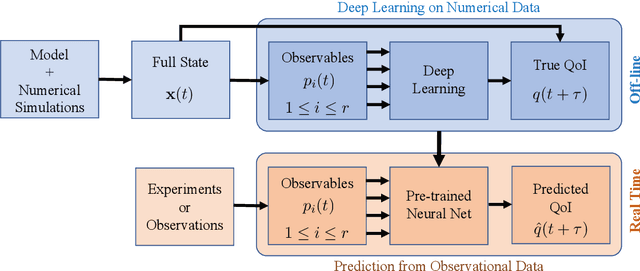
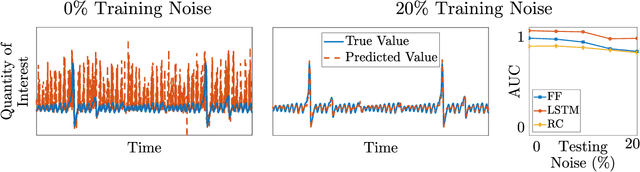
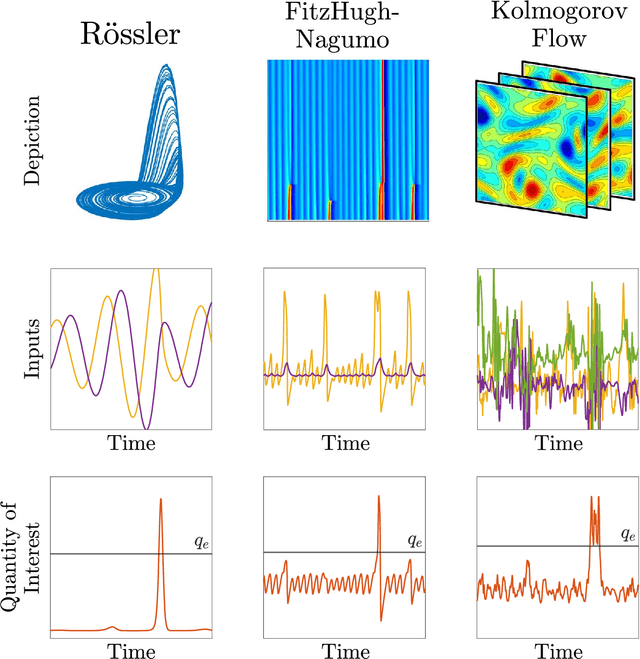
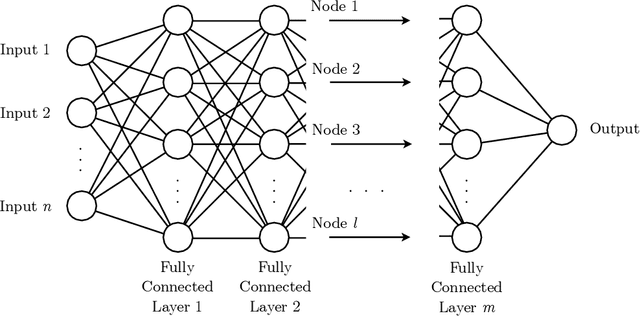
To predict rare extreme events using deep neural networks, one encounters the so-called small data problem because even long-term observations often contain few extreme events. Here, we investigate a model-assisted framework where the training data is obtained from numerical simulations, as opposed to observations, with adequate samples from extreme events. However, to ensure the trained networks are applicable in practice, the training is not performed on the full simulation data; instead we only use a small subset of observable quantities which can be measured in practice. We investigate the feasibility of this model-assisted framework on three different dynamical systems (Rossler attractor, FitzHugh--Nagumo model, and a turbulent fluid flow) and three different deep neural network architectures (feedforward, long short-term memory, and reservoir computing). In each case, we study the prediction accuracy, robustness to noise, reproducibility under repeated training, and sensitivity to the type of input data. In particular, we find long short-term memory networks to be most robust to noise and to yield relatively accurate predictions, while requiring minimal fine-tuning of the hyperparameters.
Data-driven prediction of multistable systems from sparse measurements
Oct 28, 2020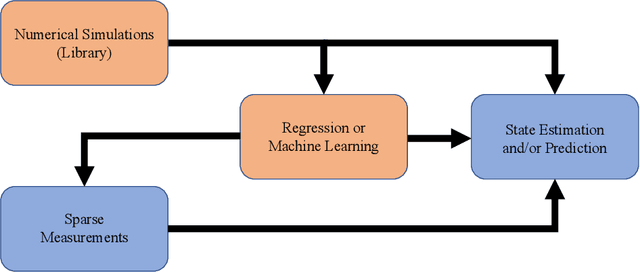

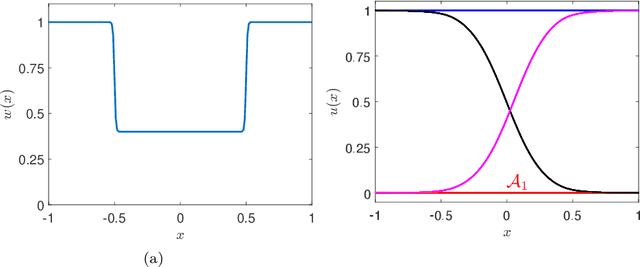
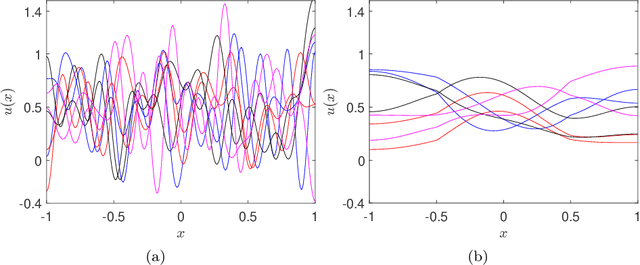
We develop a data-driven method, based on semi-supervised classification, to predict the asymptotic state of multistable systems when only sparse spatial measurements of the system are feasible. Our method predicts the asymptotic behavior of an observed state by quantifying its proximity to the states in a precomputed library of data. To quantify this proximity, we introduce a sparsity-promoting metric-learning (SPML) optimization, which learns a metric directly from the precomputed data. The resulting metric has two important properties: (i) It is compatible with the precomputed library, and (ii) It is computable from sparse measurements. We demonstrate the application of this method on a multistable reaction-diffusion equation which has four asymptotically stable steady states. Classifications based on SPML predict the asymptotic behavior of initial conditions, based on two-point measurements, with over $89\%$ accuracy. The learned optimal metric also determines where these measurements need to be made to ensure accurate predictions.