 Add to Chrome
 Add to Firefox
 Add to Edge
MUZZLE: Adaptive Agentic Red-Teaming of Web Agents Against Indirect Prompt Injection Attacks
Feb 09, 2026
Large language model (LLM) based web agents are increasingly deployed to automate complex online tasks by directly interacting with web sites and performing actions on users' behalf. While these agents offer powerful capabilities, their design exposes them to indirect prompt injection attacks embedded in untrusted web content, enabling adversaries to hijack agent behavior and violate user intent. Despite growing awareness of this threat, existing evaluations rely on fixed attack templates, manually selected injection surfaces, or narrowly scoped scenarios, limiting their ability to capture realistic, adaptive attacks encountered in practice. We present MUZZLE, an automated agentic framework for evaluating the security of web agents against indirect prompt injection attacks. MUZZLE utilizes the agent's trajectories to automatically identify high-salience injection surfaces, and adaptively generate context-aware malicious instructions that target violations of confidentiality, integrity, and availability. Unlike prior approaches, MUZZLE adapts its attack strategy based on the agent's observed execution trajectory and iteratively refines attacks using feedback from failed executions. We evaluate MUZZLE across diverse web applications, user tasks, and agent configurations, demonstrating its ability to automatically and adaptively assess the security of web agents with minimal human intervention. Our results show that MUZZLE effectively discovers 37 new attacks on 4 web applications with 10 adversarial objectives that violate confidentiality, availability, or privacy properties. MUZZLE also identifies novel attack strategies, including 2 cross-application prompt injection attacks and an agent-tailored phishing scenario.

Web Based Brain Volume Calculation for Magnetic Resonance Images
Apr 21, 2019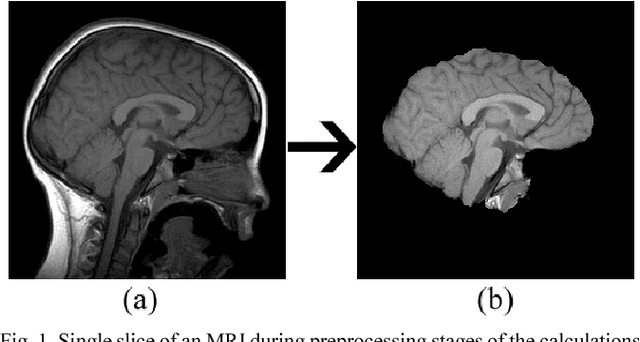
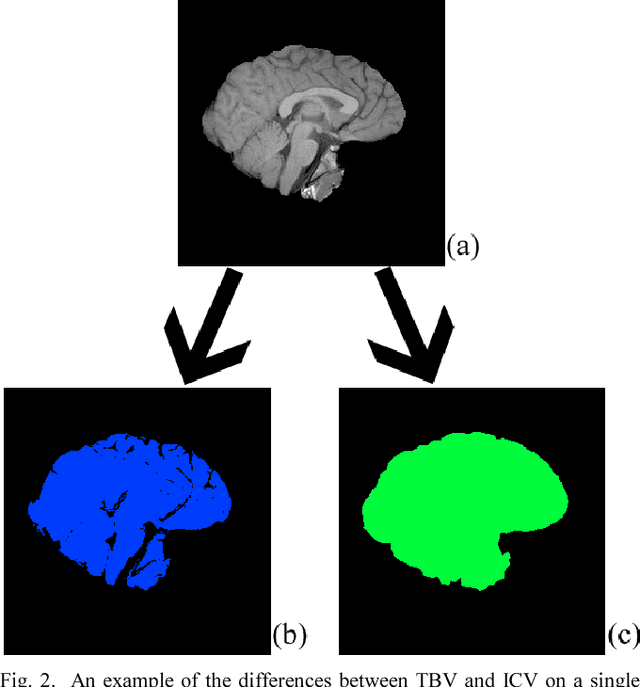
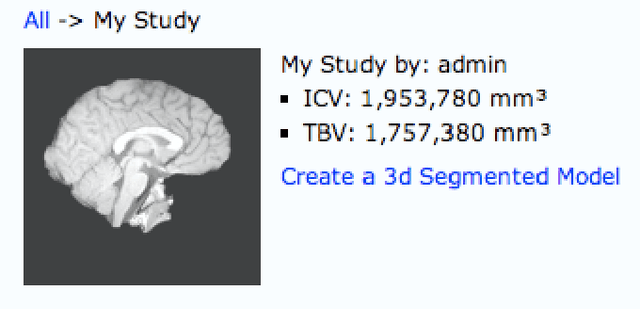
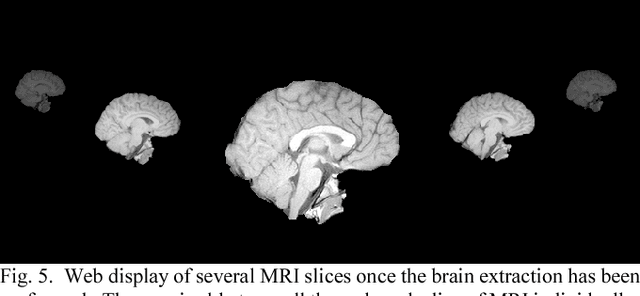
Brain volume calculations are crucial in modern medical research, especially in the study of neurodevelopmental disorders. In this paper, we present an algorithm for calculating two classifications of brain volume, total brain volume (TBV) and intracranial volume (ICV). Our algorithm takes MRI data as input, performs several preprocessing and intermediate steps, and then returns each of the two calculated volumes. To simplify this process and make our algorithm publicly accessible to anyone, we have created a web-based interface that allows users to upload their own MRI data and calculate the TBV and ICV for the given data. This interface provides a simple and efficient method for calculating these two classifications of brain volume, and it also removes the need for the user to download or install any applications.