 Add to Chrome
 Add to Firefox
 Add to Edge
Risk Assessment of Autonomous Driving: Integrating Technical Failures, Ethical Dilemmas, and Policy Frameworks
Jun 04, 2026
Autonomous driving technology has the potential to reduce the large number of road traffic accidents caused by human error each year, but it also brings new types of risks that need to be evaluated from the aspects of technology, ethics and regulations. Based on public crash data from the National Highway Traffic Safety Administration (NHTSA), disengagement reports from the California Department of Motor Vehicles (DMV), the MIT Moral Machines dataset, and a comparative regulatory analysis of five jurisdictions, we have found that the main types of technical failure modes are perception and classification errors. These account for a relatively large proportion of the reported accidents, and it can be concluded that there are different ethical frameworks for autonomous vehicle decision-making, and inconsistent regulations in different areas increase the uncertainty of widespread application. Generally speaking, the problems of technology, ethics and regulation are closely related and need to be solved together. Therefore, this paper recommends a more adaptive and cooperative governance approach that combines engineering standards, ethical discussion, and institutional supervision.

FLINT: A Platform for Federated Learning Integration
Mar 11, 2023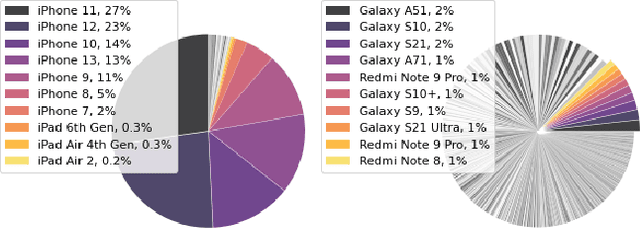
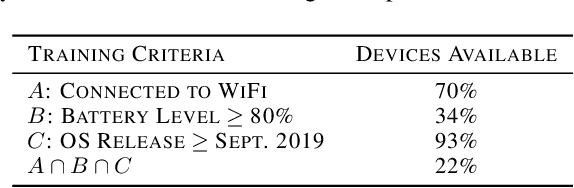
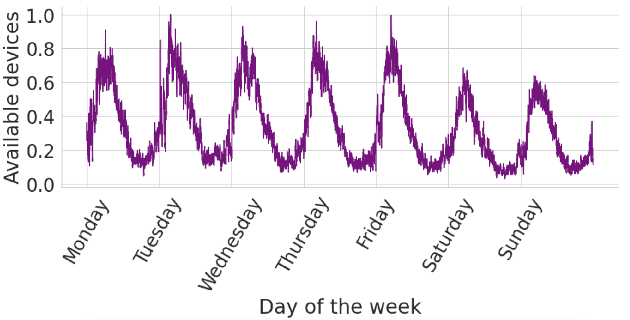

Cross-device federated learning (FL) has been well-studied from algorithmic, system scalability, and training speed perspectives. Nonetheless, moving from centralized training to cross-device FL for millions or billions of devices presents many risks, including performance loss, developer inertia, poor user experience, and unexpected application failures. In addition, the corresponding infrastructure, development costs, and return on investment are difficult to estimate. In this paper, we present a device-cloud collaborative FL platform that integrates with an existing machine learning platform, providing tools to measure real-world constraints, assess infrastructure capabilities, evaluate model training performance, and estimate system resource requirements to responsibly bring FL into production. We also present a decision workflow that leverages the FL-integrated platform to comprehensively evaluate the trade-offs of cross-device FL and share our empirical evaluations of business-critical machine learning applications that impact hundreds of millions of users.