 Add to Chrome
 Add to Firefox
 Add to Edge
Sheet as Token: A Graph-Enhanced Representation for Multi-Sheet Spreadsheet Understanding
May 07, 2026
Workbook-scale spreadsheet understanding is increasingly important for language-model-based data analysis agents, but remains challenging because relevant information is often distributed across multiple sheets with heterogeneous schemas, layouts, and implicit relationships. Existing retrieval-augmented approaches typically decompose spreadsheets into rows, columns, or blocks to improve scalability; however, such chunk-centric representations can fragment worksheets into isolated text spans and weaken global sheet-level semantics. We propose Sheet as Token, a graph-enhanced framework that treats each worksheet as a unified semantic unit for multi-sheet spreadsheet retrieval. Our method extracts schema-aware records from sheet names, column headers, representative values, and layout features, and encodes each worksheet into a compact dense token. Given a natural-language query, a Graph Retriever constructs a query-specific candidate graph over sheet tokens using semantic, query-conditioned, schema-consistency, and shape-compatibility relations, and composes these channels through a multi-stage graph transformer to retrieve supporting sheet sets. Experiments on a constructed multi-sheet spreadsheet corpus show that sheet-level tokenization learns stable representations, and that graph-enhanced cross-sheet reasoning improves listwise retrieval over a shallow graph baseline with limited additional graph-side computation. These results suggest that sheet-level tokenization is a promising abstraction for scalable multi-sheet spreadsheet understanding.

Mapping New Realities: Ground Truth Image Creation with Pix2Pix Image-to-Image Translation
May 01, 2024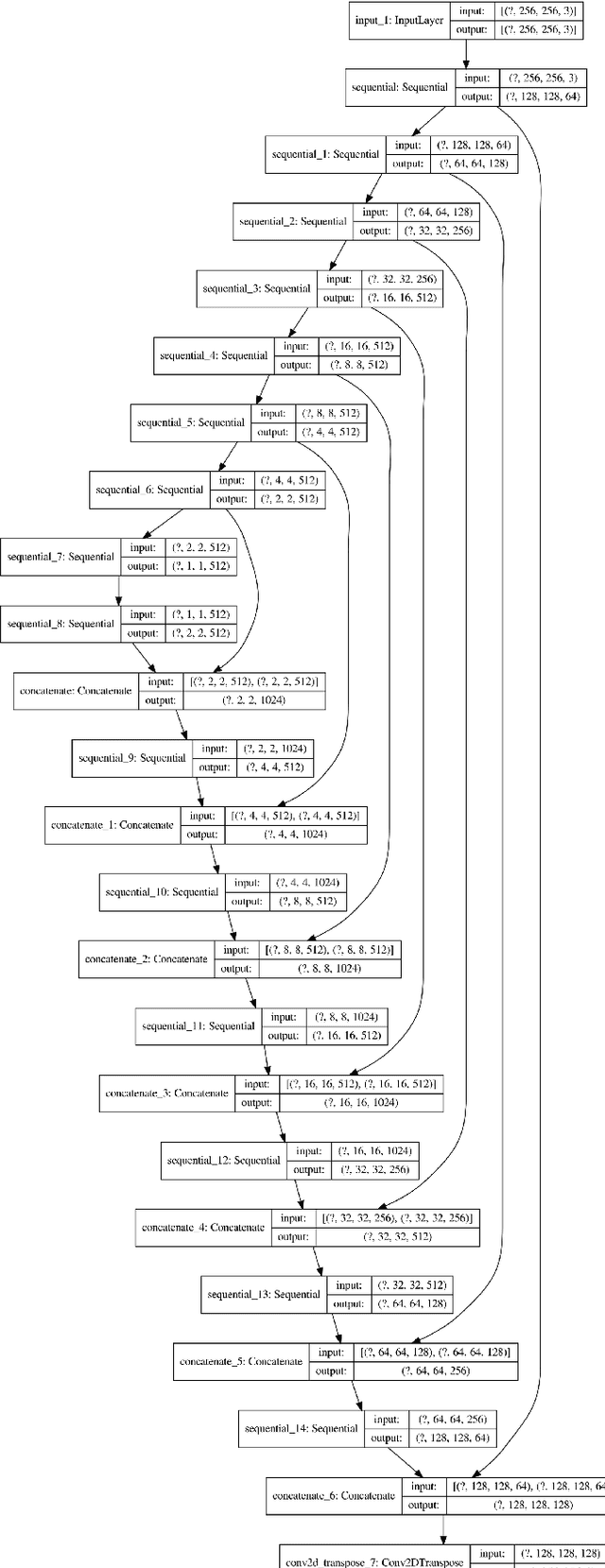
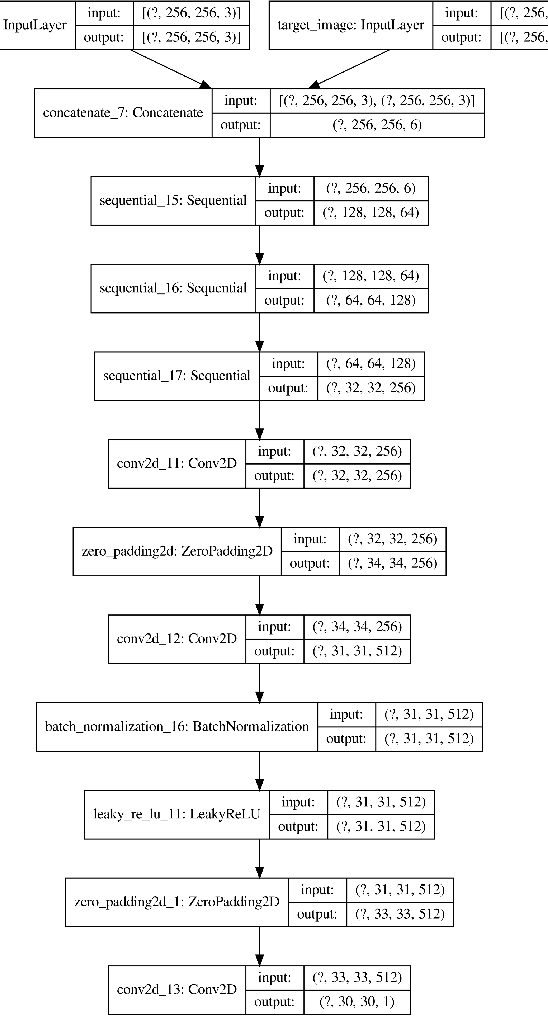
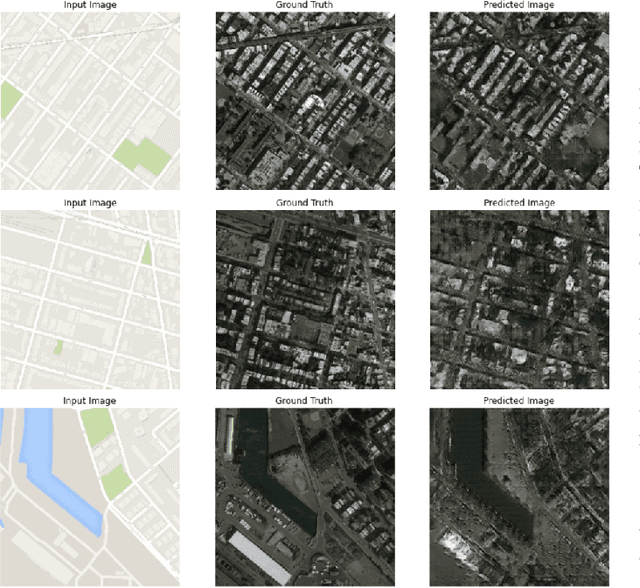
Generative Adversarial Networks (GANs) have significantly advanced image processing, with Pix2Pix being a notable framework for image-to-image translation. This paper explores a novel application of Pix2Pix to transform abstract map images into realistic ground truth images, addressing the scarcity of such images crucial for domains like urban planning and autonomous vehicle training. We detail the Pix2Pix model's utilization for generating high-fidelity datasets, supported by a dataset of paired map and aerial images, and enhanced by a tailored training regimen. The results demonstrate the model's capability to accurately render complex urban features, establishing its efficacy and potential for broad real-world applications.