 Add to Chrome
 Add to Firefox
 Add to Edge
Discovering a Zeta Map Algorithm on Dyck Paths via Mechanistic Interpretability
May 28, 2026
Machine learning is increasingly used in mathematical discovery, but in mathematics the desired output is often not a prediction itself, but an explicit construction that can be checked independently. We study this setting through the zeta map on Dyck paths, a classical bijection in the combinatorics of the q,t-Catalan numbers. We train a deliberately small one-layer, one-head encoder-decoder transformer on this map and analyze its learned computation using mechanistic interpretability tools, including decoder cross-attention analysis, linear probing, and causal intervention. The analysis reveals a level-based mechanism: encoder representations make path levels linearly accessible, while the decoder selects and traverses input positions in a structured way. Translating these signals into combinatorics leads to the scaffolding map, an explicit peak-centered traversal algorithm for Dyck paths. We prove that this algorithm agrees with the zeta map, modulo a reversal convention in the labeling. This gives a controlled example of AI-assisted mathematical discovery in which mechanistic interpretability turns model behavior into a precise, human-verifiable combinatorial algorithm.

From Black Box to Bijection: Interpreting Machine Learning to Build a Zeta Map Algorithm
Nov 16, 2025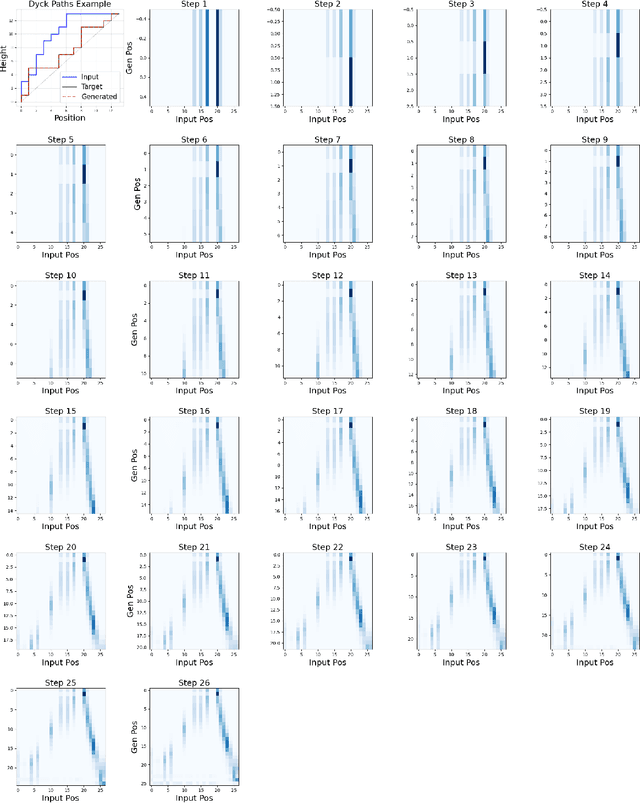
There is a large class of problems in algebraic combinatorics which can be distilled into the same challenge: construct an explicit combinatorial bijection. Traditionally, researchers have solved challenges like these by visually inspecting the data for patterns, formulating conjectures, and then proving them. But what is to be done if patterns fail to emerge until the data grows beyond human scale? In this paper, we propose a new workflow for discovering combinatorial bijections via machine learning. As a proof of concept, we train a transformer on paired Dyck paths and use its learned attention patterns to derive a new algorithmic description of the zeta map, which we call the \textit{Scaffolding Map}.
Machine Learning Mutation-Acyclicity of Quivers
Nov 06, 2024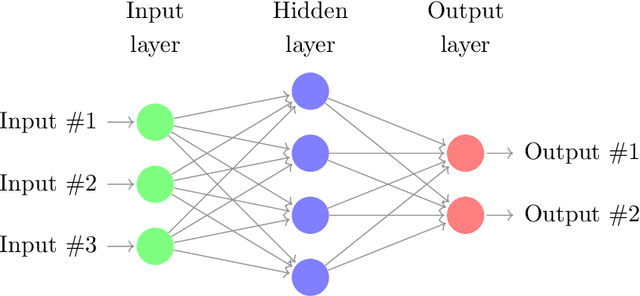

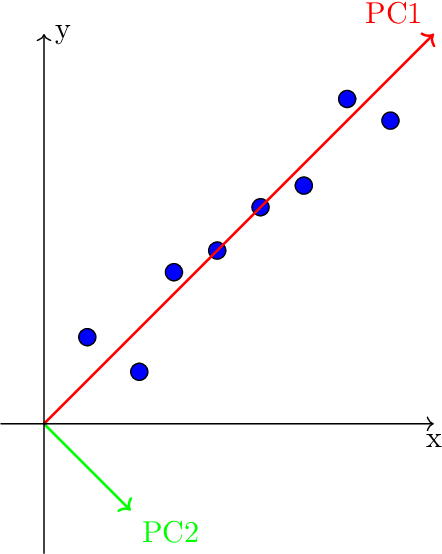
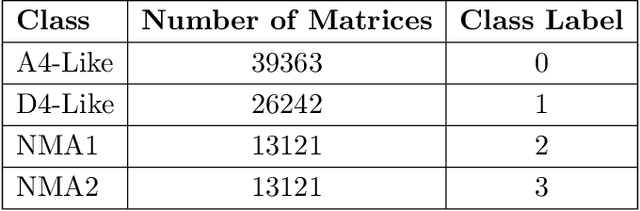
Machine learning (ML) has emerged as a powerful tool in mathematical research in recent years. This paper applies ML techniques to the study of quivers--a type of directed multigraph with significant relevance in algebra, combinatorics, computer science, and mathematical physics. Specifically, we focus on the challenging problem of determining the mutation-acyclicity of a quiver on 4 vertices, a property that is pivotal since mutation-acyclicity is often a necessary condition for theorems involving path algebras and cluster algebras. Although this classification is known for quivers with at most 3 vertices, little is known about quivers on more than 3 vertices. We give a computer-assisted proof of a theorem to prove that mutation-acyclicity is decidable for quivers on 4 vertices with edge weight at most 2. By leveraging neural networks (NNs) and support vector machines (SVMs), we then accurately classify more general 4-vertex quivers as mutation-acyclic or non-mutation-acyclic. Our results demonstrate that ML models can efficiently detect mutation-acyclicity, providing a promising computational approach to this combinatorial problem, from which the trained SVM equation provides a starting point to guide future theoretical development.