 Add to Chrome
 Add to Firefox
 Add to Edge
A Generalization Bound of Deep Neural Networks for Dependent Data
Oct 09, 2023
Existing generalization bounds for deep neural networks require data to be independent and identically distributed (iid). This assumption may not hold in real-life applications such as evolutionary biology, infectious disease epidemiology, and stock price prediction. This work establishes a generalization bound of feed-forward neural networks for non-stationary $\phi$-mixing data.

LVM-Med: Learning Large-Scale Self-Supervised Vision Models for Medical Imaging via Second-order Graph Matching
Jul 09, 2023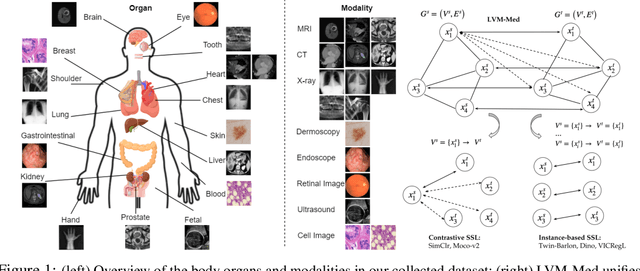
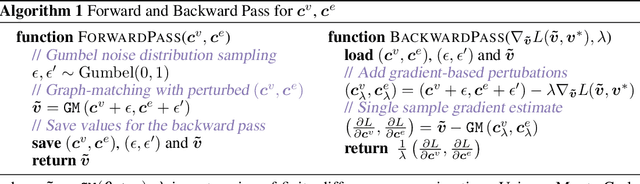
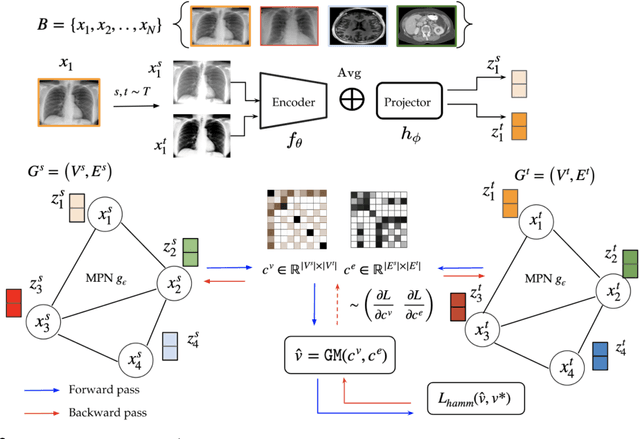
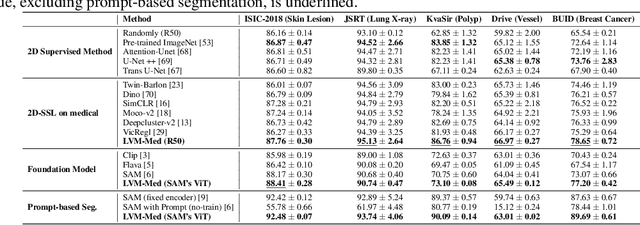
Obtaining large pre-trained models that can be fine-tuned to new tasks with limited annotated samples has remained an open challenge for medical imaging data. While pre-trained deep networks on ImageNet and vision-language foundation models trained on web-scale data are prevailing approaches, their effectiveness on medical tasks is limited due to the significant domain shift between natural and medical images. To bridge this gap, we introduce LVM-Med, the first family of deep networks trained on large-scale medical datasets. We have collected approximately 1.3 million medical images from 55 publicly available datasets, covering a large number of organs and modalities such as CT, MRI, X-ray, and Ultrasound. We benchmark several state-of-the-art self-supervised algorithms on this dataset and propose a novel self-supervised contrastive learning algorithm using a graph-matching formulation. The proposed approach makes three contributions: (i) it integrates prior pair-wise image similarity metrics based on local and global information; (ii) it captures the structural constraints of feature embeddings through a loss function constructed via a combinatorial graph-matching objective; and (iii) it can be trained efficiently end-to-end using modern gradient-estimation techniques for black-box solvers. We thoroughly evaluate the proposed LVM-Med on 15 downstream medical tasks ranging from segmentation and classification to object detection, and both for the in and out-of-distribution settings. LVM-Med empirically outperforms a number of state-of-the-art supervised, self-supervised, and foundation models. For challenging tasks such as Brain Tumor Classification or Diabetic Retinopathy Grading, LVM-Med improves previous vision-language models trained on 1 billion masks by 6-7% while using only a ResNet-50.
Correlation visualization under missing values: a comparison between imputation and direct parameter estimation methods
May 10, 2023


Correlation matrix visualization is essential for understanding the relationships between variables in a dataset, but missing data can pose a significant challenge in estimating correlation coefficients. In this paper, we compare the effects of various missing data methods on the correlation plot, focusing on two common missing patterns: random and monotone. We aim to provide practical strategies and recommendations for researchers and practitioners in creating and analyzing the correlation plot. Our experimental results suggest that while imputation is commonly used for missing data, using imputed data for plotting the correlation matrix may lead to a significantly misleading inference of the relation between the features. We recommend using DPER, a direct parameter estimation approach, for plotting the correlation matrix based on its performance in the experiments.
Blockwise Principal Component Analysis for monotone missing data imputation and dimensionality reduction
May 10, 2023

Monotone missing data is a common problem in data analysis. However, imputation combined with dimensionality reduction can be computationally expensive, especially with the increasing size of datasets. To address this issue, we propose a Blockwise principal component analysis Imputation (BPI) framework for dimensionality reduction and imputation of monotone missing data. The framework conducts Principal Component Analysis (PCA) on the observed part of each monotone block of the data and then imputes on merging the obtained principal components using a chosen imputation technique. BPI can work with various imputation techniques and can significantly reduce imputation time compared to conducting dimensionality reduction after imputation. This makes it a practical and efficient approach for large datasets with monotone missing data. Our experiments validate the improvement in speed. In addition, our experiments also show that while applying MICE imputation directly on missing data may not yield convergence, applying BPI with MICE for the data may lead to convergence.
Adaptive-saturated RNN: Remember more with less instability
Apr 24, 2023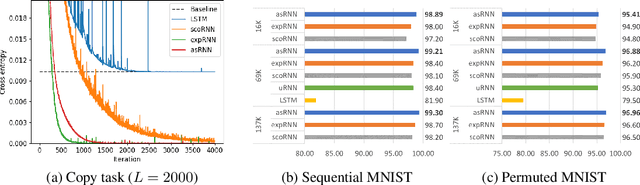
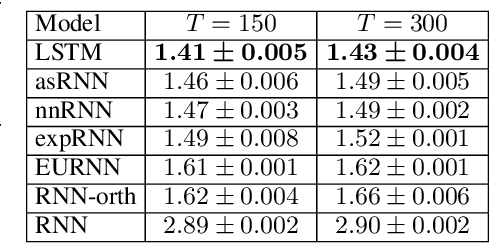
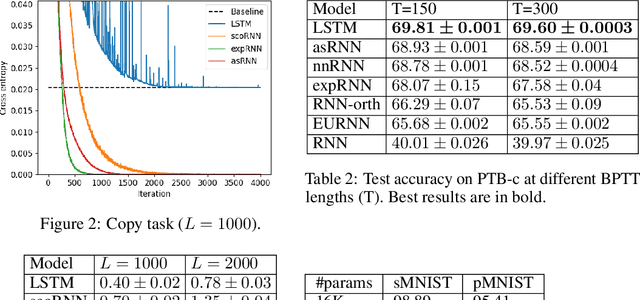
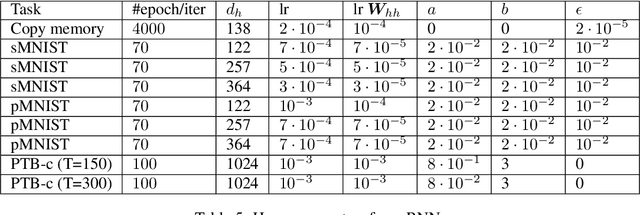
Orthogonal parameterization is a compelling solution to the vanishing gradient problem (VGP) in recurrent neural networks (RNNs). With orthogonal parameters and non-saturated activation functions, gradients in such models are constrained to unit norms. On the other hand, although the traditional vanilla RNNs are seen to have higher memory capacity, they suffer from the VGP and perform badly in many applications. This work proposes Adaptive-Saturated RNNs (asRNN), a variant that dynamically adjusts its saturation level between the two mentioned approaches. Consequently, asRNN enjoys both the capacity of a vanilla RNN and the training stability of orthogonal RNNs. Our experiments show encouraging results of asRNN on challenging sequence learning benchmarks compared to several strong competitors. The research code is accessible at https://github.com/ndminhkhoi46/asRNN/.
* 8 pages, 2 figures, 5 tables, ICLR 2023 Tiny Paper Track
Learning for Amalgamation: A Multi-Source Transfer Learning Framework For Sentiment Classification
Mar 16, 2023

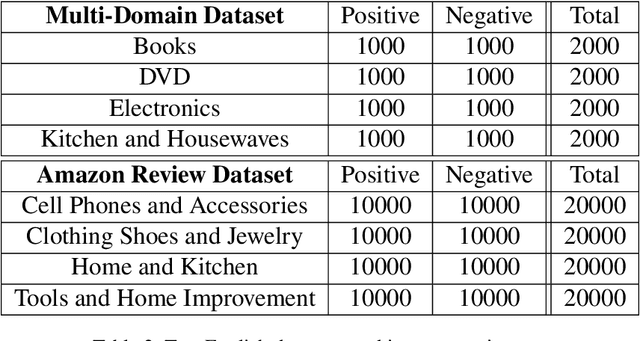

Transfer learning plays an essential role in Deep Learning, which can remarkably improve the performance of the target domain, whose training data is not sufficient. Our work explores beyond the common practice of transfer learning with a single pre-trained model. We focus on the task of Vietnamese sentiment classification and propose LIFA, a framework to learn a unified embedding from several pre-trained models. We further propose two more LIFA variants that encourage the pre-trained models to either cooperate or compete with one another. Studying these variants sheds light on the success of LIFA by showing that sharing knowledge among the models is more beneficial for transfer learning. Moreover, we construct the AISIA-VN-Review-F dataset, the first large-scale Vietnamese sentiment classification database. We conduct extensive experiments on the AISIA-VN-Review-F and existing benchmarks to demonstrate the efficacy of LIFA compared to other techniques. To contribute to the Vietnamese NLP research, we publish our source code and datasets to the research community upon acceptance.
Conditional expectation for missing data imputation
Feb 02, 2023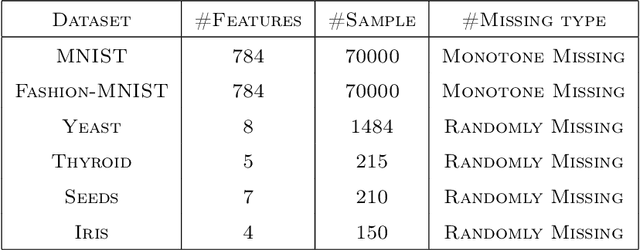
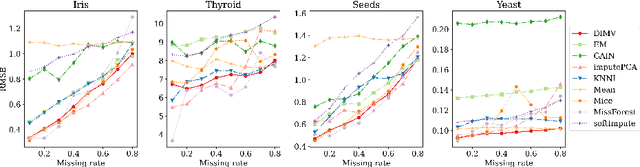
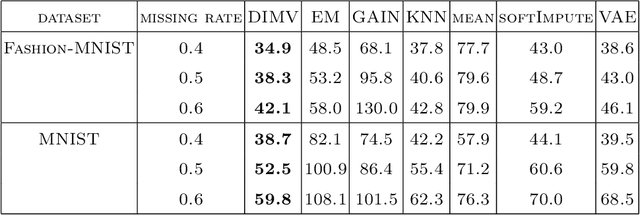
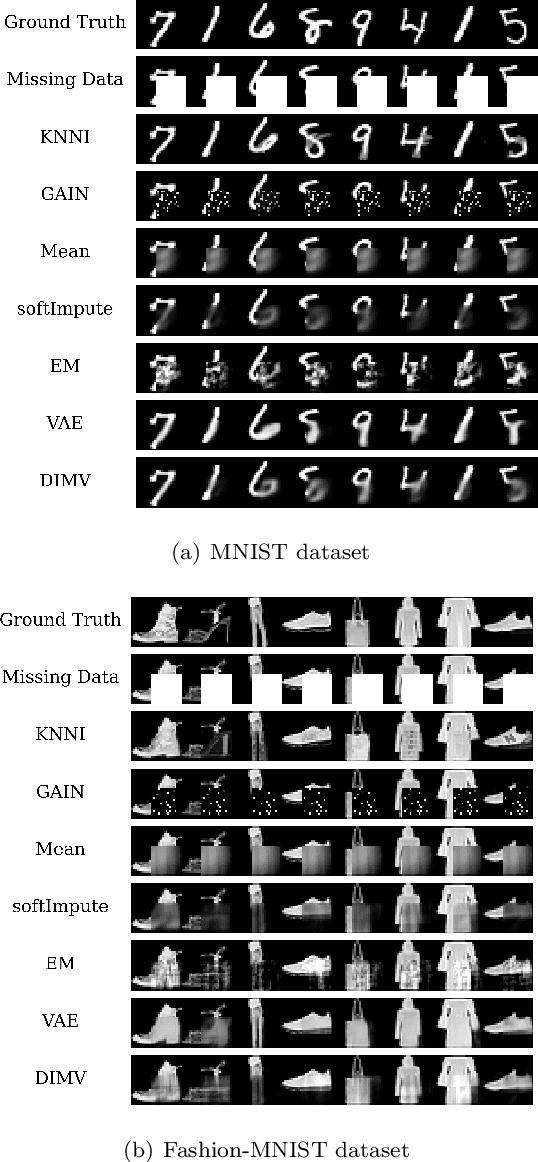
Missing data is common in datasets retrieved in various areas, such as medicine, sports, and finance. In many cases, to enable proper and reliable analyses of such data, the missing values are often imputed, and it is necessary that the method used has a low root mean square error (RMSE) between the imputed and the true values. In addition, for some critical applications, it is also often a requirement that the logic behind the imputation is explainable, which is especially difficult for complex methods that are for example, based on deep learning. This motivates us to introduce a conditional Distribution based Imputation of Missing Values (DIMV) algorithm. This approach works based on finding the conditional distribution of a feature with missing entries based on the fully observed features. As will be illustrated in the paper, DIMV (i) gives a low RMSE for the imputed values compared to state-of-the-art methods under comparison; (ii) is explainable; (iii) can provide an approximated confidence region for the missing values in a given sample; (iv) works for both small and large scale data; (v) in many scenarios, does not require a huge number of parameters as deep learning approaches and therefore can be used for mobile devices or web browsers; and (vi) is robust to the normally distributed assumption that its theoretical grounds rely on. In addition to DIMV, we also introduce the DPER* algorithm improving the speed of DPER for estimating the mean and covariance matrix from the data, and we confirm the speed-up via experiments.
HADA: A Graph-based Amalgamation Framework in Image-text Retrieval
Jan 11, 2023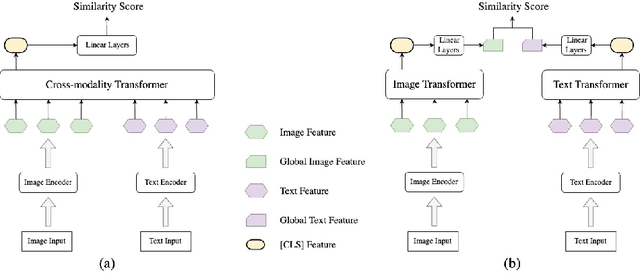
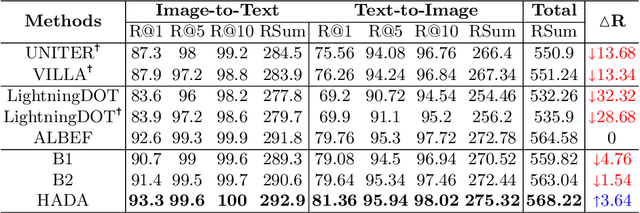
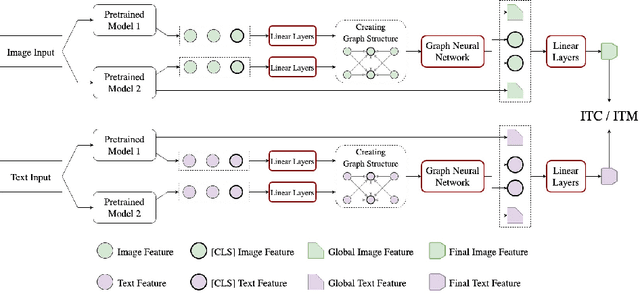
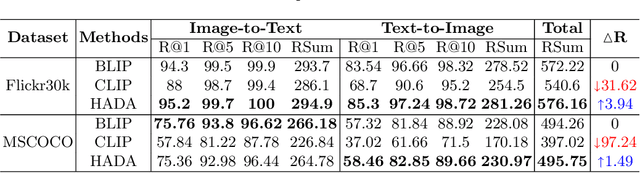
Many models have been proposed for vision and language tasks, especially the image-text retrieval task. All state-of-the-art (SOTA) models in this challenge contained hundreds of millions of parameters. They also were pretrained on a large external dataset that has been proven to make a big improvement in overall performance. It is not easy to propose a new model with a novel architecture and intensively train it on a massive dataset with many GPUs to surpass many SOTA models, which are already available to use on the Internet. In this paper, we proposed a compact graph-based framework, named HADA, which can combine pretrained models to produce a better result, rather than building from scratch. First, we created a graph structure in which the nodes were the features extracted from the pretrained models and the edges connecting them. The graph structure was employed to capture and fuse the information from every pretrained model with each other. Then a graph neural network was applied to update the connection between the nodes to get the representative embedding vector for an image and text. Finally, we used the cosine similarity to match images with their relevant texts and vice versa to ensure a low inference time. Our experiments showed that, although HADA contained a tiny number of trainable parameters, it could increase baseline performance by more than 3.6% in terms of evaluation metrics in the Flickr30k dataset. Additionally, the proposed model did not train on any external dataset and did not require many GPUs but only 1 to train due to its small number of parameters. The source code is available at https://github.com/m2man/HADA.
DRG-Net: Interactive Joint Learning of Multi-lesion Segmentation and Classification for Diabetic Retinopathy Grading
Dec 30, 2022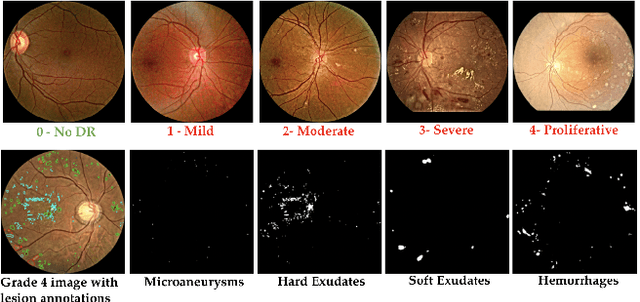
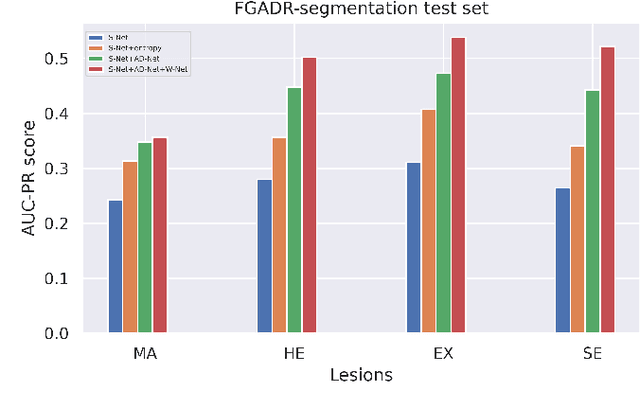
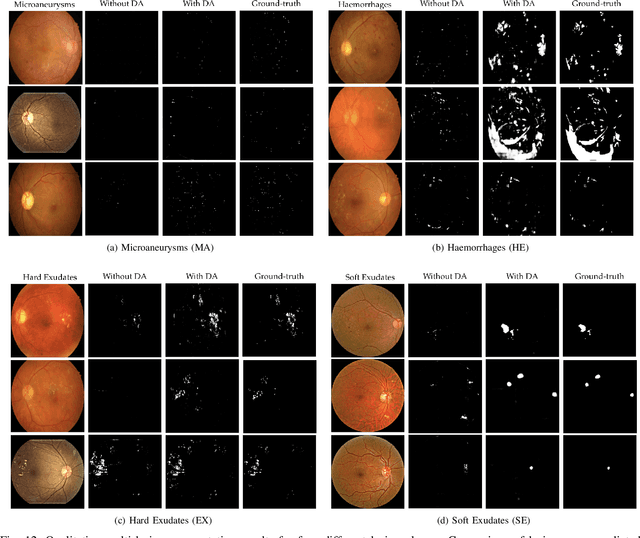
Diabetic Retinopathy (DR) is a leading cause of vision loss in the world, and early DR detection is necessary to prevent vision loss and support an appropriate treatment. In this work, we leverage interactive machine learning and introduce a joint learning framework, termed DRG-Net, to effectively learn both disease grading and multi-lesion segmentation. Our DRG-Net consists of two modules: (i) DRG-AI-System to classify DR Grading, localize lesion areas, and provide visual explanations; (ii) DRG-Expert-Interaction to receive feedback from user-expert and improve the DRG-AI-System. To deal with sparse data, we utilize transfer learning mechanisms to extract invariant feature representations by using Wasserstein distance and adversarial learning-based entropy minimization. Besides, we propose a novel attention strategy at both low- and high-level features to automatically select the most significant lesion information and provide explainable properties. In terms of human interaction, we further develop DRG-Net as a tool that enables expert users to correct the system's predictions, which may then be used to update the system as a whole. Moreover, thanks to the attention mechanism and loss functions constraint between lesion features and classification features, our approach can be robust given a certain level of noise in the feedback of users. We have benchmarked DRG-Net on the two largest DR datasets, i.e., IDRID and FGADR, and compared it to various state-of-the-art deep learning networks. In addition to outperforming other SOTA approaches, DRG-Net is effectively updated using user feedback, even in a weakly-supervised manner.
Joint Self-Supervised Image-Volume Representation Learning with Intra-Inter Contrastive Clustering
Dec 04, 2022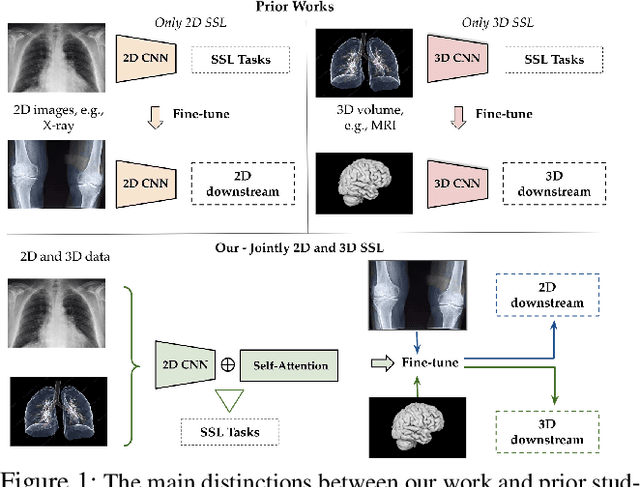
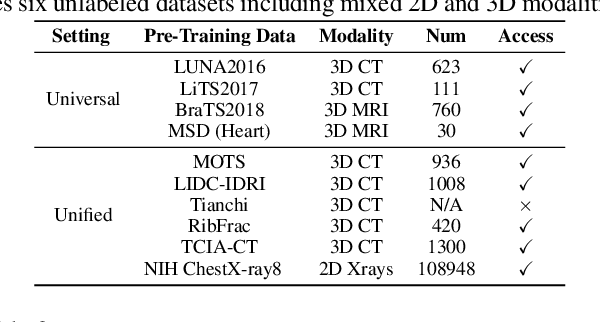
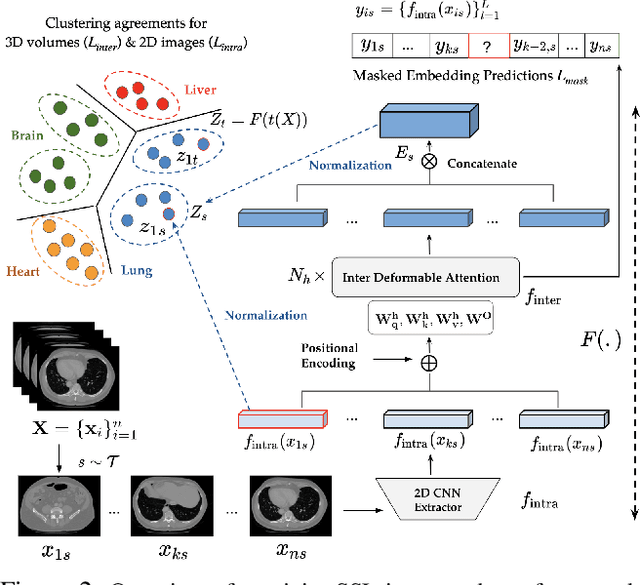
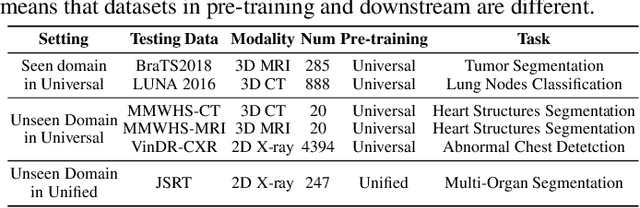
Collecting large-scale medical datasets with fully annotated samples for training of deep networks is prohibitively expensive, especially for 3D volume data. Recent breakthroughs in self-supervised learning (SSL) offer the ability to overcome the lack of labeled training samples by learning feature representations from unlabeled data. However, most current SSL techniques in the medical field have been designed for either 2D images or 3D volumes. In practice, this restricts the capability to fully leverage unlabeled data from numerous sources, which may include both 2D and 3D data. Additionally, the use of these pre-trained networks is constrained to downstream tasks with compatible data dimensions. In this paper, we propose a novel framework for unsupervised joint learning on 2D and 3D data modalities. Given a set of 2D images or 2D slices extracted from 3D volumes, we construct an SSL task based on a 2D contrastive clustering problem for distinct classes. The 3D volumes are exploited by computing vectored embedding at each slice and then assembling a holistic feature through deformable self-attention mechanisms in Transformer, allowing incorporating long-range dependencies between slices inside 3D volumes. These holistic features are further utilized to define a novel 3D clustering agreement-based SSL task and masking embedding prediction inspired by pre-trained language models. Experiments on downstream tasks, such as 3D brain segmentation, lung nodule detection, 3D heart structures segmentation, and abnormal chest X-ray detection, demonstrate the effectiveness of our joint 2D and 3D SSL approach. We improve plain 2D Deep-ClusterV2 and SwAV by a significant margin and also surpass various modern 2D and 3D SSL approaches.