 Add to Chrome
 Add to Firefox
 Add to Edge
T-LLM: Teaching Large Language Models to Forecast Time Series via Temporal Distillation
Feb 02, 2026
Time series forecasting plays a critical role in decision-making across many real-world applications. Unlike data in vision and language domains, time series data is inherently tied to the evolution of underlying processes and can only accumulate as real-world time progresses, limiting the effectiveness of scale-driven pretraining alone. This time-bound constraint poses a challenge for enabling large language models (LLMs) to acquire forecasting capability, as existing approaches primarily rely on representation-level alignment or inference-time temporal modules rather than explicitly teaching forecasting behavior to the LLM. We propose T-LLM, a temporal distillation framework that equips general-purpose LLMs with time series forecasting capability by transferring predictive behavior from a lightweight temporal teacher during training. The teacher combines trend modeling and frequency-domain analysis to provide structured temporal supervision, and is removed entirely at inference, leaving the LLM as the sole forecasting model. Experiments on benchmark datasets and infectious disease forecasting tasks demonstrate that T-LLM consistently outperforms existing LLM-based forecasting methods under full-shot, few-shot, and zero-shot settings, while enabling a simple and efficient deployment pipeline.

Transformer representation learning is necessary for dynamic multi-modal physiological data on small-cohort patients
Apr 05, 2025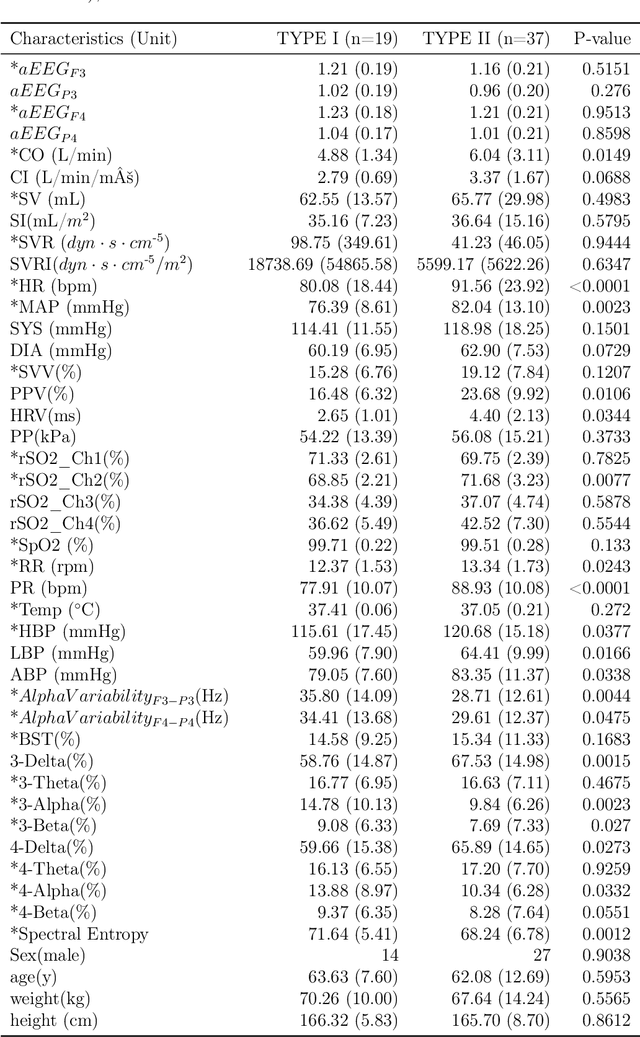
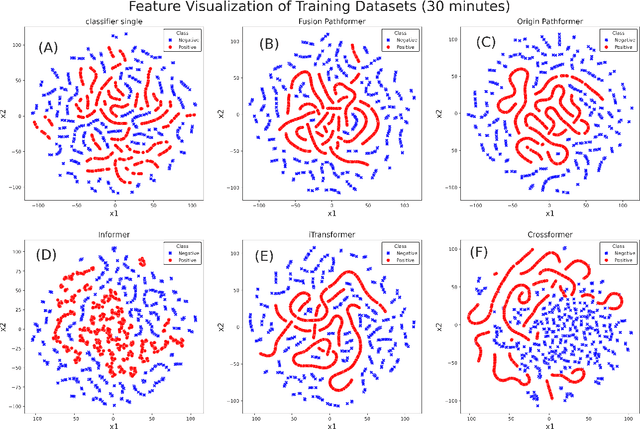
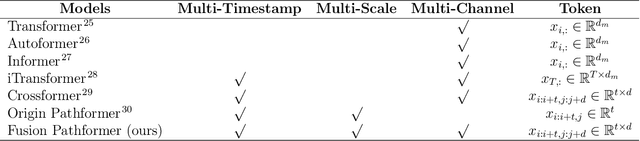
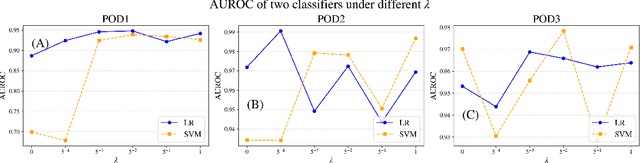
Postoperative delirium (POD), a severe neuropsychiatric complication affecting nearly 50% of high-risk surgical patients, is defined as an acute disorder of attention and cognition, It remains significantly underdiagnosed in the intensive care units (ICUs) due to subjective monitoring methods. Early and accurate diagnosis of POD is critical and achievable. Here, we propose a POD prediction framework comprising a Transformer representation model followed by traditional machine learning algorithms. Our approaches utilizes multi-modal physiological data, including amplitude-integrated electroencephalography (aEEG), vital signs, electrocardiographic monitor data as well as hemodynamic parameters. We curated the first multi-modal POD dataset encompassing two patient types and evaluated the various Transformer architectures for representation learning. Empirical results indicate a consistent improvements of sensitivity and Youden index in patient TYPE I using Transformer representations, particularly our fusion adaptation of Pathformer. By enabling effective delirium diagnosis from postoperative day 1 to 3, our extensive experimental findings emphasize the potential of multi-modal physiological data and highlight the necessity of representation learning via multi-modal Transformer architecture in clinical diagnosis.