 Add to Chrome
 Add to Firefox
 Add to Edge
Prompting is not enough: supervised baselines and leakage control for measuring shared decision-making with LLMs in pediatric encounters
Aug 14, 2026
Objectives: To determine whether zero-shot prompting of a large language model (LLM) is sufficient to detect shared decision-making (SDM) behaviors in real clinical encounters, and whether supervised learning adds value under patient-grouped, nested evaluation. Methods: We analyzed 21 audio-recorded outpatient surgical decision encounters (19 unique patients; 7,566 utterance segments; ~6.1 hours) between families of children with multiple long-term conditions and their surgical providers. Trained coders labeled segments for 12 SDM behaviors (human-human macro Cohen's kappa = 0.695). We compared a zero-shot local LLM (Qwen 2.5 32B), a supervised classifier over frozen sentence embeddings, and their logistic stack, under patient-grouped outer folds with inner cross-fitted thresholds and patient-resampled confidence intervals. Results: The zero-shot LLM reached macro kappa = 0.139 (95% CI 0.111-0.164). The supervised classifier reached kappa = 0.227 (0.186-0.262), a paired improvement of 0.088 (0.051-0.119). A logistic stack of the two reached kappa = 0.242 (0.198-0.284). We identified multiple corpus-specific leakage paths, including grouping sibling recordings separately and allowing labels from an outer held-out patient to enter few-shot exemplars used while fitting downstream models. Conclusion: Zero-shot prompting alone is not sufficient to measure SDM behavior as reliably as a small supervised model, and patient-level grouping alone does not prevent leakage when labeled prompt exemplars are precomputed outside the outer evaluation loop. Reported performance is sensitive to the unit of data splitting and to where labeled exemplars enter the pipeline. External validation is needed before these findings generalize beyond this population, model, prompt, and codebook.

When Should Graph Attention Be Sparse? Learning a Per-Edge Tsallis Index
Aug 03, 2026Graph attention normalizes neighborhood scores with softmax, the maximum-entropy choice under Shannon statistics. But homophilic and heterophilic graphs want different attention shapes, and one fixed normalization cannot serve both. We propose \textbf{LTGA} (\textbf{L}earnable \textbf{T}sallis \textbf{G}raph \textbf{A}ttention), a graph attention layer whose Tsallis entropic index $q$ is learned jointly with the weights, interpolating continuously between heavy-tailed ($q\!<\!1$), softmax ($q\!=\!1$) and compact-support ($q\!>\!1$) attention at four granularities from a global scalar to a per-edge index, under a bounded reparameterization that starts every model at the GAT baseline. Across eight benchmarks at ten seeds, LTGA-Edge takes the best average rank ($2.75$), but the omnibus test does not reject ($p\!=\!0.199$) and learning $q$ does not beat searching it: a validation-tuned frozen grid reaches $61.4\%$, tuned $α$-entmax $62.2\%$ and a capacity-matched $q\!\equiv\!1$ control $62.0\%$, against $61.7\%$ for LTGA-Edge. What the learned index buys is one run instead of a grid, and an interpretable mechanism: where $q$ leaves $1$, it prunes $42\%$ of attention coefficients to exactly zero, and those edges are selectively the wrong ones, restoring them costs $7.1$ points, while random pruning at the same rate costs $13.0$ more. Project page: https://kleyt0n.github.io/ltga
Perspectives on Tsallis Statistics for Artificial Intelligence
Aug 02, 2026Tsallis statistics generalizes Boltzmann-Gibbs statistical mechanics through a single real parameter $q$ that controls the weight assigned to rare and frequent events. Originally proposed to describe physical systems with long-range correlations, multifractal geometry, and heavy-tailed fluctuations, the framework has become a recurring ingredient in modern artificial intelligence (AI): it underlies sparse attention mechanisms (\textsc{sparsemax} and $α$-\textsc{entmax}), maximum-entropy reinforcement learning with controllable exploration, robust and heavy-tailed probabilistic models, and a family of generalized loss functions and regularizers. This paper offers a structured perspective on where Tsallis statistics meets AI. We first review the mathematical core: $q$-entropy and its variational (maximum-entropy) foundation, the $q$-exponential and $q$-logarithm, the $q$-central limit theorem, $q$-Gaussian distributions, and their dynamical origin in superstatistics, emphasizing the properties that matter for machine learning. We then survey applications across softmax generalization, reinforcement learning, sequential and graph neural models, generative and probabilistic modeling, loss design, and optimization, extracting the recurring design pattern in each case: a tunable interpolation between dense/uniform and sparse/peaked behavior governed by $q$. We further argue that the heavy-tailed weight spectra and gradient-noise statistics empirically observed in deep networks are themselves nonextensive signatures, placing modern learning dynamics within the scope of $q$-statistics. Finally, we discuss methodological pitfalls, the relationship to information geometry and $q$-exponential families, and open directions, arguing that $q$ should be treated as a learnable inductive bias rather than a fixed hyperparameter.
An Interdisciplinary Outlook on Large Language Models for Scientific Research
Nov 03, 2023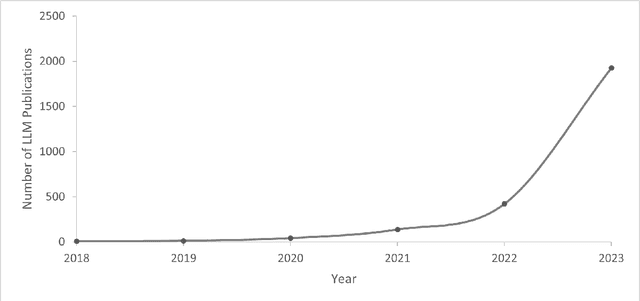
In this paper, we describe the capabilities and constraints of Large Language Models (LLMs) within disparate academic disciplines, aiming to delineate their strengths and limitations with precision. We examine how LLMs augment scientific inquiry, offering concrete examples such as accelerating literature review by summarizing vast numbers of publications, enhancing code development through automated syntax correction, and refining the scientific writing process. Simultaneously, we articulate the challenges LLMs face, including their reliance on extensive and sometimes biased datasets, and the potential ethical dilemmas stemming from their use. Our critical discussion extends to the varying impacts of LLMs across fields, from the natural sciences, where they help model complex biological sequences, to the social sciences, where they can parse large-scale qualitative data. We conclude by offering a nuanced perspective on how LLMs can be both a boon and a boundary to scientific progress.
Local and Global Explainability Metrics for Machine Learning Predictions
Feb 23, 2023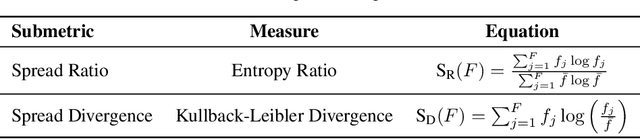
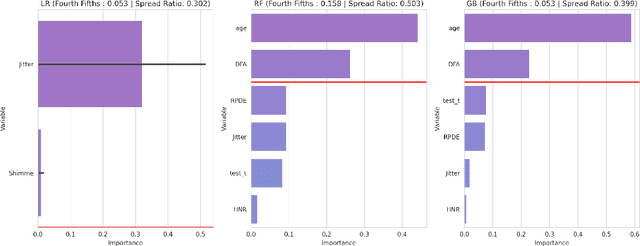

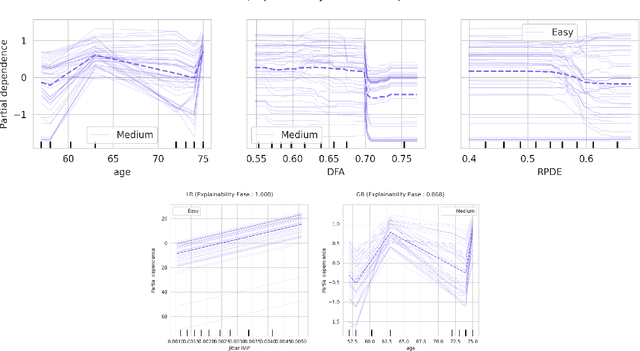
Rapid advancements in artificial intelligence (AI) technology have brought about a plethora of new challenges in terms of governance and regulation. AI systems are being integrated into various industries and sectors, creating a demand from decision-makers to possess a comprehensive and nuanced understanding of the capabilities and limitations of these systems. One critical aspect of this demand is the ability to explain the results of machine learning models, which is crucial to promoting transparency and trust in AI systems, as well as fundamental in helping machine learning models to be trained ethically. In this paper, we present novel quantitative metrics frameworks for interpreting the predictions of classifier and regressor models. The proposed metrics are model agnostic and are defined in order to be able to quantify: i. the interpretability factors based on global and local feature importance distributions; ii. the variability of feature impact on the model output; and iii. the complexity of feature interactions within model decisions. We employ publicly available datasets to apply our proposed metrics to various machine learning models focused on predicting customers' credit risk (classification task) and real estate price valuation (regression task). The results expose how these metrics can provide a more comprehensive understanding of model predictions and facilitate better communication between decision-makers and stakeholders, thereby increasing the overall transparency and accountability of AI systems.