 Add to Chrome
 Add to Firefox
 Add to Edge
Evaluating VLMs for Autonomous Agent-Driven Geometry Clipping Detection in Video Game QA
Jul 28, 2026
In this work, we study the use of Vision-Language Models (VLMs) for anomaly detection in an agent-driven game Quality Assurance (QA) pipeline focusing on geometry clipping. In this evaluation, a custom exploration agent navigates a game level to collect visual observations, while the automatic annotation pipeline provides frame-level clipping labels. This setup allows us to evaluate recent VLMs on a controlled anomaly detection task without manual annotation. We benchmark six recent VLMs (Gemini, GPT, Qwen, Gemma, Llama, and Ministral) under a zero-shot prompting setting and analyse their sensitivity to four prompt variants. Our results show that while the VLMs can capture visual cues associated with geometry clipping, they all produce substantial false positives on visually ambiguous frames such as near-contact geometry and partial occlusions. Gemini-3.1-Flash achieves the best overall accuracy and is the most robust to prompt variation, while open-source models exhibit large precision--recall swings depending on the prompt design. These findings suggest that current VLMs are best suited as high-recall candidate filters within multi-stage QA pipelines rather than as standalone bug detectors.

TempGlitch: Evaluating Vision-Language Models for Temporal Glitch Detection in Gameplay Videos
May 20, 2026Vision-language models (VLMs) are increasingly being explored for video game quality assurance, especially gameplay glitch detection. Most existing evaluations, however, treat glitches as static visual anomalies, asking models to detect failures from a single frame. We argue that this framing misses a key distinction: some glitches are spatial and visible in an isolated frame, whereas others are temporal and become evident only through changes across ordered frames. A preliminary study confirms this gap, showing that temporal glitches are substantially harder for VLMs to detect than spatial ones. To enable systematic evaluation of this underexplored setting, we introduce TempGlitch, a controlled gameplay video benchmark for temporal glitch detection. TempGlitch covers five temporal glitch types with balanced per-category samples, together with paired glitch-free videos that enable reliable binary evaluation. We evaluate 12 proprietary and open-weight VLMs across multiple frame-sampling settings. Our results show that current VLMs remain near chance on TempGlitch, often collapsing into either overly conservative behavior that misses most glitches or overly sensitive behavior that flags clean videos as glitchy. Moreover, denser frame sampling and larger model size do not reliably resolve these failures. TempGlitch provides a focused testbed for temporal reasoning, robust gameplay understanding, and automated glitch detection with VLMs. Code and data are available at the project website.
RESP: Reference-guided Sequential Prompting for Visual Glitch Detection in Video Games
Apr 13, 2026Visual glitches in video games degrade player experience and perceived quality, yet manual quality assurance cannot scale to the growing test surface of modern game development. Prior automation efforts, particularly those using vision-language models (VLMs), largely operate on single frames or rely on limited video-level baselines that struggle under realistic scene variation, making robust video-level glitch detection challenging. We present RESP, a practical multi-frame framework for gameplay glitch detection with VLMs. Our key idea is reference-guided prompting: for each test frame, we select a reference frame from earlier in the same video, establishing a visual baseline and reframing detection as within-video comparison rather than isolated classification. RESP sequentially prompts the VLM with reference/test pairs and aggregates noisy frame predictions into a stable video-level decision without fine-tuning the VLM. To enable controlled analysis of reference effects, we introduce RefGlitch, a synthetic dataset of manually labeled reference/test frame pairs with balanced coverage across five glitch types. Experiments across five VLMs and three datasets (one synthetic, two real-world) show that reference guidance consistently strengthens frame-level detection and that the improved frame-level evidence reliably transfers to stronger video-level triage under realistic QA conditions. Code and data are available at: \href{https://github.com/PipiZong/RESP_code.git}{this https URL}.
World of Bugs: A Platform for Automated Bug Detection in 3D Video Games
Jun 21, 2022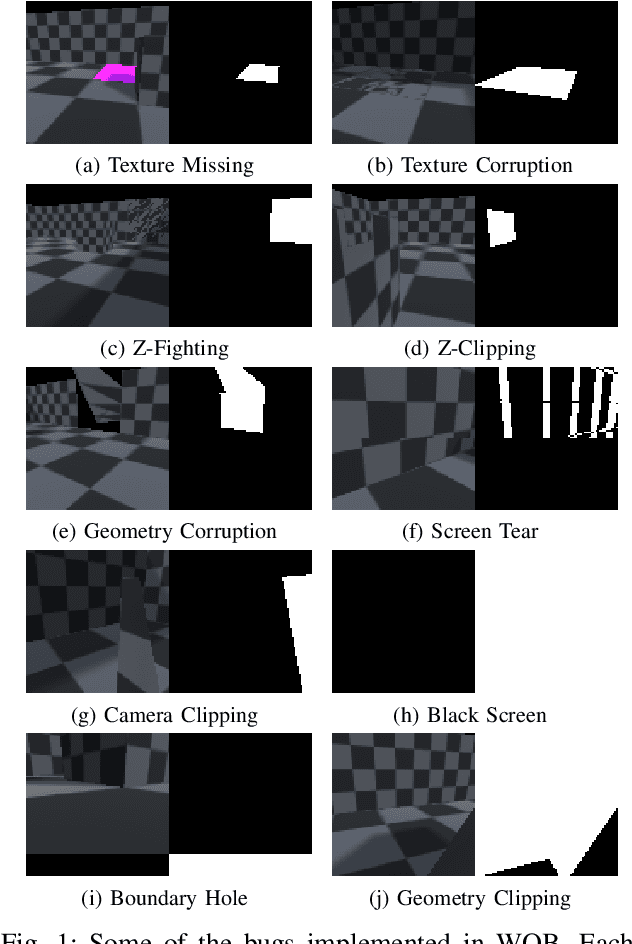
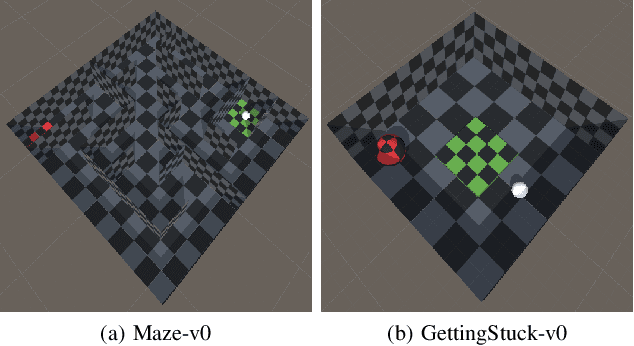
We present World of Bugs (WOB), an open platform that aims to support Automated Bug Detection (ABD) research in video games. We discuss some open problems in ABD and how they relate to the platform's design, arguing that learning-based solutions are required if further progress is to be made. The platform's key feature is a growing collection of common video game bugs that may be used for training and evaluating ABD approaches.
Learning to Identify Perceptual Bugs in 3D Video Games
Feb 25, 2022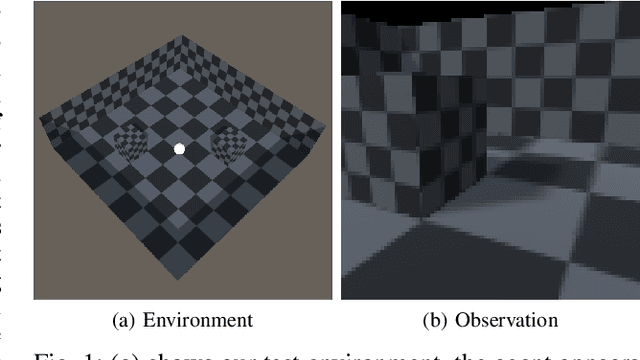
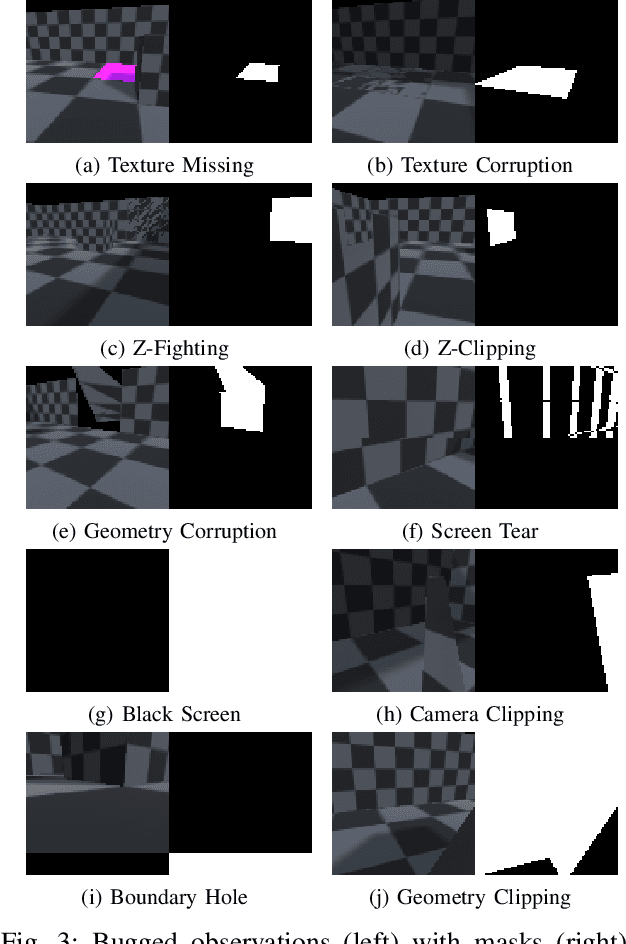
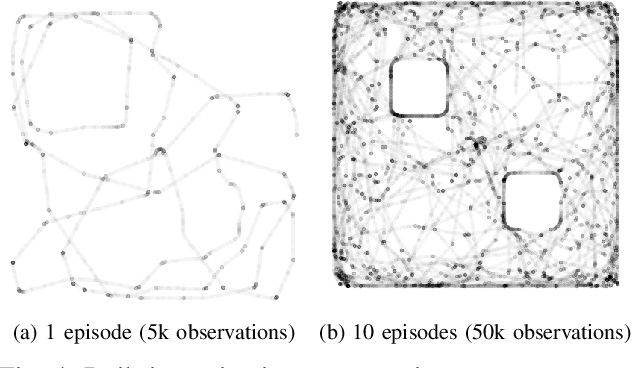
Automated Bug Detection (ABD) in video games is composed of two distinct but complementary problems: automated game exploration and bug identification. Automated game exploration has received much recent attention, spurred on by developments in fields such as reinforcement learning. The complementary problem of identifying the bugs present in a player's experience has for the most part relied on the manual specification of rules. Although it is widely recognised that many bugs of interest cannot be identified with such methods, little progress has been made in this direction. In this work we show that it is possible to identify a range of perceptual bugs using learning-based methods by making use of only the rendered game screen as seen by the player. To support our work, we have developed World of Bugs (WOB) an open platform for testing ABD methods in 3D game environments.
Anomaly Detection in Video Games
May 20, 2020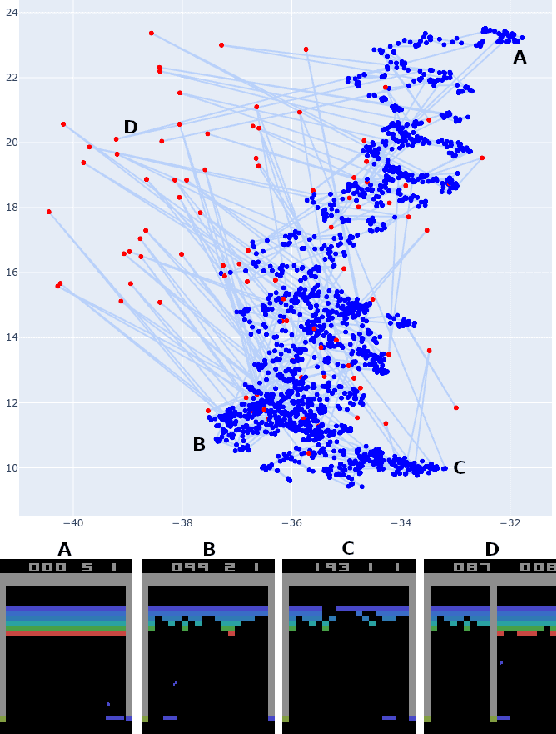
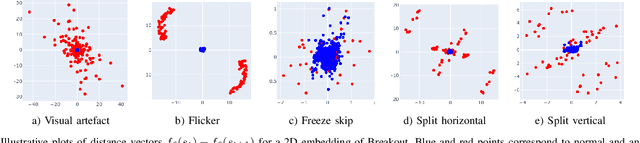
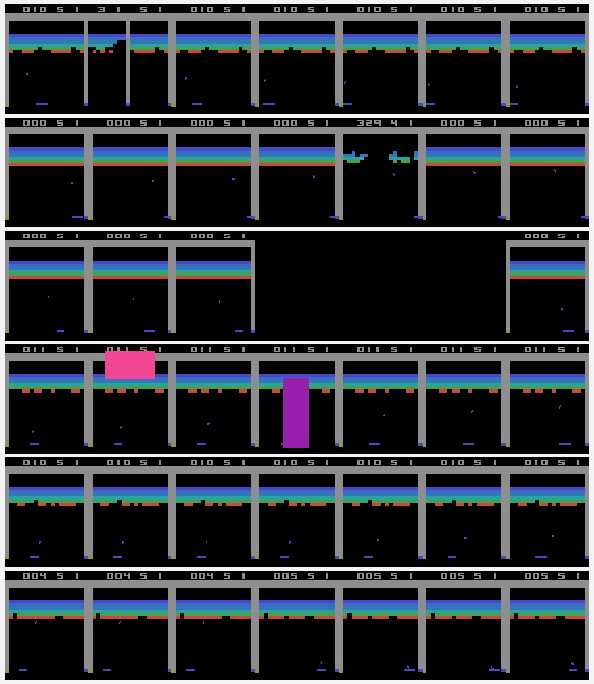
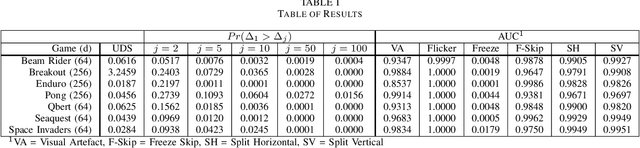
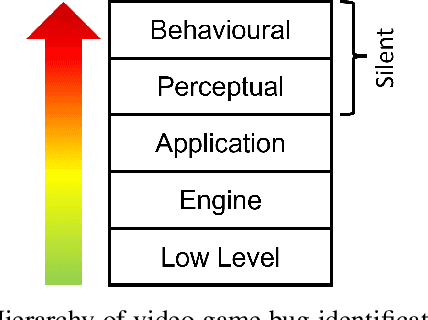
With the aim of designing automated tools that assist in the video game quality assurance process, we frame the problem of identifying bugs in video games as an anomaly detection (AD) problem. We develop State-State Siamese Networks (S3N) as an efficient deep metric learning approach to AD in this context and explore how it may be used as part of an automated testing tool. Finally, we show by empirical evaluation on a series of Atari games, that S3N is able to learn a meaningful embedding, and consequently is able to identify various common types of video game bugs.