 Add to Chrome
 Add to Firefox
 Add to Edge
AI-Driven Predictive Modelling for Groundwater Salinization in Israel
Feb 07, 2026
Increasing salinity and contamination of groundwater is a serious issue in many parts of the world, causing degradation of water resources. The aim of this work is to form a comprehensive understanding of groundwater salinization underlying causal factors and identify important meteorological, geological and anthropogenic drivers of salinity. We have integrated different datasets of potential covariates, to create a robust framework for machine learning based predictive models including Random Forest (RF), XGBoost, Neural network, Long Short-Term Memory (LSTM), convolution neural network (CNN) and linear regression (LR), of groundwater salinity. Additionally, Recursive Feature Elimination (RFE) followed by Global sensitivity analysis (GSA) and Explainable AI (XAI) based SHapley Additive exPlanations (SHAP) were used to estimate the importance scores and find insights into the drivers of salinization. We also did causality analysis via Double machine learning using various predictive models. From these analyses, key meteorological (Precipitation, Temperature), geological (Distance from river, Distance to saline body, TWI, Shoreline distance), and anthropogenic (Area of agriculture field, Treated Wastewater) covariates are identified to be influential drivers of groundwater salinity across Israel. XAI analysis also identified Treated Wastewater (TWW) as an essential anthropogenic driver of salinity, its significance being context-dependent but critical in vulnerable hydro-climatic environment. Our approach provides deeper insight into global salinization mechanisms at country scale, reducing AI model uncertainty and highlighting the need for tailored strategies to address salinity.

Open Datasets for Grid Modeling and Visualization: An Alberta Power Network Case
Apr 10, 2025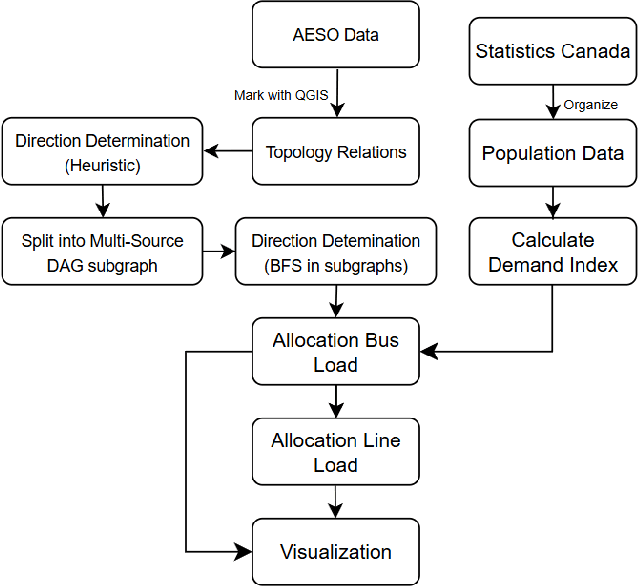
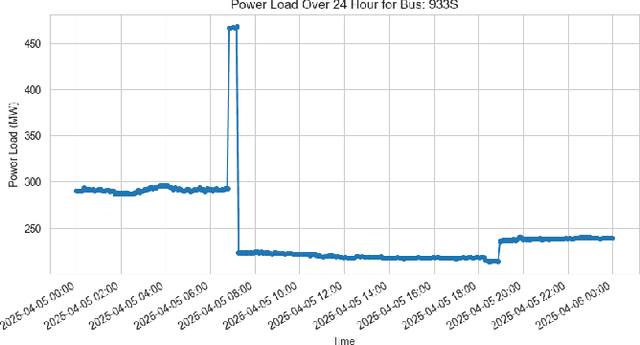
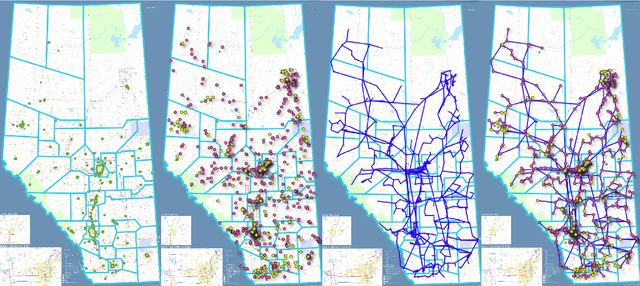
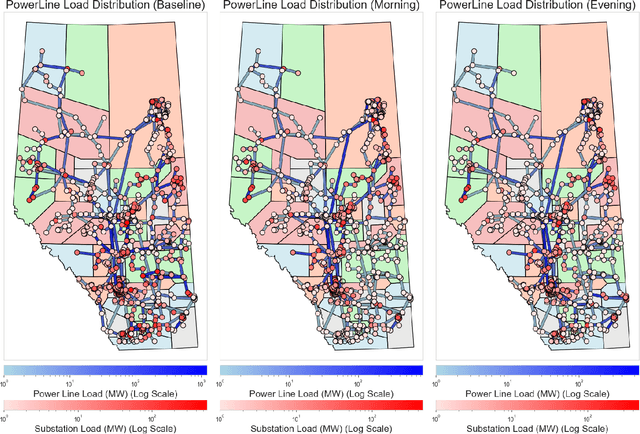
In the power and energy industry, multiple entities in grid operational logs are frequently recorded and updated. Thanks to recent advances in IT facilities and smart metering services, a variety of datasets such as system load, generation mix, and grid connection are often publicly available. While these resources are valuable in evaluating power grid's operational conditions and system resilience, the lack of fine-grained, accurate locational information constrain the usage of current data, which further hinders the development of smart grid and renewables integration. For instance, electricity end users are not aware of nodal generation mix or carbon emissions, while the general public have limited understanding about the effect of demand response or renewables integration if only the whole system's demands and generations are available. In this work, we focus on recovering power grid topology and line flow directions from open public dataset. Taking the Alberta grid as a working example, we start from mapping multi-modal power system datasets to the grid topology integrated with geographical information. By designing a novel optimization-based scheme to recover line flow directions, we are able to analyze and visualize the interactions between generations and demand vectors in an efficient manner. Proposed research is fully open-sourced and highly generalizable, which can help model and visualize grid information, create synthetic dataset, and facilitate analytics and decision-making framework for clean energy transition.