 Add to Chrome
 Add to Firefox
 Add to Edge
Conflict-Aware Multimodal Fusion for Ambivalence and Hesitancy Recognition
Mar 16, 2026
Ambivalence and hesitancy (A/H) are subtle affective states where a person shows conflicting signals through different channels -- saying one thing while their face or voice tells another story. Recognising these states automatically is valuable in clinical settings, but it is hard for machines because the key evidence lives in the \emph{disagreements} between what is said, how it sounds, and what the face shows. We present \textbf{ConflictAwareAH}, a multimodal framework built for this problem. Three pre-trained encoders extract video, audio, and text representations. Pairwise conflict features -- element-wise absolute differences between modality embeddings -- serve as \emph{bidirectional} cues: large cross-modal differences flag A/H, while small differences confirm behavioural consistency and anchor the negative class. This conflict-aware design addresses a key limitation of text-dominant approaches, which tend to over-detect A/H (high F1-AH) while struggling to confirm its absence: our multimodal model improves F1-NoAH by +4.6 points over text alone and halves the class-performance gap. A complementary \emph{text-guided late fusion} strategy blends a text-only auxiliary head with the full model at inference, adding +4.1 Macro F1. On the BAH dataset from the ABAW10 Ambivalence/Hesitancy Challenge, our method reaches \textbf{0.694 Macro F1} on the labelled test split and \textbf{0.715} on the private leaderboard, outperforming published multimodal baselines by over 10 points -- all on a single GPU in under 25 minutes of training.

Facial age estimation using BSIF and LBP
Jan 08, 2016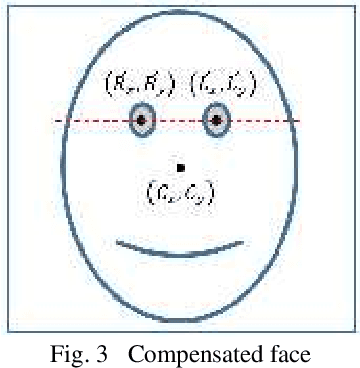
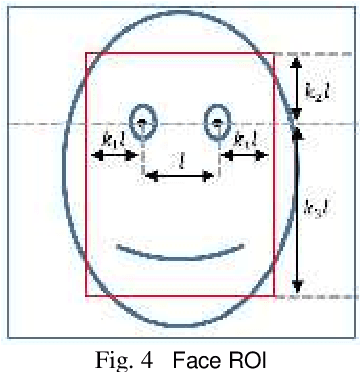
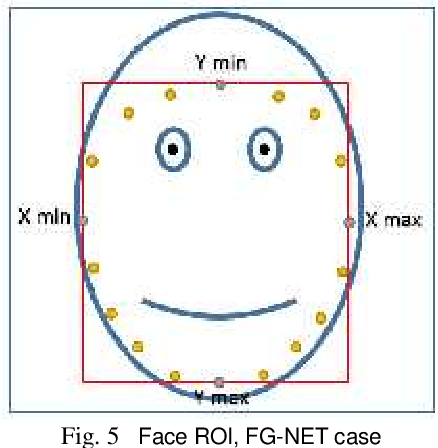
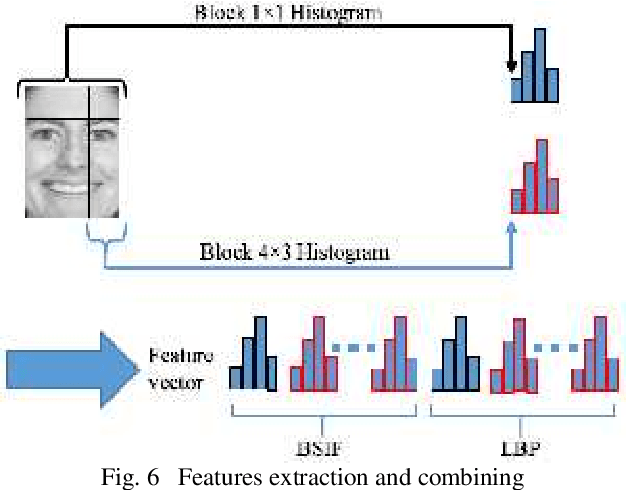
Human face aging is irreversible process causing changes in human face characteristics such us hair whitening, muscles drop and wrinkles. Due to the importance of human face aging in biometrics systems, age estimation became an attractive area for researchers. This paper presents a novel method to estimate the age from face images, using binarized statistical image features (BSIF) and local binary patterns (LBP)histograms as features performed by support vector regression (SVR) and kernel ridge regression (KRR). We applied our method on FG-NET and PAL datasets. Our proposed method has shown superiority to that of the state-of-the-art methods when using the whole PAL database.