 Add to Chrome
 Add to Firefox
 Add to Edge
Beyond Top-K: Replacing Black-Box Retrieval with Interpretable Agentic Operations
Aug 07, 2026
Retrieval-augmented generation over long documents is dominated by one design: chunk the text, embed the chunks, and surface the top-k nearest neighbours of the query. We argue that for an important class of documents -- financial statements, audit reports, regulatory returns -- this design is structurally unsound, and we make the argument measurable. On a 780-page government financial report, 86.8% of content lines are table rows, thousands of near-identical figures compete in one embedding space, and a figure inherits its unit from a header a median of 13 lines above it -- so a chunk boundary routinely separates a number from whether it is in lakh or crore, an error of two orders of magnitude. A table-aware chunker built as a steelman fixes the unit problem but leaves 27-30% of numeric chunks with no fiscal-year header at every chunk size we tried. We propose READ (Reliable Embedding-free Agentic Document-search), in which an agent reads the raw document through three deterministic operations -- normalized lexical search, structural navigation, and bounded span reads -- exposed over the Model Context Protocol, so a trajectory is a replayable audit trail, not an opaque similarity score. On 51 verified questions READ answers 58.8% against dense retrieval's 15.7% (p_Holm = 2 x 10^-5) -- or 35.3% tuned, which READ still leads by 23.5 points (p_Holm = 0.017). An agent given the same loop but a top-k tool reaches only 27.5%, locating the gain in the interface rather than in iteration. We also report what the evidence does not support: BM25 is statistically indistinguishable from READ, so our result separates embedding-based from embedding-free retrieval, not agentic from lexical search.

Optimization of Ensemble Supervised Learning Algorithms for Increased Sensitivity, Specificity, and AUC of Population-Based Colorectal Cancer Screenings
Aug 15, 2017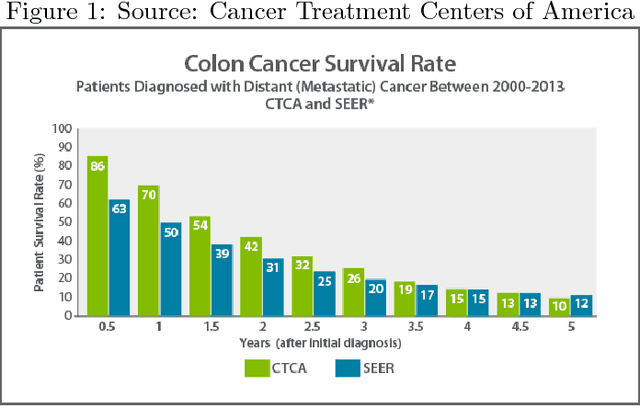
Over 150,000 new people in the United States are diagnosed with colorectal cancer each year. Nearly a third die from it (American Cancer Society). The only approved noninvasive diagnosis tools currently involve fecal blood count tests (FOBTs) or stool DNA tests. Fecal blood count tests take only five minutes and are available over the counter for as low as \$15. They are highly specific, yet not nearly as sensitive, yielding a high percentage (25%) of false negatives (Colon Cancer Alliance). Moreover, FOBT results are far too generalized, meaning that a positive result could mean much more than just colorectal cancer, and could just as easily mean hemorrhoids, anal fissure, proctitis, Crohn's disease, diverticulosis, ulcerative colitis, rectal ulcer, rectal prolapse, ischemic colitis, angiodysplasia, rectal trauma, proctitis from radiation therapy, and others. Stool DNA tests, the modern benchmark for CRC screening, have a much higher sensitivity and specificity, but also cost \$600, take two weeks to process, and are not for high-risk individuals or people with a history of polyps. To yield a cheap and effective CRC screening alternative, a unique ensemble-based classification algorithm is put in place that considers the FIT result, BMI, smoking history, and diabetic status of patients. This method is tested under ten-fold cross validation to have a .95 AUC, 92% specificity, 89% sensitivity, .88 F1, and 90% precision. Once clinically validated, this test promises to be cheaper, faster, and potentially more accurate when compared to a stool DNA test.